


- Arik Arkadi Sluzki
- •
- 6 Min Read
- •
- 3 hours ago
Key Points
- Jazz Pharmaceuticals plc (NASDAQ: JAZZ) trades at valuation multiples below many biotech peers despite stable cash flows.
- The company’s diversified portfolio, including oncology and neuroscience assets, underpins revenue visibility.
- Pipeline execution and patent dynamics remain central to assessing long-term upside potential.

As volatility persists across healthcare equities, investors are reassessing valuation opportunities within the biotechnology space. Jazz Pharmaceuticals has drawn attention for trading at earnings multiples below sector averages, despite generating consistent revenues and positive free cash flow. The question for global investors is whether the discount reflects overlooked fundamentals or embedded risk factors.
Valuation and Financial Profile
Jazz Pharmaceuticals reported annual revenues exceeding $3.7 billion in recent fiscal filings, supported by a portfolio spanning sleep disorders and oncology therapies. The company has maintained profitability, distinguishing it from earlier-stage biotech firms that rely heavily on pipeline speculation. Its forward price-to-earnings ratio has generally trended below broader biotech benchmarks, reflecting a valuation gap relative to growth-oriented peers.
The company’s cash flow generation and disciplined capital allocation have allowed for debt reduction following previous acquisitions. This financial flexibility provides a cushion in a sector often exposed to binary clinical risks. However, lower valuation multiples can also signal investor caution regarding revenue sustainability, particularly as legacy products approach patent cliffs.
Product Portfolio and Pipeline Drivers
Jazz’s revenue base is anchored by therapies addressing narcolepsy and certain oncology indications. Diversification beyond a single blockbuster drug has been a strategic focus in recent years. The acquisition of oncology assets has expanded the company’s footprint in hematologic malignancies, contributing to a broader revenue mix.
Pipeline progression remains a key catalyst. Investors typically assess biotech valuations based not only on current earnings but also on late-stage development programs and regulatory milestones. Any advancement in clinical trials or expanded indications can materially affect earnings forecasts and sentiment.
At the same time, competitive dynamics within specialty pharmaceuticals require continuous innovation. Generic competition, reimbursement pressures, and regulatory scrutiny can all impact margins. These factors are particularly relevant in the U.S. healthcare system, where pricing debates remain ongoing.
Macro Context and Investor Positioning
The broader biotech sector has faced headwinds from rising interest rates, as higher discount rates reduce the present value of future drug revenues. As monetary policy expectations shift, capital has rotated selectively back into profitable biotech companies with established revenue streams. Jazz’s relative stability positions it differently from early-stage firms that remain dependent on capital markets funding.
For Israeli institutional investors with exposure to U.S. healthcare equities, companies like Jazz may represent a middle ground between defensive pharmaceutical giants and high-risk development-stage biotech names. Currency fluctuations and regulatory developments in key markets also influence overall return dynamics.
Market sentiment toward biotech stocks remains cyclical, often linked to clinical breakthroughs and policy headlines. Jazz’s valuation discount suggests that investors are balancing its steady earnings base against long-term growth uncertainties.
Looking ahead, analysts will focus on upcoming clinical readouts, revenue growth trajectories in oncology segments, and progress in debt management. The sustainability of free cash flow, alongside pipeline execution, will likely determine whether Jazz Pharmaceuticals narrows its valuation gap relative to peers. In an environment where selectivity dominates healthcare investing, the company’s ability to combine profitability with incremental innovation remains central to its market positioning.
Comparison, examination, and analysis between investment houses
Leave your details, and an expert from our team will get back to you as soon as possible
* This article, in whole or in part, does not contain any promise of investment returns, nor does it constitute professional advice to make investments in any particular field.
To read more about the full disclaimer, click here
- orshu
- •
- 7 Min Read
- •
- ago 3 hours
SKN | Stifel Raises Target on Triple Flag Precious Metals (TFPM) as Gold Strength Supports Royalty Model
Stifel has raised its price target on Triple Flag Precious Metals Corp., reaffirming a constructive outlook on the royalty
- ago 3 hours
- •
- 7 Min Read
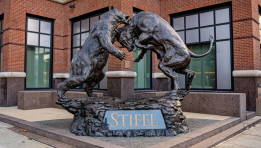
Stifel has raised its price target on Triple Flag Precious Metals Corp., reaffirming a constructive outlook on the royalty
- orshu
- •
- 7 Min Read
- •
- ago 4 hours
SKN | Nike’s China Headwinds Persist as BNP Paribas Reiterates Bearish Stance
Nike’s recovery narrative remains under pressure as BNP Paribas reiterated its cautious view on the sportswear giant, pointing to
- ago 4 hours
- •
- 7 Min Read

Nike’s recovery narrative remains under pressure as BNP Paribas reiterated its cautious view on the sportswear giant, pointing to

- sagi habasov
- •
- 7 Min Read
- •
- ago 4 hours
SKN | BofA Cuts Price Target on Robinhood (HOOD): Valuation Reset or Temporary Sentiment Shift?
Bank of America has reduced its price target on Robinhood Markets, Inc., prompting renewed scrutiny of the retail brokerage’s
- ago 4 hours
- •
- 7 Min Read

Bank of America has reduced its price target on Robinhood Markets, Inc., prompting renewed scrutiny of the retail brokerage’s
- orshu
- •
- 7 Min Read
- •
- ago 6 hours
SKN | AI Sell-Off Exposes a Stark Contrast on Wall Street: Who Wins and Who Loses Next?
Wall Street is confronting a defining moment as the latest AI-fueled rally gives way to a pronounced pullback in
- ago 6 hours
- •
- 7 Min Read

Wall Street is confronting a defining moment as the latest AI-fueled rally gives way to a pronounced pullback in

