


- Lior mor
- •
- 6 Min Read
- •
- 28 minutes ago
Key Points
- Mizrov purchased $131.8 million in the Akre Focus ETF — 2.7% of its reported assets.
- The fund is trading 14.5% below its peak after sharply underperforming the S&P 500.
- The move may reflect preparations for a leadership rotation and a return to focus on quality and value.

Institutional capital appears to be stepping into a strategy that has struggled over the past year. On February 4, 2026, Mesirow Financial Investment Management disclosed a new position in the Akre Focus ETF (NYSE: AKRE), purchasing 2,012,662 shares valued at $131.8 million as of year-end 2025. The allocation comes at a time when the actively managed ETF is down 14.5% over the past 12 months, underperforming the S&P 500 by roughly 30 percentage points.
The position represents 2.7% of Mesirow’s 13F-reported assets under management, signaling a deliberate allocation rather than a marginal trade. The quarter-end valuation closely matched the ETF’s average trading price, suggesting disciplined portfolio construction rather than opportunistic short-term positioning.
Why AKRE Now?
The Akre Focus ETF manages approximately $7.5 billion and follows a concentrated, fundamentals-driven strategy centered on high-quality companies with strong returns on capital and reinvestment potential. Unlike passive broad-market ETFs, AKRE actively selects a focused group of businesses it views as durable compounders, with flexibility to hold preferred shares, warrants, options, and up to 35% in foreign securities.
At $58.33 per share, the ETF sits meaningfully below its 52-week high, potentially presenting a valuation entry point for long-term allocators. In recent quarters, performance dispersion across sectors—particularly the dominance of mega-cap technology—has pressured concentrated active strategies. Institutional investors often use such drawdowns to accumulate exposure when relative valuations appear compelling.
The move may reflect a belief that leadership rotation is likely, especially if earnings growth broadens beyond a handful of large-cap names or if macro volatility reshapes investor preferences toward balance-sheet strength and capital discipline.
Portfolio Context and Strategic Alignment
Mesirow’s broader portfolio reinforces this thesis. Its top disclosed holdings include Berkshire Hathaway (BRK.B), Apple (AAPL), VanEck Morningstar Wide Moat ETF (MOAT), Alphabet (GOOG), and Microsoft (MSFT). These allocations emphasize competitive advantages, durable cash flows, and long-term value creation.
Adding AKRE aligns with this philosophy rather than contradicting it. The ETF’s concentrated quality bias complements large-cap core exposures while introducing active management flexibility. It may also serve as a hedge against excessive index concentration risk, which has characterized U.S. equity markets in recent years.
Active ETF Momentum and Market Implications
The allocation comes amid accelerating growth in actively managed ETFs. Investors increasingly favor the structure for its tax efficiency, liquidity, and transparency compared to traditional mutual funds. For institutions, active ETFs provide a tactical tool to express conviction without sacrificing operational efficiency.
For AKRE specifically, future performance will hinge on whether its high-return businesses regain relative momentum and whether valuation spreads normalize. If interest rates stabilize or decline and investor appetite for durable cash generators increases, quality-focused strategies could re-rate.
Looking ahead, Mesirow’s investment may be interpreted less as a short-term trade and more as a strategic allocation to disciplined capital compounding at a discount. In an environment where sentiment has chased momentum-driven gains, this move suggests at least some institutional players are positioning for a broader, more fundamentals-driven market phase.
Comparison, examination, and analysis between investment houses
Leave your details, and an expert from our team will get back to you as soon as possible
* This article, in whole or in part, does not contain any promise of investment returns, nor does it constitute professional advice to make investments in any particular field.
To read more about the full disclaimer, click here
- Lior mor
- •
- 6 Min Read
- •
- ago 58 seconds
SKN | Is It Time to Be Selective in Semiconductors? One ETF to Buy and One to Avoid in 2026
After several years of outsized gains fueled by artificial intelligence and data center expansion, semiconductor stocks are facing a more
- ago 58 seconds
- •
- 6 Min Read
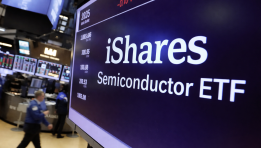
After several years of outsized gains fueled by artificial intelligence and data center expansion, semiconductor stocks are facing a more
- Lior mor
- •
- 6 Min Read
- •
- ago 11 hours
SKN | Tactical Hedge in a Volatile Chip Market: Direxion Daily Semiconductor Bear 3X Shares (SOXS)
Direxion Daily Semiconductor Bear 3X Shares (NASDAQ: SOXS) has drawn renewed attention as semiconductor equities experience sharp swings driven by
- ago 11 hours
- •
- 6 Min Read

Direxion Daily Semiconductor Bear 3X Shares (NASDAQ: SOXS) has drawn renewed attention as semiconductor equities experience sharp swings driven by

- omer bar
- •
- 6 Min Read
- •
- ago 20 hours
SKN | Is This Bank ETF the Smartest Way to Play America’s Financial Backbone?
Despite rapid advances in artificial intelligence and fintech innovation, the traditional banking system remains the structural backbone of the U.S.
- ago 20 hours
- •
- 6 Min Read

Despite rapid advances in artificial intelligence and fintech innovation, the traditional banking system remains the structural backbone of the U.S.

- orshu
- •
- 6 Min Read
- •
- ago 21 hours
SKN | Energy ETF Holds Firm as Volatility Rises: XLE Gains Ground on February 19
The Energy Select Sector SPDR ETF (XLE) advanced to $55.26 on February 19, gaining 0.87% during the trading session
- ago 21 hours
- •
- 6 Min Read

The Energy Select Sector SPDR ETF (XLE) advanced to $55.26 on February 19, gaining 0.87% during the trading session

