


- omer bar
- •
- 7 Min Read
- •
- 4 hours ago
Key Points
- Gold has risen from $1,250 in 2016 to over $5,185 per ounce in early 2026, prompting renewed allocation debate.
- Unlike equities, gold functions primarily as a hedge against systemic and monetary risk rather than a growth engine.
- Forward performance will depend largely on real interest rates, central bank policy, and geopolitical stability.

Gold’s dramatic rise over the past decade has reignited a fundamental portfolio question: does gold still deserve a strategic allocation, or has it become a late-cycle momentum trade vulnerable to reversal?
While historical comparisons — such as how much $1 million could have bought in gold in 1900 — capture attention, professional investors focus on gold’s role within diversified portfolio construction. The relevant issue is not nominal appreciation but correlation, volatility behavior, and performance during stress regimes.
Gold’s Role in Portfolio Construction
Gold does not generate earnings, dividends, or cash flow. Its value is derived from scarcity, monetary perception, and its role as a reserve asset. That structural distinction defines its purpose in asset allocation.
Historically, gold performs best during periods of negative real interest rates, elevated inflation uncertainty, sovereign debt expansion, or geopolitical instability. In such environments, it acts less as a return driver and more as a purchasing power stabilizer.
Today’s macro landscape contains several of those conditions simultaneously. Public debt levels remain elevated across developed markets, inflation volatility persists, and geopolitical risk premiums have widened. Central banks continue to accumulate gold reserves, reinforcing its status as a monetary asset rather than merely a commodity.
Allocation Size and Strategic Discipline
Institutional portfolios typically maintain modest gold allocations, often in the low- to mid-single-digit range as a percentage of total assets. At these levels, gold contributes diversification benefits due to its historically low correlation with equities and credit markets.
Larger allocations signal stronger macro conviction. An overweight position implies expectations of prolonged monetary instability or systemic financial stress. Such positioning becomes increasingly sensitive to movements in real yields and central bank tightening cycles.
At current price levels near historic highs, gold’s trajectory is closely tied to real interest rates rather than headline inflation alone. If real yields remain positive and policy stays restrictive, upside may be limited. Conversely, renewed monetary easing or inflation reacceleration could reinforce the structural case.
Geopolitical Risk and Regional Sensitivity
For investors in both the United States and Israel, geopolitical developments are not abstract variables. Escalation in the Middle East historically increases volatility in energy markets and currency flows. Gold has often served as a direct beneficiary of that uncertainty.
However, strategic allocation should not be reactive. Gold purchased during crisis peaks frequently underperforms relative to disciplined, long-term exposure established during calmer periods. Its effectiveness lies in consistent portfolio integration rather than tactical panic buying.
Insurance Rather Than Replacement
Equities have historically outperformed gold over long time horizons due to compounding earnings growth. Gold does not replace productive assets. It offsets vulnerability during systemic stress.
At today’s levels above $5,000 per ounce, gold remains a credible hedge against macro instability. Its forward performance, however, will depend heavily on real yield direction, fiscal policy trajectories, and the durability of geopolitical tensions.
The strategic question for investors is not whether gold was transformative a century ago. It is whether measured exposure today enhances portfolio resilience in a world increasingly defined by fiscal expansion, monetary experimentation, and geopolitical fragmentation.
Comparison, examination, and analysis between investment houses
Leave your details, and an expert from our team will get back to you as soon as possible
* This article, in whole or in part, does not contain any promise of investment returns, nor does it constitute professional advice to make investments in any particular field.
To read more about the full disclaimer, click here
- omer bar
- •
- 7 Min Read
- •
- ago 2 minutes
SKN | Aluminum Climbs to Multi-Month High as Iran Conflict Threatens Middle East Supply Routes
Aluminum prices advanced to their highest level since January as escalating conflict involving Iran raised fears that key shipping routes
- ago 2 minutes
- •
- 7 Min Read

Aluminum prices advanced to their highest level since January as escalating conflict involving Iran raised fears that key shipping routes

- Lior mor
- •
- 5 Min Read
- •
- ago 4 days
SKN | Gold Heads for Fourth Weekly Gain as Trade Tensions and Fed Signals Shape Outlook
Gold hovered near $5,190 per ounce on Friday, extending a two-day advance and positioning for a fourth consecutive weekly gain.
- ago 4 days
- •
- 5 Min Read

Gold hovered near $5,190 per ounce on Friday, extending a two-day advance and positioning for a fourth consecutive weekly gain.
- omer bar
- •
- 5 Min Read
- •
- ago 4 days
SKN | US-Venezuela Oil Deal Poised to Generate $2 Billion in Sales by End of February
Sales under the US-Venezuela oil supply agreement are forecast to reach $2 billion by the end of February 2026, signaling
- ago 4 days
- •
- 5 Min Read

Sales under the US-Venezuela oil supply agreement are forecast to reach $2 billion by the end of February 2026, signaling
- omer bar
- •
- 6 Min Read
- •
- ago 5 days
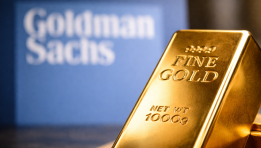
SKN | Is Gold Headed to $5,400 in 2026? Inside Goldman Sachs’ Upgraded Forecast
Gold is trading near historic highs after one of the strongest rallies in its modern history, with spot prices touching
- ago 5 days
- •
- 6 Min Read
Gold is trading near historic highs after one of the strongest rallies in its modern history, with spot prices touching

