


- sagi habasov
- •
- 7 Min Read
- •
- 24 hours ago
Key Points
- China’s exports rose 5.9% in November, even as shipments to the U.S. dropped nearly 29%.
- A record $1.08 trillion trade surplus highlights strong external demand but masks persistent domestic weakness.
- Economists expect China’s global export share to continue rising, driven by advanced manufacturing and market diversification.
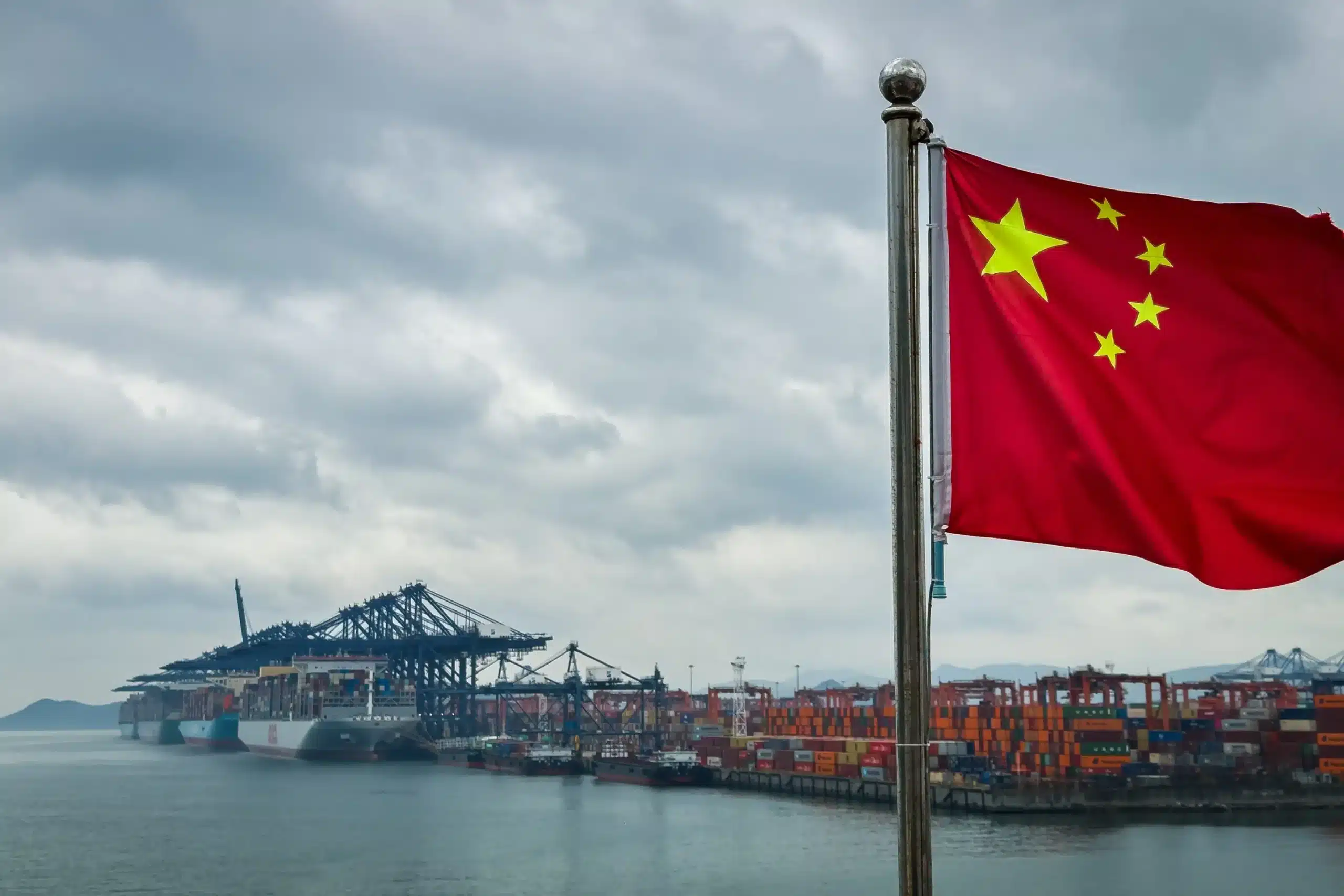
China’s November trade data offered a striking snapshot of divergence in the global economy: overall exports returned to growth with a 5.9% annual increase, even as shipments to the United States plunged nearly 29% in yet another month of deep double-digit declines. The figures underscore how China is reshaping its export strategy amid shifting geopolitical relationships, broadening its reliance on emerging markets while managing a delicate tariff truce with Washington. At the same time, a record trade surplus above $1 trillion for the year highlights both external demand resilience and persistent weakness in domestic consumption, reinforcing the country’s reliance on foreign markets to stabilize growth as internal headwinds continue.
Export Growth Strengthens as China Diversifies Beyond the U.S.
China’s $330.3 billion in exports last month exceeded economists’ expectations, reversing October’s contraction and signaling renewed momentum heading into year-end. Yet the data also exposed the structural realignment underway: shipments to the U.S. have contracted for most of 2025, weighed down by trade tensions, supply-chain decoupling, and shifts in American corporate sourcing strategies.
Beijing has compensated by deepening ties with Southeast Asia, Latin America, Africa and the European Union, where demand for Chinese machinery, electronics, and consumer goods has remained robust. This diversification reflects both opportunity and necessity. As global production networks evolve, Chinese exporters are securing footholds in markets less sensitive to geopolitical friction, positioning themselves for long-term share gains even as Western economies reassess dependencies in critical sectors.
A Surging Trade Surplus Masks Domestic Fragilities
China’s imports rose 1.9% in November, a modest improvement but still far from signaling broad-based domestic recovery. Persistent weakness in the property sector — historically a cornerstone of China’s economic engine — continues to suppress household consumption and constrain business investment. As a result, the nation’s trade surplus has ballooned to nearly $1.08 trillion for the first 11 months, overtaking previous annual records.
This growing surplus is double-edged. It supports GDP growth at a time when domestic demand remains muted, allowing Beijing to maintain its 5% growth target. But it also highlights how heavily export-driven China’s recovery remains, exposing vulnerabilities should global demand soften or geopolitical tensions flare again.
Policy Support, a Tentative Truce, and the Push for Advanced Manufacturing
The temporary tariff truce struck between President Donald Trump and President Xi Jinping in October has offered some breathing room for exporters, though economists note that the full effects of tariff reductions are unlikely to show until early 2026. ING’s Lynn Song argues that November’s export recovery likely predates the tariff relief, suggesting more upside may come.
Meanwhile, Beijing’s economic planning meeting reaffirmed long-term priorities: advanced manufacturing, technological self-sufficiency, and industrial upgrading. These ambitions align with forecasts such as Morgan Stanley’s projection that China’s global export share could reach 16.5% by 2030, driven by competitive advantages in electric vehicles, robotics, batteries and automation.
However, even with structural strengths, geopolitical risks remain unavoidable. BNP Paribas strategist Chi Lo warns that despite the temporary easing in U.S.-China relations, the strategic rivalry remains entrenched — a dynamic that could shape global trade flows for years.
Looking Ahead
China’s ability to sustain export growth while navigating weakening Western demand will be a central theme in 2026. Investors and policymakers will watch how the tariff truce evolves, whether domestic demand can stabilize without major stimulus, and how effectively China advances its manufacturing upgrade in a fragmenting global trade landscape. The coming year will test whether China’s diversification strategy can establish a durable foundation for export-driven expansion amid geopolitical volatility.
Comparison, examination, and analysis between investment houses
Leave your details, and an expert from our team will get back to you as soon as possible
* This article, in whole or in part, does not contain any promise of investment returns, nor does it constitute professional advice to make investments in any particular field.
To read more about the full disclaimer, click here
- Lior mor
- •
- 7 Min Read
- •
- ago 2 minutes
SKN | Can Pakistan Convert IMF Support Into Lasting Economic Stability?
Pakistan received a critical boost on Tuesday as the International Monetary Fund approved a $1.2 billion disbursement, reinforcing the country’s
- ago 2 minutes
- •
- 7 Min Read

Pakistan received a critical boost on Tuesday as the International Monetary Fund approved a $1.2 billion disbursement, reinforcing the country’s

- omer bar
- •
- 6 Min Read
- •
- ago 1 day
SKN | China’s November Exports Surge Beyond Expectations Following U.S. Trade Truce
China’s export sector posted a notable recovery in November, significantly exceeding forecasts and drawing attention from global investors. The surge
- ago 1 day
- •
- 6 Min Read

China’s export sector posted a notable recovery in November, significantly exceeding forecasts and drawing attention from global investors. The surge

- Ronny Mor
- •
- 7 Min Read
- •
- ago 1 day
SKN | Can China’s Export Recovery Last as U.S. Shipments Plunge 29%
China’s November trade figures offered a mixed but notable shift in global demand dynamics. While overall exports returned to growth
- ago 1 day
- •
- 7 Min Read

China’s November trade figures offered a mixed but notable shift in global demand dynamics. While overall exports returned to growth
- Lior mor
- •
- 7 Min Read
- •
- ago 2 days
SKN | Why the Fed’s Most Important Decision This Week May Have Nothing to Do With Interest Rates
The Federal Reserve is widely expected to deliver another quarter-point rate cut at its December 9–10 policy meeting, a move
- ago 2 days
- •
- 7 Min Read

The Federal Reserve is widely expected to deliver another quarter-point rate cut at its December 9–10 policy meeting, a move

