


- omer bar
- •
- 6 Min Read
- •
- 1 hour ago
Key Points
- Airbus targets 870 deliveries in 2026, below market expectations, sending shares down over 5%.
- Engine shortages and fuselage quality issues are constraining narrowbody production ramp-up.
- Boeing’s improving order and delivery momentum signals tighter competitive dynamics ahead.
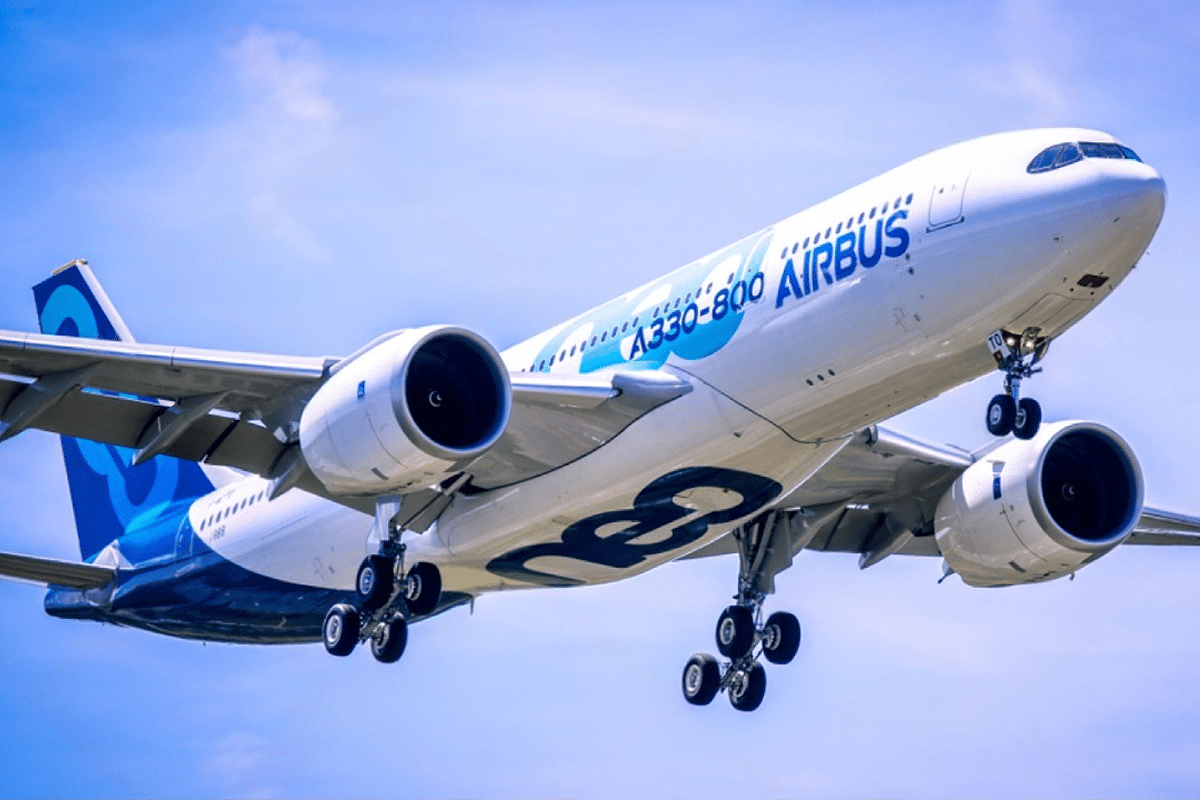
Airbus shares slid more than 5% after the European aerospace giant projected 870 commercial aircraft deliveries for 2026, slightly below analyst expectations of around 880. The muted outlook comes at a delicate juncture for the global aviation cycle, as Boeing shows early signs of operational recovery and supply-chain frictions continue to challenge Airbus’ production ramp-up. For investors, the issue is not demand—but execution.
Production Constraints Cloud Delivery Outlook
Airbus delivered 793 aircraft in 2025, narrowly exceeding its revised target of 790 after cutting an earlier goal of 820 due to supplier quality issues. Now, while global airline demand remains robust and order backlogs stretch years into the future, engine shortages from RTX subsidiary Pratt & Whitney are emerging as a central bottleneck.
CEO Guillaume Faury described the engine supply problem as “the single most important topic” facing the company. Airbus said Pratt & Whitney’s inability to meet committed engine volumes is directly constraining its guidance and slowing the A320 family ramp-up. The planemaker now expects narrowbody production to reach 70–75 aircraft per month by the end of 2027, stabilizing at 75 thereafter—slightly softer than previous ambitions.
January deliveries were particularly weak at 19 aircraft, compared with 25 in January 2025, raising concerns about another back-end-loaded year. While management attributes the early softness primarily to fuselage panel quality issues rather than engines, investors are wary of repeated supply disruptions.
Boeing Regains Momentum as Competitive Balance Shifts
For much of the past three years, Airbus benefited from Boeing’s crisis involving the 737 Max and broader production challenges. In 2025, Airbus delivered 193 more planes than its U.S. rival. However, the competitive landscape is evolving.
Boeing secured more net orders in 2025 than Airbus for the first time since 2018 and began 2026 strongly, booking 103 net orders and delivering 46 aircraft in January. By contrast, Airbus reported 49 net orders and just 19 deliveries in the same period.
Under CEO Kelly Ortberg, Boeing has signaled improving production stability and stronger operational discipline. If sustained, that recovery could narrow Airbus’ competitive advantage in the highly profitable narrowbody segment, where margins are sensitive to output rates and delivery timing.
From a market psychology perspective, Airbus is now transitioning from a “relative winner” narrative to one that must prove resilience amid normalized competition.
Financial Strength Offers Cushion, But Execution Is Key
Despite the delivery disappointment, Airbus’ financial performance remains solid. Fourth-quarter adjusted EBIT rose 17% year-on-year to 2.98 billion euros, beating consensus estimates of 2.87 billion. Full-year EBIT reached 7.13 billion euros on revenue of 73.4 billion euros, while 2026 guidance calls for approximately 7.5 billion euros in adjusted EBIT and 4.5 billion euros in free cash flow before customer financing.
These figures underscore that the challenge is operational rather than demand-driven. Airlines continue to modernize fleets amid high fuel costs and sustainability targets, providing long-term visibility.
Looking ahead, the trajectory of engine deliveries, supplier stabilization, and Boeing’s sustained recovery will define Airbus’ relative valuation. If bottlenecks ease, the production ramp could re-accelerate. If not, investor patience may wear thin in a sector where delivery growth directly translates into cash flow.
Comparison, examination, and analysis between investment houses
Leave your details, and an expert from our team will get back to you as soon as possible
* This article, in whole or in part, does not contain any promise of investment returns, nor does it constitute professional advice to make investments in any particular field.
To read more about the full disclaimer, click here
- Lior mor
- •
- 7 Min Read
- •
- ago 2 minutes
SKN | Can Walmart Sustain Its $1 Trillion Momentum as New CEO John Furner Delivers First Earnings?
Walmart enters its latest earnings season at a historic juncture. The retail giant is set to release quarterly results with
- ago 2 minutes
- •
- 7 Min Read

Walmart enters its latest earnings season at a historic juncture. The retail giant is set to release quarterly results with
- Lior mor
- •
- 6 Min Read
- •
- ago 3 hours
SKN | Can Nestlé’s Ice Cream Exit and Portfolio Reset Drive a Sustainable Growth Revival?
Nestlé shares climbed roughly 3% after the Swiss food giant delivered fourth-quarter organic sales growth of 4%, surpassing analyst expectations
- ago 3 hours
- •
- 6 Min Read

Nestlé shares climbed roughly 3% after the Swiss food giant delivered fourth-quarter organic sales growth of 4%, surpassing analyst expectations
- Lior mor
- •
- 7 Min Read
- •
- ago 1 day
SKN | Western Digital to Sell $3.17 Billion Stake in Sandisk: Strategic Exit or Capital Repositioning?
Western Digital is moving to monetize part of its investment in flash memory maker Sandisk, announcing plans to sell a
- ago 1 day
- •
- 7 Min Read

Western Digital is moving to monetize part of its investment in flash memory maker Sandisk, announcing plans to sell a
- Lior mor
- •
- 7 Min Read
- •
- ago 3 days
SKN | Can 3M’s New Government Affairs Chief Strengthen Growth Through Policy and Contracts?
3M has appointed Meagan Linn as Senior Vice President of Government Affairs, a strategic move that underscores the industrial conglomerate’s
- ago 3 days
- •
- 7 Min Read

3M has appointed Meagan Linn as Senior Vice President of Government Affairs, a strategic move that underscores the industrial conglomerate’s

