





- Lior mor
- •
- 7 Min Read
- •
- 3 weeks ago
Key Points
- The hawkish Federal Reserve, under the leadership of new Chair Kevin Warsh, has significantly driven up hedging costs for foreign investors, prompting them to leave their currency exposure unhedged.
- Leading institutional investors in Canada, Denmark, and the Netherlands have steadily reduced their U.S. dollar hedging ratios, removing a major source of structural selling pressure on the greenback.
- Following the financial instability of early 2025 ("Liberation Day"), the U.S. dollar has reclaimed its traditional safe-haven status amid escalating global geopolitical tensions.

The steady strengthening of the U.S. dollar throughout 2026, driven by a hawkish monetary stance from the Federal Reserve, has recently received a major and unexpected boost from global financial institutions. Giant pension funds worldwide, which rushed to aggressively hedge their greenback exposure last year amid market turmoil, are now shifting course and allowing these hedging contracts to expire without replacement. This move not only relieves structural pressure on the dollar but also challenges the popular narrative that foreign investors are steering clear of American assets.
The U.S. Monetary Shift and Rising Hedging Costs
The primary driver behind this shift in foreign fund management strategy is the Federal Reserve’s restrictive monetary policy. The appointment of Kevin Warsh as Fed Chair, alongside stubborn inflation data, has pushed U.S. real (inflation-adjusted) interest rates significantly higher in recent months. Because the cost of hedging is determined by the interest rate differential between an investor’s home country and the United States, the widening gap—with U.S. short-term rates currently sitting about 140 basis points above those of the Eurozone—makes buying protection against currency fluctuations highly expensive, dragging down net institutional yields. Consequently, many asset managers are choosing to leave their U.S. equity holdings fully exposed to currency swings.
Active Trend Reversal Among Global Pension Funds
An in-depth analysis by Wells Fargo reveals that this trend is highly visible among Canadian, Danish, and Dutch pension funds. Hedging ratios, which measure how much of a fund’s dollar exposure is actively protected, have steadily declined. Danish funds have reversed roughly half of the dollar hedging increase they implemented in mid-2025, with their hedging ratios dropping by about five percentage points. Meanwhile, Canadian funds recorded a one-percentage-point decline over the past year. Forex experts explain that this is largely a passive process; fund managers are allowing forward contracts to expire naturally without opening new protective positions, recognizing that the economic resilience of the U.S. justifies taking on the currency risk.
Re-established Correlation Between the Dollar and Equities, and the Role of Tech
Beyond funding costs, changes in market behavior have also contributed to the decision to stop hedging. In early 2025, following global tariffs dubbed the “Liberation Day” shock, the dollar and U.S. equities fell in tandem, delivering a painful double blow to foreign investors with substantial Wall Street exposure. This year, however, traditional market relationships have returned, and the greenback has reclaimed its role as a classic safe-haven asset, especially amid security tensions between the U.S. and Iran. Additionally, renewed confidence in the Fed’s independence under its new leadership has eased the financial anxieties that accompanied the previous administration’s repeated attacks on former Chair Jerome Powell. Now, as long as the artificial intelligence revolution continues to drive tech growth on Wall Street, foreign investors prefer direct and unhedged dollar exposure.
Summary
The current shift in the forex strategies of global financial institutions removes a major headwind for the U.S. dollar, cementing its dominance in global markets. As long as interest rate differentials favor the U.S. and tech stock yields drive risk appetite, the dollar is poised to maintain its outperformance. However, Wall Street risk managers warn that this is a delicate equilibrium. If the market enthusiasm surrounding artificial intelligence proves to be overvalued, or if U.S. economic growth slows dramatically, global pension funds will be forced to quickly pivot back to hedging, potentially destabilizing the greenback once again.
Comparison, examination, and analysis between investment houses
Leave your details, and an expert from our team will get back to you as soon as possible
* This article, in whole or in part, does not contain any promise of investment returns, nor does it constitute professional advice to make investments in any particular field.
To read more about the full disclaimer, click here
- Lior mor
- •
- 8 Min Read
- •
- ago 3 hours
SKN | U.S.-Backed Yen Intervention Lifts Japanese Currency, but Analysts Warn Structural Weakness Persists
The Japanese yen posted a sharp rebound after coordinated intervention supported by the United States helped lift the currency from
- ago 3 hours
- •
- 8 Min Read
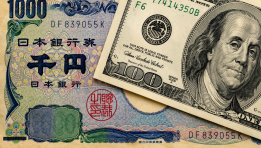
The Japanese yen posted a sharp rebound after coordinated intervention supported by the United States helped lift the currency from

- Ronny Mor
- •
- 7 Min Read
- •
- ago 4 days
SKN | Coinbase Shares Slide After Q2 Earnings Miss as Crypto Trading Weakness Persists
Coinbase Global (NASDAQ: COIN) shares fell more than 7% in after-hours trading after the cryptocurrency exchange reported second-quarter results that
- ago 4 days
- •
- 7 Min Read

Coinbase Global (NASDAQ: COIN) shares fell more than 7% in after-hours trading after the cryptocurrency exchange reported second-quarter results that
- Ronny Mor
- •
- 6 Min Read
- •
- ago 2 weeks
SKN | British Pound Gains as Andy Burnham Takes Office and Markets Anticipate Fiscal Stability
The British pound strengthened against the U.S. dollar after Andy Burnham officially became the United Kingdom's Prime Minister, marking the
- ago 2 weeks
- •
- 6 Min Read
The British pound strengthened against the U.S. dollar after Andy Burnham officially became the United Kingdom's Prime Minister, marking the
- Lior mor
- •
- 10 Min Read
- •
- ago 1 month
SKN | The Dollar Outperformance Phase: Bank of America Targets 5% Shekel Depreciation on Fed Tightening and Institutional De-Risking
Systemic realignments across cross-border foreign exchange structures and domestic credit clearings are registering high-velocity variance in late June 2026. The
- ago 1 month
- •
- 10 Min Read
Systemic realignments across cross-border foreign exchange structures and domestic credit clearings are registering high-velocity variance in late June 2026. The


