





- orshu
- •
- 7 Min Read
- •
- 4 hours ago
Key Points
- European markets outperformed during the week, with Germany’s DAX rising 4.49%, the MSCI Europe Index advancing 2.70%, and the FTSE 100 gaining 1.63%.
- Market volatility eased significantly as the CBOE Volatility Index (VIX) fell 14.12%, reflecting reduced demand for downside protection despite mixed performances across global equities.
- Israeli markets strengthened, with the TA-35 climbing 2.37% and the TA-125 advancing 2.71%, while South Korea’s KOSPI remained the weakest major benchmark, falling 3.65%.
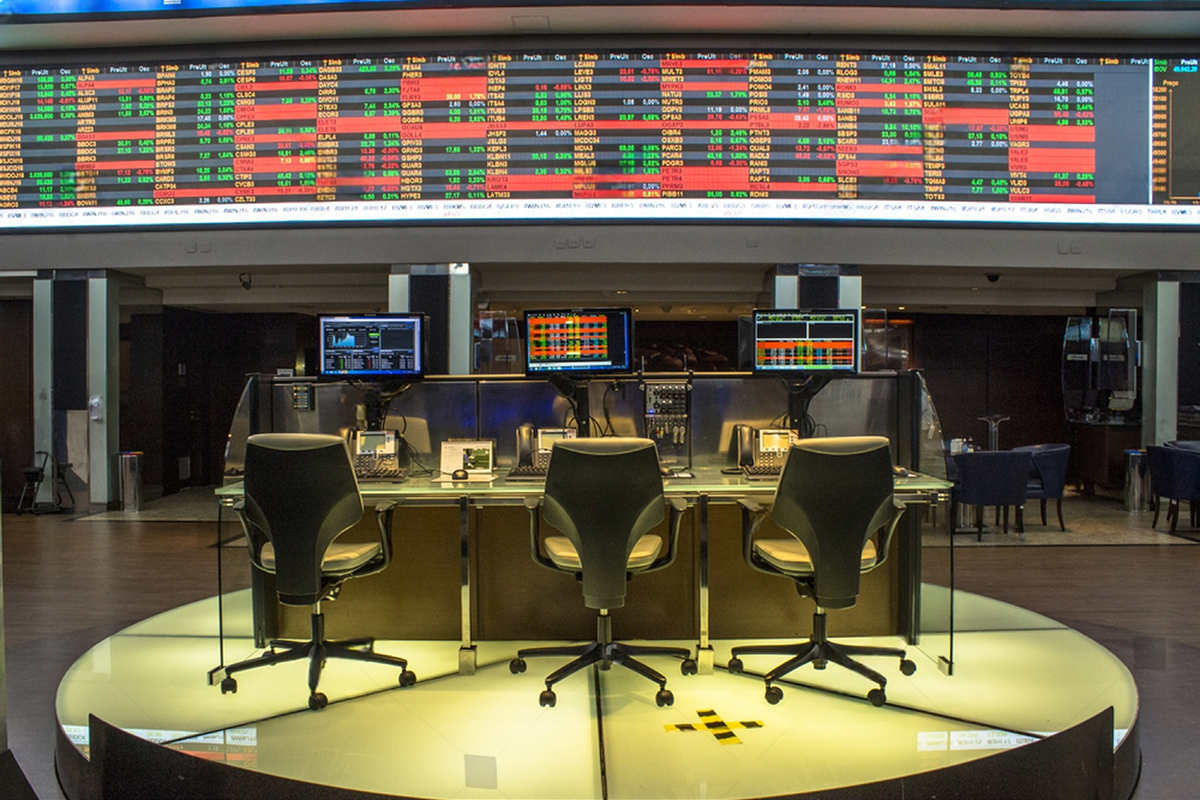
The defining story of the week was not that most global equity markets finished higher—it was that they did so while investors sharply reduced demand for portfolio protection. The VIX dropped 14.12% over the week, its largest move among the major indicators, even as performance across regional markets remained uneven. Europe rallied strongly, Israel recovered from the previous week’s weakness, yet South Korea continued to struggle. That divergence illustrates a market becoming more selective rather than broadly optimistic.
Unlike previous weeks, investors were willing to rotate back into equities while simultaneously pricing in less short-term uncertainty. The combination of declining volatility and stronger performances across Europe and parts of the Middle East suggested that confidence improved, although pockets of weakness remained in Asia.
Falling Volatility Signals Renewed Risk Appetite
The CBOE Volatility Index (VIX) fell 14.12% during the week, marking one of the clearest indicators that investor sentiment improved. A declining VIX generally reflects reduced demand for options-based portfolio insurance, suggesting institutional investors became less concerned about abrupt market declines. Lower hedging activity typically accompanies periods in which investors feel more comfortable increasing exposure to risk assets.
The U.S. Dollar Index slipped 0.25%, reinforcing the broader improvement in market sentiment. While the decline was modest, a softer dollar often coincides with greater willingness among investors to allocate capital toward equities and international assets rather than defensive positions. Together, the weaker dollar and lower volatility created a more supportive environment for global markets than had been seen in recent weeks.
The week’s performance suggested that investors were becoming more confident that near-term macroeconomic risks remained manageable, although regional differences continued to shape market leadership.
Europe Leads the Recovery While U.S. Markets Deliver Mixed Results
European equities delivered the strongest regional performance. Germany’s DAX surged 4.49%, making it the best-performing major developed-market benchmark of the week. The broader MSCI Europe Index gained 2.70%, while France’s CAC 40 advanced 1.47% and the FTSE 100 climbed 1.63%. The gains reflected improving investor confidence toward European corporate earnings, economic resilience, and reduced market volatility across the region.
In the United States, performance was more balanced. The Dow Jones Industrial Average rose 1.89%, the Nasdaq Composite gained 1.87%, and the S&P 500 advanced 1.71%, indicating continued support for large-cap equities. However, the Russell 2000 slipped 0.39%, suggesting investors remained somewhat cautious toward smaller companies that are generally more sensitive to domestic economic conditions and financing costs.
Israeli Markets Recover While Asia Remains Uneven
Israeli equities rebounded after consecutive weeks of declines. The TA-125 rose 2.71%, while the TA-35 gained 2.37%, indicating renewed investor confidence across a broad range of sectors. The recovery likely reflected a combination of bargain hunting, institutional repositioning, and improved global risk sentiment, although geopolitical developments remain an important variable for domestic investors.
Asia presented a more mixed picture. Hong Kong’s Hang Seng Index increased 1.18%, China’s Shanghai Composite edged up 0.41%, and Japan’s Nikkei 225 added 0.40%. South Korea remained the notable exception, with the KOSPI falling 3.65%. Given the country’s heavy dependence on semiconductor exports and global manufacturing demand, the decline suggests investors remained cautious toward export-driven economies despite improving sentiment elsewhere.
Looking ahead, investors will be watching whether this week’s sharp decline in volatility marks the beginning of a more durable improvement in global risk appetite or merely a temporary pause following recent market turbulence. Attention will likely shift toward upcoming corporate earnings guidance, inflation data, and central bank communication, all of which will help determine whether equities can sustain their recent momentum. For Israeli investors, the key question will be whether the rebound in the TA-35 and TA-125 develops into a broader recovery or proves to be a short-lived relief rally.
Comparison, examination, and analysis between investment houses
Leave your details, and an expert from our team will get back to you as soon as possible
* This article, in whole or in part, does not contain any promise of investment returns, nor does it constitute professional advice to make investments in any particular field.
To read more about the full disclaimer, click here
- orshu
- •
- 7 Min Read
- •
- ago 1 week
SKN | Global Markets Weekly Performance Review (June 22–June 26, 2026): Risk Aversion Returns as Asian and Israeli Markets Lead Global Declines
The defining story of the week was not simply that technology stocks retreated or that Asian markets posted some
- ago 1 week
- •
- 7 Min Read

The defining story of the week was not simply that technology stocks retreated or that Asian markets posted some
- orshu
- •
- 7 Min Read
- •
- ago 2 weeks
SKN | Global Markets Weekly Performance Review (June 15–June 19, 2026): Strong U.S. and Asian Gains Offset Rising Dollar and Weakness in Israel
The most important market contradiction of the week was that investors continued buying equities even as the U.S. dollar
- ago 2 weeks
- •
- 7 Min Read
The most important market contradiction of the week was that investors continued buying equities even as the U.S. dollar
- orshu
- •
- 7 Min Read
- •
- ago 3 weeks
SKN | Global Markets Weekly Performance Review (June 08–June 12, 2026): Falling Volatility, South Korea Leads Rally, and Global Risk Appetite Returns
The biggest story of the week was not that the Nasdaq gained 0.70% or that the S&P 500 rose
- ago 3 weeks
- •
- 7 Min Read
The biggest story of the week was not that the Nasdaq gained 0.70% or that the S&P 500 rose
- orshu
- •
- 7 Min Read
- •
- ago 4 weeks
SKN | Global Markets Weekly Performance Review (June 01–June 05, 2026): Volatility Surges as Equities Retreat Across Major Regions
The defining story of the week was not simply that the Nasdaq fell 4.68% or that the S&P 500
- ago 4 weeks
- •
- 7 Min Read
The defining story of the week was not simply that the Nasdaq fell 4.68% or that the S&P 500


