





- Lior mor
- •
- 6 Min Read
- •
- 8 hours ago
Key Points
- The UK benchmark FTSE 100 Index (^FTSE) concluded the week higher at 10,508.02, representing a 1.40% gain over the trailing five days.
- Mid-week momentum lifted the index toward the 10,550 level before a sharp Friday reversal wiped out a portion of the structural gains.
- Global allocators and institutional investors remain focused on Bank of England policy directions, currency volatility, and evolving fiscal risks.
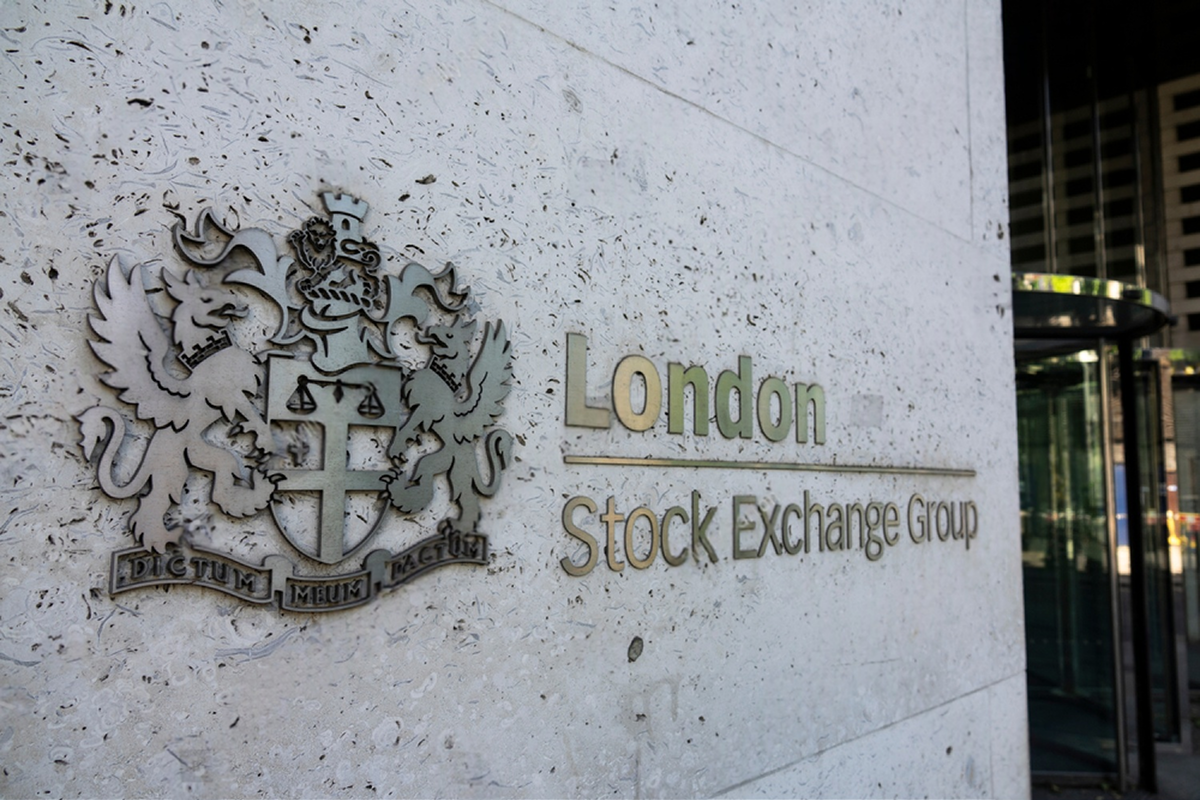
The UK benchmark FTSE 100 Index (^FTSE) finished the week higher at 10,508.02, reflecting a resilient but highly sensitive performance across British capital markets. Although regional large-cap equities faced sudden profit-taking and localized volatility during the final session, the index managed a net positive performance over the trailing five days as investors balanced corporate stability with an evolving global macroeconomic backdrop.
Index Demonstrates Stability with Underlying Intraday Volatility The five-day trading pattern highlighted a market actively searching for direction amid shifting global risk sentiment. Early-week sessions saw the index establish a solid support floor, dipping to intermediate lows near 10,354.98 on June 23 before buyers systematically rotated back into equities, driving the benchmark toward multi-day peaks approaching 10,550. Friday’s trading, however, induced a moderate 0.21% contraction, dragging the index down to an intraday low of 10,404.73 before a late-session recovery trimmed daily losses. While the benchmark remains securely positioned within its broader 52-week range of 8,726.90 to 10,934.90, this late-week volatility underscores the tactical risk adjustments maintained by major market participants.
Monetary Policy Expectations and Inflationary Trends The primary macro driver behind the FTSE 100’s recent trajectory remains the ongoing evaluation of the Bank of England’s (BoE) monetary policy path. Institutional allocators are continuously parsing domestic labor market tightness and services-sector sticky inflation to gauge the probability and timing of future interest rate reductions. Because a significant portion of the index’s heavyweights rely heavily on international revenue streams, any widening or narrowing of expected yield differentials between the United Kingdom and the United States can rapidly shift capital allocations. This complex interest-rate outlook keeps near-term corporate earnings visibility constrained, forcing a more defensive approach to domestic equity exposure.
Global Portfolio Implications and Currency Risks For Israeli institutional investors and internationally diversified asset allocators, the performance of UK equities introduces key structural risk considerations, particularly regarding currency volatility and geopolitical premiums. Fluctuations in the British Pound relative to the Euro, U.S. Dollar, and Israeli Shekel alter total return profiles, making active currency hedging a vital component of cross-border risk management. Underlying vulnerabilities, including sovereign fiscal configurations and global trade realignments, add layers of operational complexity, necessitating active risk mitigation to safeguard international equity portfolios from localized macroeconomic shocks.
Outlook: Looking ahead, the outlook for the FTSE 100 Index remains carefully balanced, but near-term stability will likely depend on incoming consumer price index (CPI) prints, industrial output metrics, and clear forward guidance from central bank officials. Markets will also closely monitor global commodity price movements and shifting fiscal adjustments that could trigger sudden asset reallocations. While UK equities retain structural appeal at current valuations, meaningful downside risks remain prevalent if core inflation reaccelerates or global financial market volatility intensifies. Conversely, evidence of consistent economic stabilization and resilient corporate guidance could catalyze a steady, non-linear recovery back toward the upper bounds of its annual range near 10,934.
Comparison, examination, and analysis between investment houses
Leave your details, and an expert from our team will get back to you as soon as possible
* This article, in whole or in part, does not contain any promise of investment returns, nor does it constitute professional advice to make investments in any particular field.
To read more about the full disclaimer, click here
- Arik Arkadi Sluzki
- •
- 6 Min Read
- •
- ago 2 hours
SKN | Nikkei 225 Sharpens Correction as Bank of Japan Normalization and Global Tech De-risking Weigh on Japanese Equities
The Japanese benchmark Nikkei 225 Index (^N225) finished the week sharply lower at 69,360.88, reflecting a highly pressured and
- ago 2 hours
- •
- 6 Min Read
The Japanese benchmark Nikkei 225 Index (^N225) finished the week sharply lower at 69,360.88, reflecting a highly pressured and

- sagi habasov
- •
- 6 Min Read
- •
- ago 2 hours
SKN | KOSPI Composite Index Sharpens Decline as Tech Sector Pressures and Global Macro Headwinds Weigh on South Korean Equities
The South Korean benchmark KOSPI Composite Index (^KS11) finished the week sharply lower at 8,411.21, reflecting a highly pressured
- ago 2 hours
- •
- 6 Min Read

The South Korean benchmark KOSPI Composite Index (^KS11) finished the week sharply lower at 8,411.21, reflecting a highly pressured

- orshu
- •
- 6 Min Read
- •
- ago 2 hours
SKN | Japanese Yen Index Hovers Near Annual Lows as Markets Reassess Global Rate Trajectories
The Japanese Yen Currency Index (^XDN) finished the week marginally lower at 61.82, reflecting a pressured and cautious performance
- ago 2 hours
- •
- 6 Min Read

The Japanese Yen Currency Index (^XDN) finished the week marginally lower at 61.82, reflecting a pressured and cautious performance

- Ronny Mor
- •
- 6 Min Read
- •
- ago 2 hours
SKN | SSE Composite Index Retreets as Growth Concerns and Policy Uncertainties Weigh on Chinese Equities
The Chinese benchmark SSE Composite Index (000001.SS) finished the week lower at 4,027.27, reflecting a pressured and cautious performance
- ago 2 hours
- •
- 6 Min Read

The Chinese benchmark SSE Composite Index (000001.SS) finished the week lower at 4,027.27, reflecting a pressured and cautious performance


