


- orshu
- •
- 6 Min Read
- •
- 20 minutes ago
Key Points
- Major European indices closed sharply lower, with the DAX down 3.65% and EURO STOXX 50 off 3.57%.
- MSCI Europe fell 3.85%, reflecting broad-based selling across sectors.
- Euro and British pound weakened, signaling defensive currency flows.

European equity markets closed deeply in negative territory on March 3, marking one of the sharpest regional pullbacks in recent sessions. Broad-based declines across Germany, France, and the UK suggest synchronized risk aversion rather than isolated national weakness.
The DAX dropped 3.65% to 23,737.68, while the EURO STOXX 50 declined 3.57% to 5,772.91. France’s CAC 40 slid 3.36%, and the FTSE 100 lost 2.84%, underscoring widespread pressure across core European benchmarks.
Broad-Based Equity Selloff Signals Risk Repricing
The magnitude of declines across indices indicates a systemic shift in investor positioning. The MSCI Europe, a key regional benchmark, fell 3.85%, reflecting weakness across financials, industrials, technology, and consumer sectors.
Large-cap exporters, particularly in Germany and France, were vulnerable amid currency volatility and global growth concerns. European equities are highly sensitive to global trade flows, making them responsive to macroeconomic uncertainty in both the United States and emerging markets.
Sharp intraday moves also suggest institutional repositioning, potentially linked to portfolio rebalancing or volatility-driven strategies. When volatility accelerates globally, European markets often mirror U.S. risk-off dynamics.
Currency Weakness Reinforces Defensive Tone
The Euro Index declined 0.83% to 115.92, while the British Pound Index fell 0.65% to 133.16. Currency depreciation can reflect capital outflows or investor preference for safe-haven assets such as the U.S. dollar.
A weaker euro can provide longer-term export support, but in the short term it often signals financial stress or shifting capital flows. European corporate earnings, particularly for multinational firms, may experience mixed effects depending on revenue exposure and cost structures.
Currency movements also interact with inflation expectations and European Central Bank policy considerations. Exchange rate volatility may complicate monetary policy calibration if sustained.
Sector Sensitivity and Cross-Asset Implications
Industrial and cyclical sectors bore significant pressure during the session. These segments typically react strongly to concerns about slowing global demand. Financials were also affected, reflecting potential yield curve shifts and credit risk reassessments.
Energy and commodity-linked stocks may have faced additional volatility depending on crude price movements and global demand projections. European markets remain sensitive to energy supply dynamics, particularly in light of geopolitical and supply chain considerations.
For Israeli and international investors with exposure to European equities, the session highlights the importance of diversification across regions and asset classes. Correlations between U.S. and European markets appear elevated, amplifying global volatility transmission.
Looking ahead, investors will monitor upcoming European Central Bank commentary, inflation data, and global macro indicators to assess whether the selloff stabilizes or deepens. Currency movements and bond yield trends will be particularly critical in shaping near-term equity sentiment. If volatility subsides and macro signals provide clarity, markets may attempt consolidation. However, sustained weakness across major indices could prompt further defensive allocation and sector rotation. The coming sessions will determine whether March 3 represents a temporary adjustment or the start of a more extended recalibration in European risk assets.
Comparison, examination, and analysis between investment houses
Leave your details, and an expert from our team will get back to you as soon as possible
* This article, in whole or in part, does not contain any promise of investment returns, nor does it constitute professional advice to make investments in any particular field.
To read more about the full disclaimer, click here
- orshu
- •
- 6 Min Read
- •
- ago 32 minutes
SKN| Israel Market Close Today, February 3, 2026: Tel Aviv Indices Surge Over 4% in Powerful Broad-Based Rally
Israeli financial markets closed on February 3, 2026, with an explosive rally that lifted all major equity indices by more
- ago 32 minutes
- •
- 6 Min Read

Israeli financial markets closed on February 3, 2026, with an explosive rally that lifted all major equity indices by more
- orshu
- •
- 6 Min Read
- •
- ago 2 hours
SKN | U.S. Stocks Slide as VIX Surges Above 25 on March 3: Is Risk Aversion Taking Control?
U.S. equities opened the week under pronounced pressure on March 3, with all major benchmarks trading decisively lower during
- ago 2 hours
- •
- 6 Min Read

U.S. equities opened the week under pronounced pressure on March 3, with all major benchmarks trading decisively lower during
- orshu
- •
- 5 Min Read
- •
- ago 6 hours
SKN | Asia Markets Plunge on March 3, 2026 as South Korea Crashes 7.24% and Japan Sinks 3.06%; India and Thailand Shut for Holidays
Asian markets closed sharply lower on March 3, 2026, as heavy selling swept across major equity benchmarks. The downturn was
- ago 6 hours
- •
- 5 Min Read
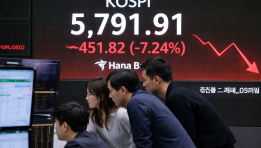
Asian markets closed sharply lower on March 3, 2026, as heavy selling swept across major equity benchmarks. The downturn was
- orshu
- •
- 6 Min Read
- •
- ago 20 hours
SKN | US Markets Close Mixed on March 2, 2026 as Small Caps Lead Gains Despite Rising Volatility
U.S. equity markets closed mixed on Monday, March 2, 2026, as investors navigated rising volatility and a strengthening U.S. dollar.
- ago 20 hours
- •
- 6 Min Read

U.S. equity markets closed mixed on Monday, March 2, 2026, as investors navigated rising volatility and a strengthening U.S. dollar.

