


- orshu
- •
- 8 Min Read
- •
- 2 months ago
Key Points
- European equities post broad declines, led by sharp losses in the CAC 40, Euro Stoxx 50, and Euronext 100.
- Germany’s DAX and the FTSE 100 retreat as investors reduce risk exposure following recent volatility.
- The euro and British pound weaken modestly, while the MSCI Europe reading reflects a technical distortion rather than systemic stress.
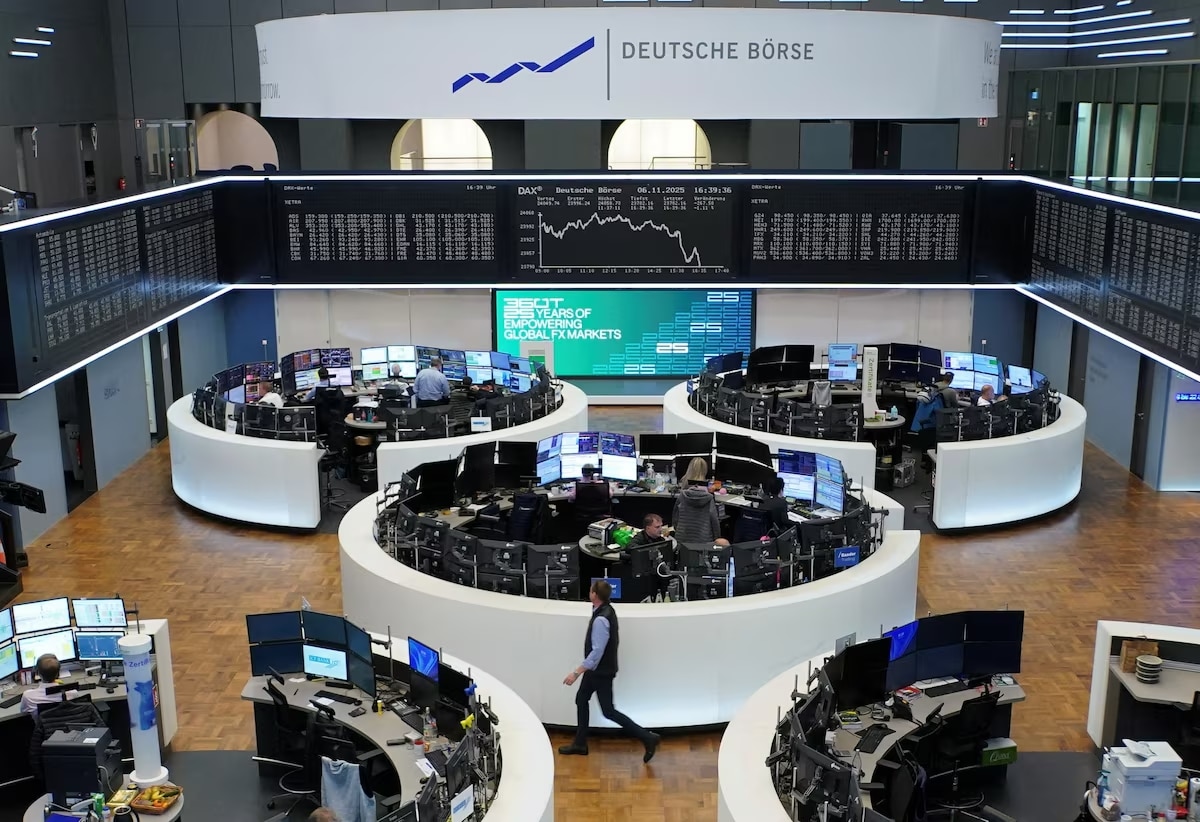
European markets opened the week under heavy pressure on Monday, January 19, 2026, as a wave of risk aversion swept across the region. After a stretch of selective gains and consolidation, investors moved decisively toward the sidelines, triggering broad-based selling across major benchmarks. The session was characterized by heightened caution, profit-taking, and sensitivity to global macro uncertainty, with losses concentrated in cyclical and growth-sensitive sectors.Sharp Declines Hit Core European Indices
France’s CAC 40 was among the hardest hit, sliding 1.70% to 8,118.51. Losses were widespread across industrials, consumer discretionary stocks, and financials, reflecting renewed concern around earnings visibility and external demand. The sell-off erased recent gains and pushed the index back toward earlier January levels.
The EURO STOXX 50 fell 1.58% to 5,933.96, highlighting pronounced weakness among eurozone blue-chip stocks. Financials and industrials led the decline, reversing sectors that had previously benefited from early-year optimism and supportive currency dynamics. The abrupt move suggests investors are reassessing risk after the recent rebound and growing more cautious on near-term growth expectations.
Germany’s DAX dropped 1.39% to 24,940.47, with export-oriented and industrial names underperforming. The decline underscores renewed sensitivity to global demand signals and currency pressures. Despite Germany’s structural strengths, short-term sentiment clearly shifted toward defense.
Pan-European and U.K. Markets Follow Lower
Selling pressure extended beyond the eurozone core. The Euronext 100 plunged 1.49% to 1,760.53, reflecting reduced appetite for multinational firms with broad global exposure. The breadth of losses points to a coordinated pullback rather than index-specific weakness.
In the U.K., the FTSE 100 declined 0.41% to 10,193.83. While the drop was less severe than on the continent, weakness in financials and energy stocks weighed on performance. Defensive sectors offered only limited insulation as investors broadly trimmed exposure in response to the risk-off shift.
Currency Movements Offer Limited Relief
Currency markets provided little support during the session. The Euro Index slipped 0.11% to 115.96, while the British Pound Index was effectively flat at 133.80. Although weaker currencies can support exporters over time, the immediate impact was muted as equity markets focused on capital preservation rather than earnings competitiveness.
The lack of a decisive currency response suggests that the sell-off was driven more by sentiment and positioning than by foreign exchange dynamics.
MSCI Europe Reading Reflects Technical Distortion
The MSCI Europe Index was reported with an unusually large percentage decline that does not align with the observed price action across underlying indices. This appears to reflect a technical or data-related distortion rather than a genuine collapse in regional equity values. Excluding this anomaly, the broader regional picture points to a sharp but orderly pullback rather than systemic stress.
Outlook
Looking ahead, European markets may remain volatile as investors digest the abrupt shift in sentiment and await clearer macro signals. Key risks include further profit-taking following the early-January rally, uncertainty around global growth trajectories, and potential spillovers from geopolitical or policy developments. At the same time, periods of sharp pullback often create selective opportunities in high-quality large-cap stocks and defensive sectors with resilient cash flows. As the week unfolds, market direction is likely to hinge on incoming economic data, central bank commentary, and whether risk appetite can stabilize after today’s broad-based sell-off.
Comparison, examination, and analysis between investment houses
Leave your details, and an expert from our team will get back to you as soon as possible
* This article, in whole or in part, does not contain any promise of investment returns, nor does it constitute professional advice to make investments in any particular field.
To read more about the full disclaimer, click here
- orshu
- •
- 6 Min Read
- •
- ago 3 hours
SKN | US Markets Close Mixed on March 10, 2026 as Investors Pause After Recent Volatility
U.S. equity markets closed with mixed results on Tuesday, March 10, 2026, as investors adopted a cautious stance following recent
- ago 3 hours
- •
- 6 Min Read

U.S. equity markets closed with mixed results on Tuesday, March 10, 2026, as investors adopted a cautious stance following recent
- orshu
- •
- 7 Min Read
- •
- ago 7 hours
SKN | South Korea’s KOSPI Surges Over 5% in Powerful Rally — What Drove the March 10 Market Breakout?
South Korea’s KOSPI Composite Index delivered a powerful rally on March 10, surging 280.72 points (+5.35%) to close at
- ago 7 hours
- •
- 7 Min Read

South Korea’s KOSPI Composite Index delivered a powerful rally on March 10, surging 280.72 points (+5.35%) to close at
- orshu
- •
- 6 Min Read
- •
- ago 8 hours
SKN | European Stocks Rally Sharply as DAX, EURO STOXX 50 Lead Broad Market Gains
European financial markets closed significantly higher on March 10, with broad-based gains across major stock indices. Investors returned to
- ago 8 hours
- •
- 6 Min Read

European financial markets closed significantly higher on March 10, with broad-based gains across major stock indices. Investors returned to
- orshu
- •
- 7 Min Read
- •
- ago 10 hours
SKN | U.S. Stocks Drift Lower as Dow and S&P 500 Slip While Volatility and Dollar Ease
Global equity markets opened the March 10 session with a cautious tone as U.S. stock indices moved slightly lower
- ago 10 hours
- •
- 7 Min Read

Global equity markets opened the March 10 session with a cautious tone as U.S. stock indices moved slightly lower

