


- omer bar
- •
- 7 Min Read
- •
- 4 hours ago
Key Points
- U.S. indexes rebound as AMD jumps on major AI infrastructure deal with Meta.
- New 10% global tariff takes effect, with potential increase to 15% under consideration.
- Markets balance AI growth momentum against rising trade and policy uncertainty.
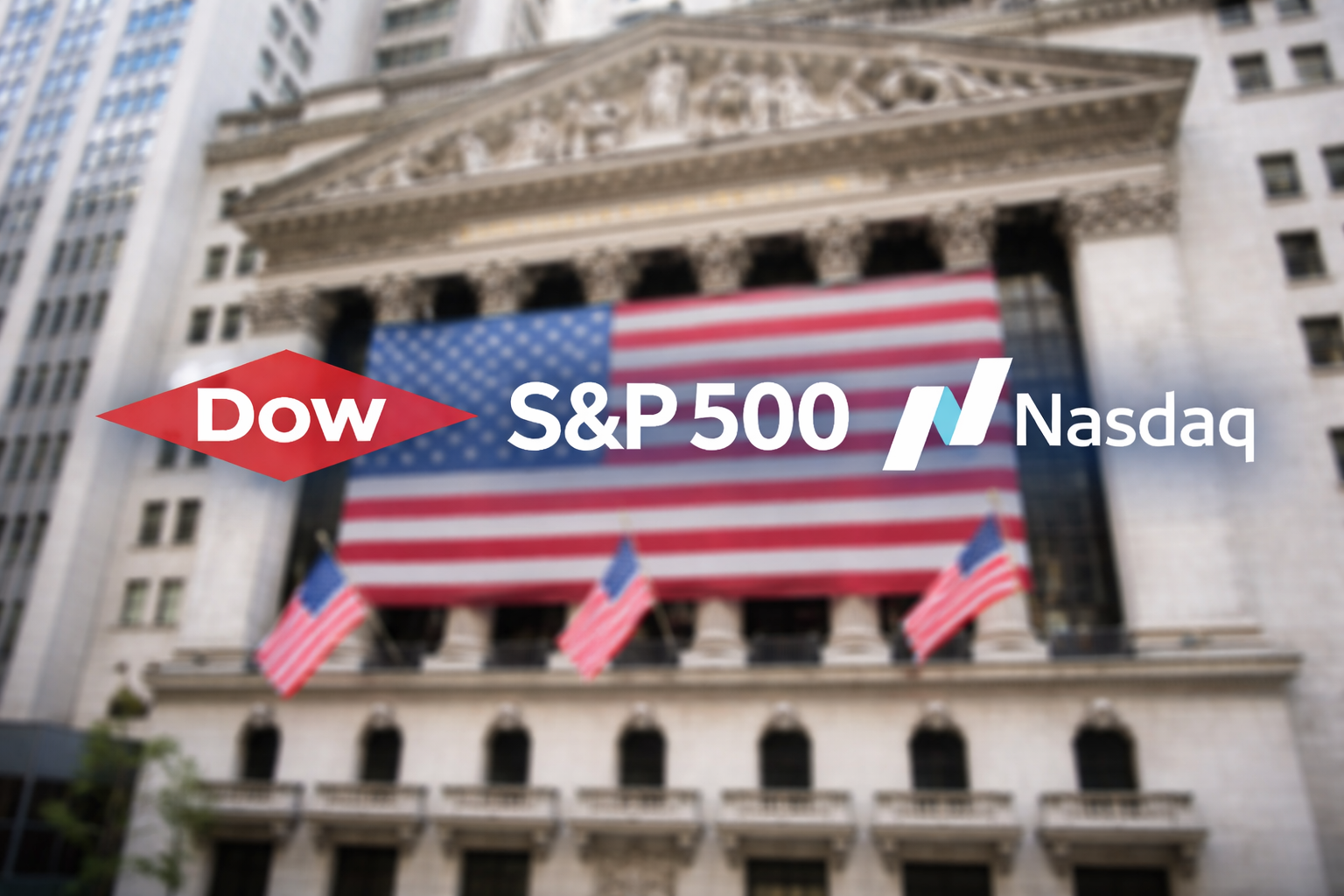
U.S. stocks opened higher Tuesday as investors attempted to recover from a sharp AI-driven sell-off, even as President Trump’s new 10% global tariff officially took effect. The rebound in major indexes reflects tactical dip-buying, yet the broader backdrop remains fragile: rapid advances in artificial intelligence are reshaping valuation models while renewed trade tensions threaten corporate margins and global supply chains.
AI Volatility Meets Selective Buying
The Dow Jones Industrial Average climbed roughly 0.9%, adding more than 400 points in early trading. The S&P 500 gained around 0.6%, while the Nasdaq Composite rose close to 0.9%. Technology shares led the bounce, with AMD surging as much as 10% after announcing a major GPU supply agreement with Meta to support the social media giant’s expanding AI infrastructure.
The rally follows Monday’s broad sell-off, where investors reacted to growing concerns that generative AI tools could disrupt large segments of corporate America, from consulting to enterprise software. IBM and other legacy technology names faced renewed pressure as markets reassessed the durability of traditional service models in a rapidly automating environment.
Tuesday’s gains suggest investors are drawing sharper distinctions between AI infrastructure beneficiaries and companies potentially vulnerable to automation-driven margin compression. For institutional portfolios, this marks a transition from indiscriminate enthusiasm to targeted positioning within the AI value chain.
Tariff Uncertainty Clouds the Recovery
Complicating the picture, President Trump’s 10% global tariff came into force Tuesday, raising fresh questions about trade stability. The European Union and Japan have protested the move, arguing it undermines previously negotiated arrangements. Reports indicate the White House is preparing a formal order to lift the rate to 15%, while exploring national security investigations into specific sectors that could trigger additional duties.
For multinational firms in the S&P 500, higher tariffs translate into potential cost pressures, pricing adjustments, and renewed supply chain recalibration. Investors are acutely aware that escalating trade friction could offset AI-driven productivity gains. Markets in both the U.S. and Israel — where many institutional investors maintain significant U.S. exposure — are particularly sensitive to shifts in global trade policy, given export linkages and tech sector integration.
Investor Psychology and the Next Catalyst
Anthropic’s virtual event unveiling updates to its Claude AI tools has further intensified scrutiny. Product launches from AI developers are now treated as macro catalysts, capable of influencing sector-wide valuations. This dynamic has contributed to what some strategists describe as an “AI volatility regime,” where narrative shifts can trigger outsized short-term moves.
At the same time, President Trump’s upcoming State of the Union address may offer critical signals regarding trade direction and economic priorities. Markets will parse not only policy specifics but also tone, searching for signs of escalation or moderation.
The coming sessions will test whether the current rebound represents stabilization or merely a pause within a broader recalibration. Investors should monitor corporate guidance revisions, hyperscaler capital expenditure trends, and developments in tariff implementation. If AI demand continues to justify infrastructure spending while trade tensions remain contained, equities may regain footing. However, a widening tariff regime or evidence of AI-driven margin compression could renew volatility, keeping risk management firmly at the forefront of institutional strategy.
Comparison, examination, and analysis between investment houses
Leave your details, and an expert from our team will get back to you as soon as possible
* This article, in whole or in part, does not contain any promise of investment returns, nor does it constitute professional advice to make investments in any particular field.
To read more about the full disclaimer, click here
- orshu
- •
- 7 Min Read
- •
- ago 2 minutes
SKN | US Markets Rally on February 24, 2026 as Volatility Drops and Small Caps Lead the Charge
U.S. equity markets closed firmly higher on Tuesday, February 24, 2026, as investors embraced a renewed wave of risk appetite.
- ago 2 minutes
- •
- 7 Min Read
U.S. equity markets closed firmly higher on Tuesday, February 24, 2026, as investors embraced a renewed wave of risk appetite.

- omer bar
- •
- 5 Min Read
- •
- ago 4 hours
SKN | Will US Tariff Relief on Metals Ease Transatlantic Trade Tensions?
European Union officials have signaled that Washington may soon take steps to ease the impact of tariffs on steel
- ago 4 hours
- •
- 5 Min Read

European Union officials have signaled that Washington may soon take steps to ease the impact of tariffs on steel
- orshu
- •
- 7 Min Read
- •
- ago 5 hours
SKN | Israel Market Close Today, February 24, 2026: Sharp Broad-Based Selloff Hits Mid-Caps and Value Stocks as Bonds Also Retreat
Israeli financial markets closed today, February 24, 2026, with a pronounced and broad-based selloff that erased recent gains and shifted
- ago 5 hours
- •
- 7 Min Read
Israeli financial markets closed today, February 24, 2026, with a pronounced and broad-based selloff that erased recent gains and shifted

- Lior mor
- •
- 5 Min Read
- •
- ago 5 hours
SKN | IBM Feels the Heat as AI Scare Trade Shakes Investor Confidence
IBM experienced notable stock weakness as AI-driven market sentiment created volatility across the technology sector. While the company continues to
- ago 5 hours
- •
- 5 Min Read
IBM experienced notable stock weakness as AI-driven market sentiment created volatility across the technology sector. While the company continues to

