


- sagi habasov
- •
- 6 Min Read
- •
- 15 minutes ago
Key Points
- 65% of EU citizens support a minimum wealth tax on the ultra-rich.
- 80% back taxing multinational companies where they operate.
- Support varies widely, reflecting differences in competitiveness and institutional trust.
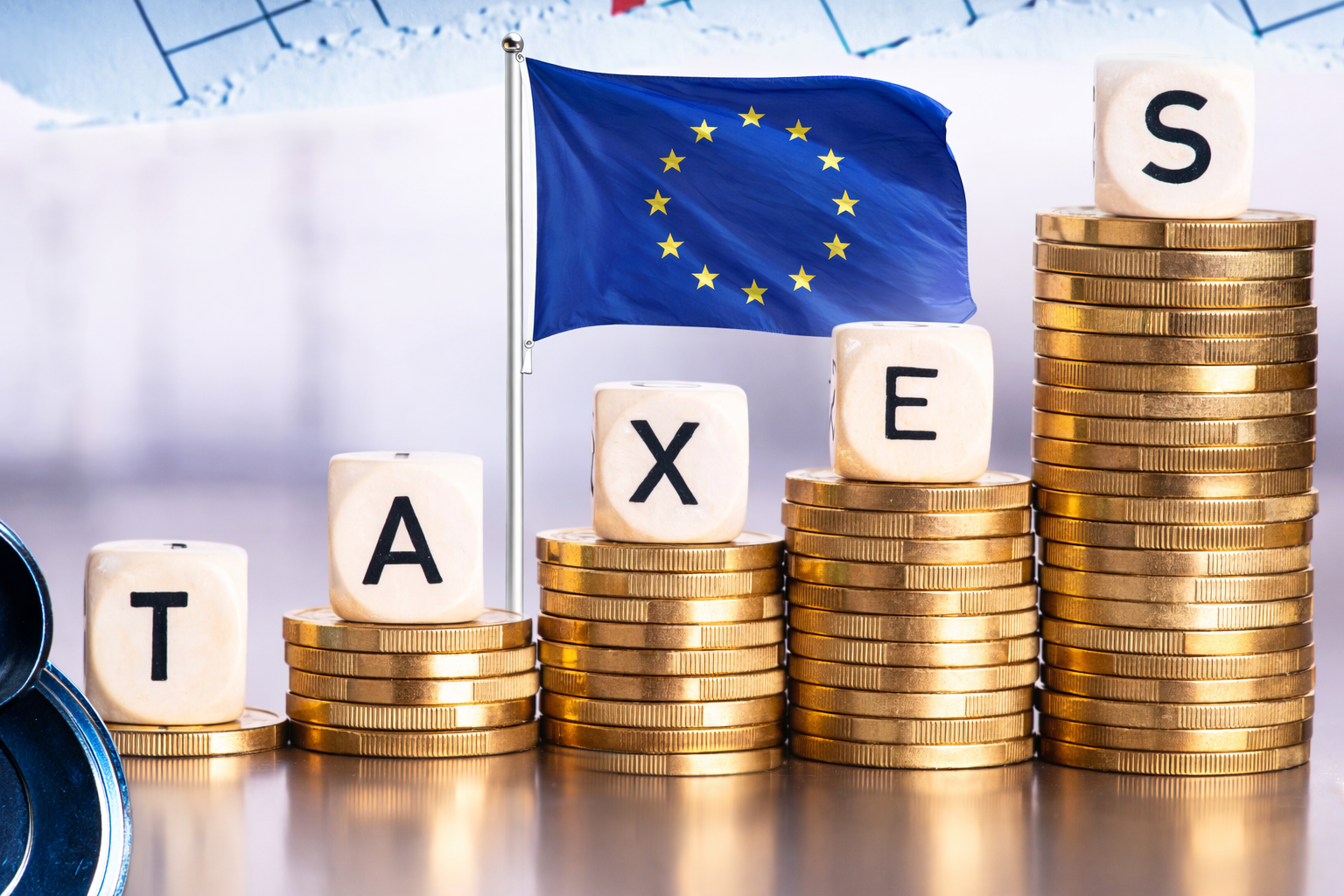
A growing majority of Europeans favor stronger taxation of wealthy individuals and large multinational corporations, reflecting rising scrutiny over tax fairness and economic inequality. According to a 2025 Eurobarometer survey, 65% of EU citizens support a minimum wealth tax on the top 0.001% in their country, while 80% back imposing a minimum level of taxation on multinational companies where they operate. The findings highlight broad political momentum — but also significant regional differences shaped by trust, competitiveness concerns, and economic structure.
Strong Support for Wealth Taxes — With Regional Gaps
Across the European Union, nearly two-thirds of respondents favor a minimum wealth tax targeting ultra-high-net-worth individuals. Support is especially strong in Hungary (78%), Bulgaria, Romania, Croatia, and Greece (all above 70%). Italy leads among the EU’s largest economies at 70%, followed closely by Germany and Spain at 69%, while France aligns with the EU average at 65%.
However, backing drops sharply in some countries. Only 45% of respondents in Czechia support such a measure, and support falls below 50% in Poland and Denmark. In these lower-support countries, “don’t know” responses are relatively high, suggesting uncertainty or skepticism about implementation and economic consequences.
Experts attribute these differences to varying levels of trust in public institutions and perceptions of redistribution effectiveness. Countries with stronger social welfare systems and higher perceived service quality tend to show greater acceptance of progressive taxation.
Overwhelming Backing for Taxing Multinationals
Support for minimum corporate taxation is even stronger. Eighty percent of EU respondents agree that multinational companies should pay a minimum level of tax where they generate profits, with 44% strongly agreeing. Greece (87%), Austria (86%), Bulgaria (84%), France (83%), Finland (83%), Portugal (83%), Malta (83%), Croatia (82%), Germany (82%), and Luxembourg (81%) report particularly high approval rates.
Only a handful of countries fall below three-quarters support, including Hungary (67%), Latvia (72%), Slovenia (73%), Slovakia (73%), and Czechia (74%). The divergence reflects differing economic strategies. Nations such as Hungary and Latvia rely heavily on low corporate tax rates to attract foreign direct investment, making voters more cautious about policies that could reduce competitiveness.
In contrast, Austria and Germany display high support levels, with large shares of respondents strongly endorsing minimum corporate taxation. Analysts note that these countries emphasize fiscal stability and equitable competition rather than tax-rate competition.
Competitiveness vs. Fairness Debate
The divide often centers on economic positioning. Countries that rely on low corporate taxes as a development strategy fear that stricter global coordination could weaken investment inflows. Meanwhile, Southeastern European nations tend to view minimum taxation as protection against profit shifting and revenue erosion.
Public sentiment is also influenced by high-profile scrutiny of multinational firms such as Amazon, Meta, Google, and Apple. Protests across Europe have amplified calls for corporations to contribute more visibly to national budgets.
Looking ahead, EU efforts to harmonize tax frameworks may face political complexity despite broad public support. While momentum toward fairer taxation appears strong, national competitiveness concerns and varying institutional trust levels will likely shape how policies evolve. The data suggest that Europeans broadly endorse stronger fiscal fairness — but translating that consensus into unified policy remains a nuanced challenge.
Comparison, examination, and analysis between investment houses
Leave your details, and an expert from our team will get back to you as soon as possible
* This article, in whole or in part, does not contain any promise of investment returns, nor does it constitute professional advice to make investments in any particular field.
To read more about the full disclaimer, click here
- sagi habasov
- •
- 7 Min Read
- •
- ago 23 hours
SKN | Did the Supreme Court Offer Trump a Tariff Exit — and Why Is He Escalating Instead?
The U.S. Supreme Court delivered what many economists viewed as a potential off ramp for President Donald Trump’s aggressive tariff
- ago 23 hours
- •
- 7 Min Read
The U.S. Supreme Court delivered what many economists viewed as a potential off ramp for President Donald Trump’s aggressive tariff

- Lior mor
- •
- 5 Min Read
- •
- ago 1 day
SKN | Supreme Court Ruling Against Tariffs: Can Trump Outmaneuver China on the Road to the Beijing Summit?
The U.S. Supreme Court has dealt a significant blow to Trump’s trade policy by nullifying his sweeping tariffs. While Beijing
- ago 1 day
- •
- 5 Min Read
The U.S. Supreme Court has dealt a significant blow to Trump’s trade policy by nullifying his sweeping tariffs. While Beijing
- Lior mor
- •
- 7 Min Read
- •
- ago 2 days
SKN | Can Geneva Talks Break the Iran-US Nuclear Deadlock Before Military Deadlines Expire?
The United States and Iran are set to resume nuclear negotiations in Geneva on Feb. 26, with Omani mediators signaling
- ago 2 days
- •
- 7 Min Read

The United States and Iran are set to resume nuclear negotiations in Geneva on Feb. 26, with Omani mediators signaling

- omer bar
- •
- 7 Min Read
- •
- ago 2 days
SKN | Will Trump’s Warning to Netflix Escalate Corporate-Political Tensions on Wall Street?
Former President Donald Trump’s call for Netflix to remove board member Susan Rice — or “pay the consequences” — adds
- ago 2 days
- •
- 7 Min Read

Former President Donald Trump’s call for Netflix to remove board member Susan Rice — or “pay the consequences” — adds

