


- sagi habasov
- •
- 7 Min Read
- •
- 4 days ago
Key Points
- Lagarde warns new US tariffs risk disrupting the EU–US trade equilibrium.
- EU lawmakers are reassessing trade agreements amid policy volatility.
- Trade uncertainty may complicate ECB monetary policy and eurozone growth forecasts.
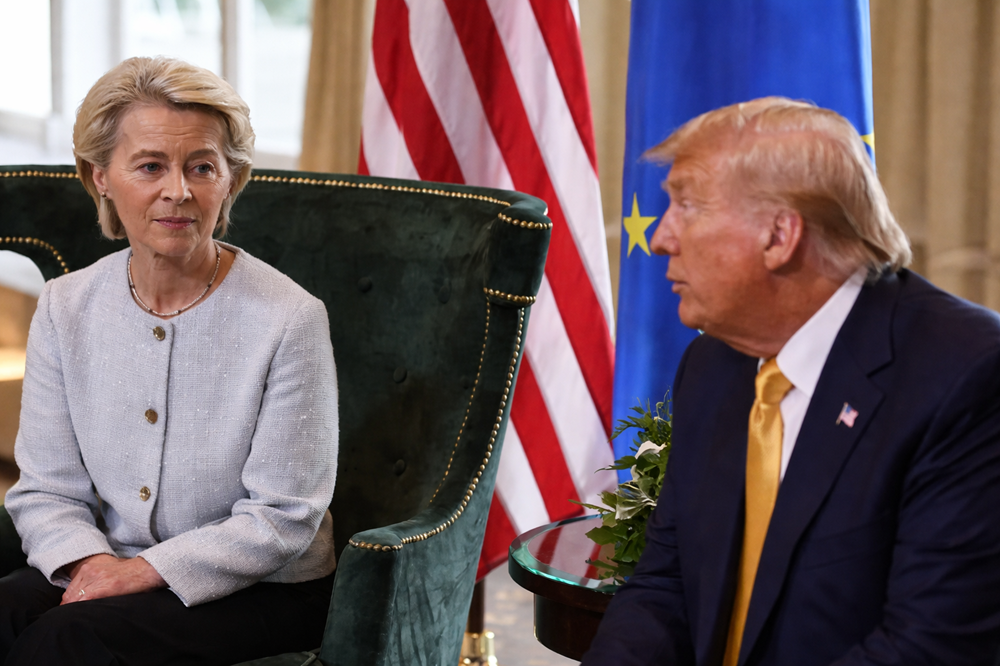
Fresh trade tensions between Washington and Brussels are reintroducing uncertainty into an already fragile global macro backdrop. European Central Bank President Christine Lagarde warned that President Donald Trump’s renewed tariff measures risk upsetting the “equilibrium” previously negotiated between the European Union and the United States. The warning comes as markets digest a rapid policy reversal in Washington, where the US Supreme Court struck down emergency-based tariffs only for new levies to be introduced within days. For Europe, clarity on trade rules is not merely political — it is central to investment decisions, supply chains, and growth forecasts.
Trade Stability at Risk as Policy Shifts Intensify
Lagarde emphasized the importance of predictable trade rules, noting that businesses require certainty before committing capital. The recent decision by the Supreme Court to invalidate Trump’s emergency-powers tariffs briefly suggested a cooling of transatlantic trade friction. However, the swift introduction of a new 10% global tariff — later raised to 15% — has revived concerns about volatility in trade policy.
The European Parliament is convening an emergency meeting to reassess the bloc’s trade stance, and proposals are emerging to freeze ratification of the existing EU–US trade agreement. Such moves signal that the dispute is not symbolic; it could influence customs flows, regulatory alignment, and cross-border investment planning.
For European exporters, particularly in manufacturing-heavy economies such as Germany, renewed tariffs could weigh on already modest growth trajectories. The eurozone has been navigating soft industrial production, tepid consumer demand, and cautious capital spending. Additional trade friction may exacerbate these headwinds.
Economic Implications for the ECB
From a monetary policy perspective, trade uncertainty complicates the ECB’s balancing act. The central bank is attempting to guide inflation toward its target while supporting growth amid global volatility. Tariffs can simultaneously dampen growth and increase import costs, creating a stagflationary impulse that constrains policy flexibility.
Lagarde acknowledged that US consumers are also experiencing the “pain” of tariffs, underscoring that trade barriers rarely operate in isolation. For Europe, the risk lies in disrupted supply chains and weakened business confidence. Investment hesitation often precedes measurable economic slowdown, particularly in export-oriented sectors.
Financial markets are likely to monitor euro-dollar dynamics and sovereign bond spreads for early signs of stress. Renewed tariff escalation could pressure the euro and influence capital flows between the US and European fixed-income markets.
Leadership Continuity Amid Political Speculation
Lagarde also addressed speculation about her tenure, reaffirming her intention to serve through the end of her mandate in October 2027. While political shifts in France and broader European elections may shape future leadership discussions, she framed her current focus as firmly aligned with the ECB’s mission.
Institutional stability at the ECB is particularly important during periods of external economic shock. Leadership transitions amid trade disruption could amplify market sensitivity.
Looking ahead, the central question is whether tariff escalation becomes entrenched policy or a negotiating tactic. If volatility persists, European growth forecasts may require downward revision, potentially influencing ECB rate decisions and fiscal coordination within the bloc.
For investors in both Israel and the United States, the episode highlights a broader theme: trade policy remains a key macro variable. In a global economy tightly woven through supply chains and capital markets, renewed uncertainty between two major economic blocs can ripple far beyond customs checkpoints.
Comparison, examination, and analysis between investment houses
Leave your details, and an expert from our team will get back to you as soon as possible
* This article, in whole or in part, does not contain any promise of investment returns, nor does it constitute professional advice to make investments in any particular field.
To read more about the full disclaimer, click here
- Lior mor
- •
- 6 Min Read
- •
- ago 8 hours
SKN | IMF Unlocks $2.3 Billion for Egypt: Is the Reform Program Finally Turning the Corner?
The International Monetary Fund approved the release of approximately $2.3 billion to Egypt, citing progress in macroeconomic stabilization and structural
- ago 8 hours
- •
- 6 Min Read

The International Monetary Fund approved the release of approximately $2.3 billion to Egypt, citing progress in macroeconomic stabilization and structural

- sagi habasov
- •
- 7 Min Read
- •
- ago 6 days
SKN | Will New Dietary Guidelines and GLP-1 Drugs Reshape the U.S. Sugar Market?
As federal agencies move toward stricter dietary guidelines and updated school meal standards, the U.S. sugar industry is confronting a
- ago 6 days
- •
- 7 Min Read

As federal agencies move toward stricter dietary guidelines and updated school meal standards, the U.S. sugar industry is confronting a

- Ronny Mor
- •
- 6 Min Read
- •
- ago 7 days
SKN | Walmart’s 1% Q4 Price Increase Signals Retail Discipline Amid Inflation Crosscurrents
Walmart’s finance chief disclosed that prices increased only around 1% across the board in the fourth quarter, a figure
- ago 7 days
- •
- 6 Min Read

Walmart’s finance chief disclosed that prices increased only around 1% across the board in the fourth quarter, a figure

- orshu
- •
- 7 Min Read
- •
- ago 1 week
SKN | Fed Minutes Signal Caution as Buffett’s Amazon Bet and Rising Oil Prices Reshape Market Narrative
Global markets are recalibrating as the latest Federal Reserve minutes highlight policymakers’ caution on inflation, while renewed attention to
- ago 1 week
- •
- 7 Min Read

Global markets are recalibrating as the latest Federal Reserve minutes highlight policymakers’ caution on inflation, while renewed attention to

