





- sagi habasov
- •
- 6 Min Read
- •
- 2 hours ago
Key Points
- Historical market cycles suggest that peaks in the U.S. dollar have frequently coincided with periods of stronger performance in emerging market equities.
- Some market strategists argue that both the U.S. dollar and U.S. equities remain historically expensive relative to international markets.
- If the dollar enters a sustained period of weakness, capital flows could increasingly shift toward emerging markets, commodities, and international equities.
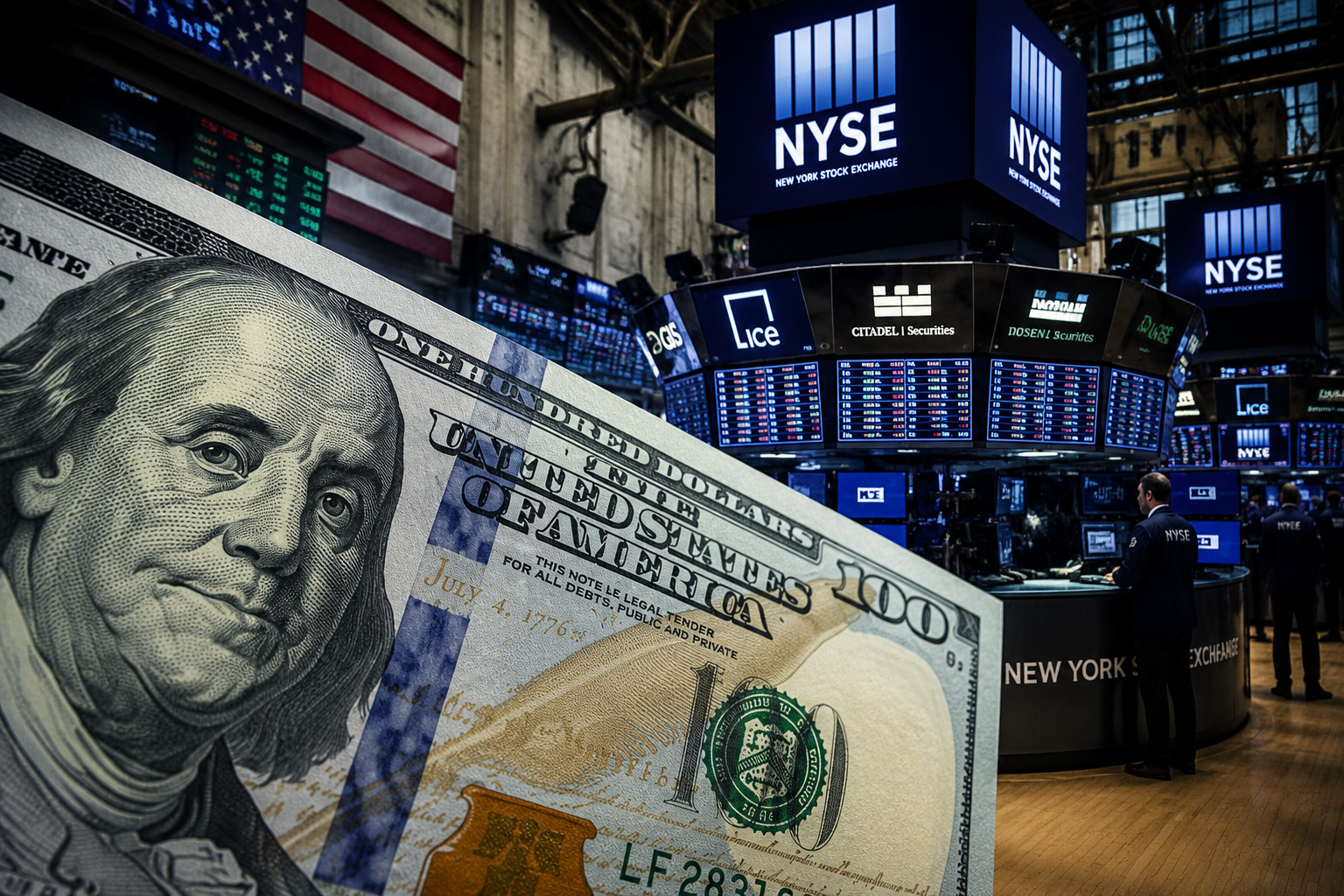
The relationship between the U.S. dollar and emerging market equities has once again become a focal point for global investors. Historical market data shows that periods of dollar strength have often been followed by stronger relative performance from emerging markets once the currency reaches cyclical peaks. As investors reassess valuations after years of U.S. market leadership, many portfolio managers are evaluating whether the current environment could mark another turning point in global capital allocation. While history does not guarantee future performance, the combination of elevated U.S. asset valuations and signs of a moderating dollar has renewed interest in international diversification.
Dollar Cycles Have Historically Influenced Global Capital Flows
The U.S. dollar plays a central role in the global financial system, influencing everything from international trade and commodity prices to investment flows across developed and emerging economies. Historically, periods of sustained dollar appreciation have tended to coincide with stronger relative performance for U.S. assets, while weaker dollar cycles have often supported emerging market equities by easing financial conditions and improving capital availability.
Many emerging economies borrow in U.S. dollars or rely heavily on global investment flows. A softer dollar can reduce financing costs, strengthen local currencies, and improve investor appetite for higher-growth markets. This dynamic has been observed during previous market cycles, particularly in the early 2000s and the period following the Global Financial Crisis.
Valuation Gaps Are Driving Investor Interest Beyond U.S. Markets
After years of exceptional gains led by large-cap U.S. technology companies, valuation differences between American equities and many international markets have widened considerably. Although U.S. companies continue to benefit from strong profitability and innovation, some investors believe much of that optimism is already reflected in current prices.
Emerging markets, by comparison, generally trade at lower valuation multiples despite offering exposure to faster-growing populations, expanding middle classes, and increasing digital adoption. Countries across Asia, Latin America, the Middle East, and parts of Eastern Europe continue to benefit from long-term structural growth trends that could become more attractive if global investors begin rotating away from concentrated U.S. equity exposure.
Macro Conditions Will Determine Whether a Rotation Takes Hold
Whether history repeats itself will depend largely on macroeconomic developments. Federal Reserve policy, inflation trends, Treasury yields, geopolitical risks, and global economic growth will all influence the direction of the U.S. dollar and international capital flows. A sustained decline in the dollar could provide meaningful support for emerging markets, particularly if accompanied by stable global growth and improving investor confidence.
At the same time, investors should recognize that market leadership rarely shifts overnight. Rotations between regions typically unfold over extended periods and are influenced by earnings growth, monetary policy, and changing risk appetite. Looking ahead, monitoring the trajectory of the U.S. dollar alongside corporate earnings and global economic indicators will be essential in determining whether emerging markets are entering a new period of relative outperformance or whether U.S. equities continue to justify their premium valuations.
Comparison, examination, and analysis between investment houses
Leave your details, and an expert from our team will get back to you as soon as possible
* This article, in whole or in part, does not contain any promise of investment returns, nor does it constitute professional advice to make investments in any particular field.
To read more about the full disclaimer, click here
- orshu
- •
- 7 Min Read
- •
- ago 1 hour
SKN | Tel Aviv Stocks Rally on July 21 as Broad Buying Lifts TA-35 and TA-125 to Strong Gains
Israel's stock market closed sharply higher on Tuesday, July 21, 2026, with broad gains across the major equity benchmarks as
- ago 1 hour
- •
- 7 Min Read

Israel's stock market closed sharply higher on Tuesday, July 21, 2026, with broad gains across the major equity benchmarks as
- orshu
- •
- 6 Min Read
- •
- ago 2 hours
SKN | European Markets Close Higher as Broad-Based Rally Signals Renewed Investor Confidence
European equity markets closed higher on July 21, with investors returning to risk assets as optimism surrounding corporate earnings
- ago 2 hours
- •
- 6 Min Read

European equity markets closed higher on July 21, with investors returning to risk assets as optimism surrounding corporate earnings
- orshu
- •
- 7 Min Read
- •
- ago 4 hours
SKN | U.S. Markets Advance as Technology Stocks Lead While Small Caps Lag
U.S. equity markets traded mostly higher on July 21, as investors continued to favor technology shares ahead of another
- ago 4 hours
- •
- 7 Min Read

U.S. equity markets traded mostly higher on July 21, as investors continued to favor technology shares ahead of another
- orshu
- •
- 7 Min Read
- •
- ago 8 hours
SKN | Asia Markets Rebound on July 21, 2026 as Japan and South Korea Lead Regional Recovery
Asian markets staged a strong recovery on July 21, 2026, as investors returned to risk assets after several volatile
- ago 8 hours
- •
- 7 Min Read

Asian markets staged a strong recovery on July 21, 2026, as investors returned to risk assets after several volatile


