


- Ronny Mor
- •
- 7 Min Read
- •
- 3 months ago
Key Points
- Ford CEO Jim Farley discussed with Trump administration officials a potential joint-venture model for Chinese automakers building cars in the U.S.
- The proposal would reportedly require U.S. automakers to hold controlling stakes, sharing profits and technology while protecting domestic interests.
- The idea received a cold reception in Washington amid national security and economic concerns.
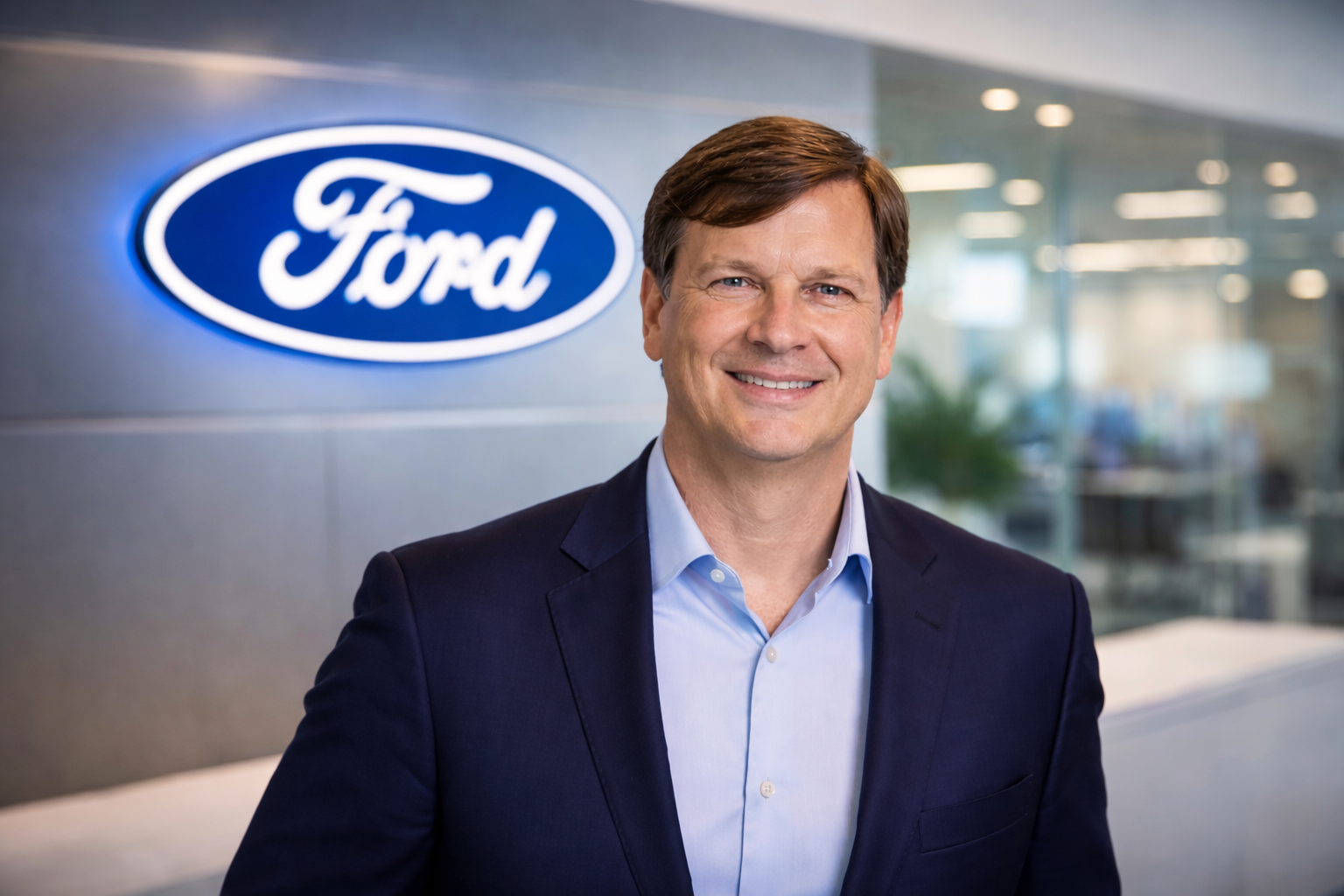
Ford Motor Co. CEO Jim Farley has quietly explored a controversial idea with members of the Trump administration: allowing Chinese automakers to build vehicles in the United States through joint ventures with American companies. The concept, according to a source familiar with the discussions, would aim to balance competitive realities with national economic interests at a time when Chinese electric vehicle makers are rapidly expanding abroad.
The proposal comes as U.S. automakers confront mounting pressure from China’s auto industry, which now produces roughly one-third of the world’s vehicles and has become especially dominant in electric vehicles. Although a 100% tariff on imported Chinese cars — first implemented under President Joe Biden and maintained by President Donald Trump — currently blocks direct entry into the U.S. market, many analysts believe it is only a matter of time before Chinese manufacturers find alternative pathways.
A Joint-Venture Model as a Strategic Buffer
Farley’s idea, reportedly discussed with U.S. Trade Representative Jamieson Greer, Transportation Secretary Sean Duffy and EPA Administrator Lee Zeldin during the Detroit Auto Show, would allow Chinese companies to establish U.S.-based production facilities in partnership with domestic automakers. Under such a structure, American firms would retain controlling stakes, while profits and technology would be shared.
The strategic logic mirrors models long used in China itself, where foreign automakers were historically required to partner with local firms. By reversing that framework, the U.S. could theoretically maintain oversight, protect intellectual property and ensure American job creation, while mitigating the shock of a direct Chinese market entry.
However, according to reports, the concept was met with skepticism in Washington. Concerns reportedly centered on national security, political backlash and the optics of cooperating with Chinese firms in a sector viewed as critical to economic sovereignty.
The Competitive Reality: China’s EV Surge
Farley has been outspoken about the competitive threat posed by Chinese automakers. He has described their vehicles as an “existential threat” to U.S. manufacturers, citing their speed of innovation, digital integration and cost efficiency. Chinese EVs already account for approximately 20% of new vehicle sales in Mexico, and Canada is expected to permit some Chinese EV imports in the near future.
Ford has intensified its study of Chinese competitors in recent years. Farley and his leadership team have reportedly traveled to Shanghai multiple times to analyze product design, software integration and customer experience strategies. Farley himself has driven a Xiaomi SU7, publicly praising its digital experience and build quality.
China’s domestic auto market is saturated, and with more than 100 brands competing aggressively on price, export expansion has become a necessity for growth. Companies such as Geely have openly signaled ambitions to enter the U.S. market within the next few years.
Policy Tensions and Market Implications
For policymakers, the debate reflects a broader tension between economic openness and strategic protectionism. Allowing Chinese firms to build plants in the U.S. could generate employment and consumer benefits, including lower-priced EVs and increased competition. Yet it also raises questions about data privacy, cybersecurity and long-term technological dependence.
Ford has reiterated its position that the U.S. market must be protected from a “flood of subsidized vehicles built in China,” while also acknowledging the inevitability of eventual competition. The joint-venture concept appears less an endorsement of Chinese entry and more an attempt to shape the terms under which it might occur.
Looking ahead, the trajectory of U.S.-China trade policy, North American EV adoption rates and domestic political dynamics will determine whether such partnerships become politically viable. For now, tariffs remain the primary barrier — but strategic discussions suggest that industry leaders are preparing for a future in which those walls may not be permanent.
Comparison, examination, and analysis between investment houses
Leave your details, and an expert from our team will get back to you as soon as possible
* This article, in whole or in part, does not contain any promise of investment returns, nor does it constitute professional advice to make investments in any particular field.
To read more about the full disclaimer, click here
- Lior mor
- •
- 4 Min Read
- •
- ago 38 minutes
SKN | Samsung Chairman Warns Strike Could Damage Competitiveness and Economy
Shin Je-yoon, board chairman of Samsung Electronics, has called on unionized workers to resolve ongoing pay disputes with management, warning
- ago 38 minutes
- •
- 4 Min Read

Shin Je-yoon, board chairman of Samsung Electronics, has called on unionized workers to resolve ongoing pay disputes with management, warning

- Ronny Mor
- •
- 5 Min Read
- •
- ago 44 minutes
SKN | U.S. Futures Edge Higher Despite Middle East Tensions — Can Earnings Sustain Momentum?
U.S. stock futures pointed slightly higher as investors weighed escalating tensions in the Middle East against a steady flow
- ago 44 minutes
- •
- 5 Min Read

U.S. stock futures pointed slightly higher as investors weighed escalating tensions in the Middle East against a steady flow

- omer bar
- •
- 5 Min Read
- •
- ago 1 hour
SKN | Dow Transports Slide Toward Bear Market — A Warning Signal for Global Growth?
The Dow Jones Transportation Average is approaching bear market territory after erasing its April breakout, raising concerns about underlying
- ago 1 hour
- •
- 5 Min Read

The Dow Jones Transportation Average is approaching bear market territory after erasing its April breakout, raising concerns about underlying

- orshu
- •
- 7 Min Read
- •
- ago 3 hours
SKN | Tel Aviv Stock Exchange Mixed as TA-35 Edges Higher While Sector Rotation Signals Market Fragmentation
Israeli financial markets are trading in a mixed and selective environment, with the Tel Aviv-35 index posting a modest gain
- ago 3 hours
- •
- 7 Min Read

Israeli financial markets are trading in a mixed and selective environment, with the Tel Aviv-35 index posting a modest gain


