





- sagi habasov
- •
- 6 Min Read
- •
- 8 months ago
Key Points
- Ken Griffin, founder of Citadel, warned that political proximity between the White House and the Federal Reserve risks undermining market confidence, according to the Financial Times.
- The remarks revive debate over central bank independence amid persistent inflation risks and shifting interest-rate expectations.
- Investors are closely watching how policy credibility and political signaling could influence bond yields, currencies, and risk assets.

Ken Griffin, the billionaire founder of hedge fund giant Citadel, has called on the White House to create greater distance from the Federal Reserve, warning that political influence over monetary policy could damage economic stability and investor trust. Speaking in comments reported by the Financial Times, Griffin emphasized that the perception of independence is as critical as independence itself.
The remarks land at a sensitive moment, as global markets attempt to assess the trajectory of interest rates amid slowing growth, uneven disinflation, and rising political scrutiny of central banks.
A warning on central bank credibility
Griffin’s core message centers on credibility. He argued that when governments appear too closely aligned with central banks, markets begin to question whether policy decisions are driven by economic data or political priorities. Such doubts, he warned, can translate into higher inflation expectations, weaker currencies, and increased volatility across asset classes.
The Federal Reserve has long been viewed as one of the world’s most independent monetary authorities, a status that underpins the global role of the US dollar. Any erosion of that perception could carry far-reaching consequences, particularly at a time when public debt levels are elevated and fiscal pressures are intensifying.
Griffin’s comments echo concerns raised by economists who argue that central bank independence is essential for anchoring long-term inflation expectations.
Market sensitivity to political pressure
Financial markets tend to react sharply to any hint that monetary policy could be politicized. Bond yields, in particular, are sensitive to shifts in confidence around inflation control. If investors believe that rate decisions are influenced by electoral considerations, they may demand higher risk premiums, pushing borrowing costs higher.
Equity markets could also feel the impact. While looser policy can temporarily support stocks, uncertainty over the Fed’s mandate often leads to greater volatility. For global investors, including those in Israel, the credibility of US monetary policy remains a cornerstone of global capital flows and currency stability.
Griffin’s intervention highlights how closely institutional investors are watching the interaction between politics and policy as the next phase of the economic cycle unfolds.
Broader implications for global policy frameworks
The debate extends beyond the United States. Around the world, governments are grappling with high debt burdens, rising defense spending, and social pressures that complicate fiscal discipline. In such an environment, central banks face growing pressure to support growth or ease financing conditions.
For countries with less established institutional frameworks, perceived political influence over central banks has historically led to currency weakness and persistent inflation. Griffin’s comments implicitly warn that even advanced economies are not immune to these risks.
As policymakers balance economic realities with political demands, maintaining clear institutional boundaries may prove increasingly challenging.
Looking ahead, investors will monitor signals from both the White House and the Federal Reserve for any signs of shifting dynamics. Upcoming policy meetings, inflation data, and public commentary from senior officials will be scrutinized for clues about the Fed’s independence. For markets, the issue is not just policy direction, but whether confidence in the system that sets that policy remains intact.
Comparison, examination, and analysis between investment houses
Leave your details, and an expert from our team will get back to you as soon as possible
* This article, in whole or in part, does not contain any promise of investment returns, nor does it constitute professional advice to make investments in any particular field.
To read more about the full disclaimer, click here
- sagi habasov
- •
- 6 Min Read
- •
- ago 1 day
SKN | US Strikes Iran After Regional Escalation Raises Global Market Risks
The United States has begun military strikes against Iran following an attempted attack on US forces across the Middle East,
- ago 1 day
- •
- 6 Min Read

The United States has begun military strikes against Iran following an attempted attack on US forces across the Middle East,

- omer bar
- •
- 6 Min Read
- •
- ago 2 days
SKN | Is the Bank of Japan Preparing for a More Aggressive Fight Against Inflation?
Japan's long-standing era of ultra-loose monetary policy is facing renewed scrutiny after a prominent inflation expert suggested the Bank of
- ago 2 days
- •
- 6 Min Read

Japan's long-standing era of ultra-loose monetary policy is facing renewed scrutiny after a prominent inflation expert suggested the Bank of
- sagi habasov
- •
- 6 Min Read
- •
- ago 2 days
SKN | Middle East Escalation Drives Oil Prices Up: How Will the Fed Respond?
The Middle East is experiencing a sharp military escalation, triggering significant volatility across global energy markets. A ballistic missile
- ago 2 days
- •
- 6 Min Read
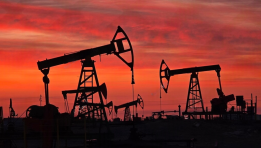
The Middle East is experiencing a sharp military escalation, triggering significant volatility across global energy markets. A ballistic missile

- Ronny Mor
- •
- 7 Min Read
- •
- ago 3 days
SKN | Oil Prices are Climbing, But Interest Rates Will Likely Pause: What Does This Mean for Your Money?
Why Would Oil Prices Rise, But Not Interest Rates? The U.S. central bank is in an interesting spot right now.
- ago 3 days
- •
- 7 Min Read

Why Would Oil Prices Rise, But Not Interest Rates? The U.S. central bank is in an interesting spot right now.


