


- Ronny Mor
- •
- 6 Min Read
- •
- 1 day ago
Key Points
- China set a 2026 economic growth target of 4.5%–5%, the lowest in decades.
- Weak domestic demand, a prolonged property crisis, and global uncertainty are weighing on the economy.
- The announcement comes ahead of a planned summit between Xi Jinping and Donald Trump in Beijing.
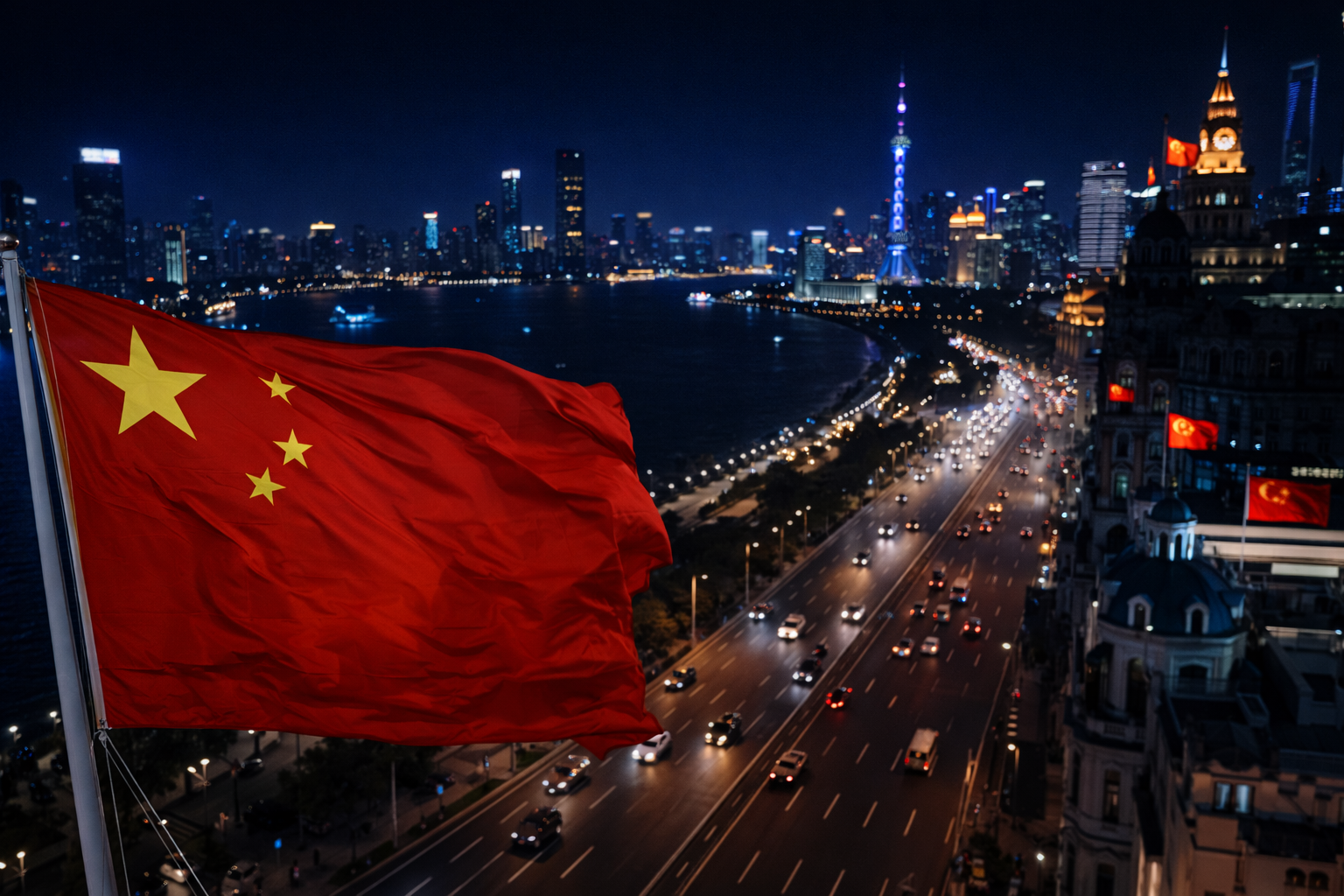
China has announced its lowest economic growth target in decades, signaling a more cautious outlook as the world’s second-largest economy grapples with structural challenges and global uncertainty.
Premier Li Qiang said the government will aim for economic growth between 4.5% and 5% in 2026. The projection marks a step down from the country’s previous goal of “around 5%” growth maintained between 2023 and 2025.
The announcement came during the opening of the annual session of the National People’s Congress in Beijing, where nearly 2,900 delegates are expected to approve policy priorities and a new national development blueprint.
Economic Headwinds Continue to Mount
China’s economy has slowed significantly in recent years due to a combination of domestic and external pressures.
A prolonged property sector crisis, weaker investment, sluggish consumer spending, and deflationary pressures have all contributed to the country’s slowing growth trajectory. Investment across key sectors such as housing, manufacturing, and infrastructure declined last year for the first time in decades.
Officials acknowledged that the economy faces deep structural issues while emphasizing the need to shift toward a model focused more on sustainable and high-quality growth.
Despite meeting the previous “around 5%” growth target last year, only about half of China’s provinces achieved their own economic targets.
Trump Visit Adds Geopolitical Context
The policy announcement also comes ahead of a highly anticipated summit between Chinese President Xi Jinping and Donald Trump.
Trump is expected to visit Beijing for a three-day summit focused on trade, technology competition, and regional security issues including Taiwan.
The meeting will mark the first time the two leaders have met in China since 2017, following months of geopolitical tension and trade disputes between the world’s two largest economies.
Push for Technology and Innovation
Despite the slowing growth outlook, Chinese officials highlighted the country’s progress in advanced industries such as artificial intelligence, robotics, biotechnology, and semiconductor development.
Beijing announced plans to increase its science and technology budget by roughly 10% in 2026, continuing a multi-year push to build domestic capabilities in critical technologies.
The government also pledged new investments in data-center infrastructure and AI-related industries as part of its long-term strategy to strengthen technological self-reliance.
These initiatives will form a central pillar of China’s next Five-Year Plan, which aims to help double the country’s per-capita GDP from its 2020 level by 2035.
Military Spending Continues to Rise
At the same time, China confirmed another increase in defense spending as it continues modernizing its armed forces.
The country’s 2026 military budget will rise by about 7%, supporting continued expansion of naval forces, aircraft, drones, and advanced weapons systems under President Xi’s modernization strategy for the People’s Liberation Army.
Analysts say the consistent increase in defense spending reflects China’s ambitions to strengthen its position in the Asia-Pacific region and maintain strategic competition with the United States.
Comparison, examination, and analysis between investment houses
Leave your details, and an expert from our team will get back to you as soon as possible
* This article, in whole or in part, does not contain any promise of investment returns, nor does it constitute professional advice to make investments in any particular field.
To read more about the full disclaimer, click here
- omer bar
- •
- 4 Min Read
- •
- ago 4 hours
SKN | U.S. Companies Denied Refunds on Tariffs Ruled Illegal by Supreme Court
Several U.S. companies have reportedly been denied refunds for tariffs that were ruled illegal by the Supreme Court of the
- ago 4 hours
- •
- 4 Min Read
Several U.S. companies have reportedly been denied refunds for tariffs that were ruled illegal by the Supreme Court of the

- Ronny Mor
- •
- 7 Min Read
- •
- ago 4 days
SKN | Trump Retreats From Legal Showdown With Major Law Firms: What It Signals for Regulatory and Corporate Risk
Former President Donald Trump has reportedly abandoned efforts to continue pursuing punitive executive measures against several major US law firms,
- ago 4 days
- •
- 7 Min Read
Former President Donald Trump has reportedly abandoned efforts to continue pursuing punitive executive measures against several major US law firms,
- omer bar
- •
- 7 Min Read
- •
- ago 1 week
SKN | Xiaomi Challenges $72 Million India Tariff Ruling: A Precedent for Contract Manufacturing?
Xiaomi has escalated its dispute with Indian authorities to the Supreme Court, challenging a tax tribunal ruling that it evaded
- ago 1 week
- •
- 7 Min Read

Xiaomi has escalated its dispute with Indian authorities to the Supreme Court, challenging a tax tribunal ruling that it evaded
- Ronny Mor
- •
- 7 Min Read
- •
- ago 1 week
SKN | US Considers Requiring Banks to Collect Citizenship Data – Regulatory Shift or Political Signal?
US financial regulators are reportedly examining whether banks should be required to collect and maintain data on customers’ citizenship status,
- ago 1 week
- •
- 7 Min Read

US financial regulators are reportedly examining whether banks should be required to collect and maintain data on customers’ citizenship status,

