





- orshu
- •
- 6 Min Read
- •
- 6 hours ago
Key Points
- The CBOE Volatility Index (^VIX) concluded the week higher over the five-day trailing period, registering a 6.54% increase to close at 18.41.
- Heightened mid-week and Friday trading sessions drove the index to an intraday peak of 20.72, highlighting sensitive institutional sentiment before retreating toward daily support levels.
- Global allocators and tech-focused institutional investors are closely monitoring options pricing to hedge multi-asset portfolios against macro and geopolitical risks.
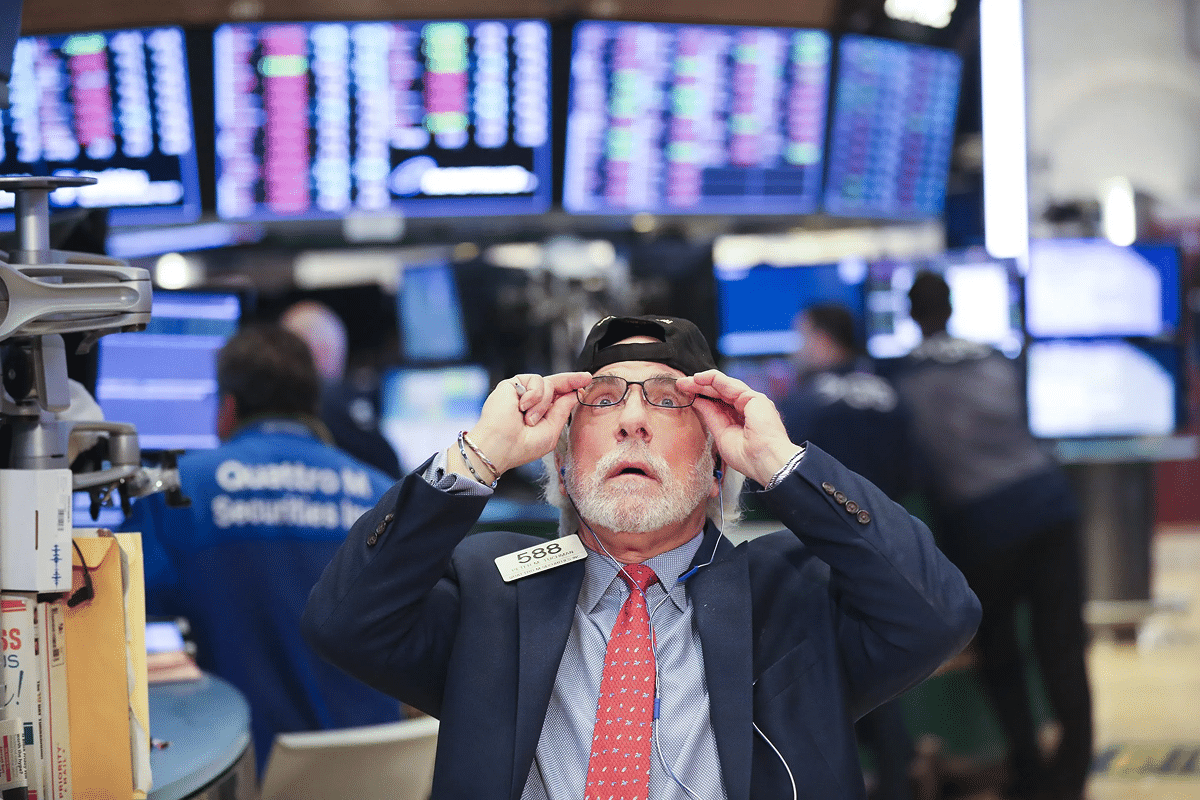
The CBOE Volatility Index (^VIX) finished the week elevated at 18.41, reflecting a heightened and cautious posture across global capital markets as Wall Street’s “fear gauge” climbed 6.54% over the trailing five days. Although equity market volatility experienced brief reprieves during mid-week sessions, underlying options pricing expanded as international investors balanced complex macroeconomic signals with shifting policy expectations that continue to influence global risk aversion.
Index Reflects Pronounced Intraday Volatility and Shifting Risk Sentiment The five-day trading pattern highlighted a market actively searching for macro stabilization. Early-week sessions saw the index open at a gap-up level of 19.70 before testing intermediate support floors around June 24 and June 25 near the 18.00 threshold. However, a sharp late-week acceleration propelled the index to a multi-day intraday peak of 20.72 as defensive positioning intensified across equity desks before settling down to an intraday low of 18.20. While the benchmark remains well within its broader 52-week range of 13.38 to 35.30, the underlying swings show that institutional participants are actively hedging equity portfolios against sudden market corrections.
Central Bank Trajectories and Macroeconomic Headwinds Expand Risk Premiums The primary driver behind the volatility index’s elevation stems from ongoing institutional repricing of global monetary policy and persistent inflation metrics. Market participants are continuously evaluating whether sticky services-sector inflation will force major central banks to sustain restrictive interest-rate paths longer than initially anticipated. This prolonged uncertainty regarding global liquidity conditions has injected structural constraints into equity valuations, widening credit spreads and boosting demand for downside protection via index options as corporate earnings visibility faces near-term pressures.
Global Portfolio Implications and Cross-Border Hedging Frameworks For Israeli institutional investors and internationally diversified asset allocators, the widening volatility regime introduces critical multi-asset risk management challenges. Heightened market swings frequently amplify currency volatility across the US Dollar, Euro, and Israeli Shekel, complicating total return profiles for cross-border holdings. Evolving geopolitical premiums require sophisticated hedging frameworks to cushion international equity portfolios from localized shocks, forcing a tactical rotation toward defensive assets and premium fixed-income instruments to insulate portfolios against non-linear downside risks.
Outlook: Looking ahead, the outlook for the CBOE Volatility Index remains constructively elevated, but near-term stability will likely depend on upcoming core inflation readings, labor market indicators, and explicit central bank forward guidance. Markets will also monitor corporate guidance metrics and global fiscal shifts that could spark sudden asset reallocations. While a return to historical complacency remains possible if global growth shows synchronized strength, downside risks remain prominent across equity markets, keeping a structural floor under options implied volatility near the 18.00 support zone. Conversely, any unexpected macroeconomic deceleration or geopolitical flare-up could quickly catalyze a non-linear breakout back toward the upper boundaries of its annual range.
Comparison, examination, and analysis between investment houses
Leave your details, and an expert from our team will get back to you as soon as possible
* This article, in whole or in part, does not contain any promise of investment returns, nor does it constitute professional advice to make investments in any particular field.
To read more about the full disclaimer, click here
- Arik Arkadi Sluzki
- •
- 6 Min Read
- •
- ago 1 hour
SKN | Nikkei 225 Sharpens Correction as Bank of Japan Normalization and Global Tech De-risking Weigh on Japanese Equities
The Japanese benchmark Nikkei 225 Index (^N225) finished the week sharply lower at 69,360.88, reflecting a highly pressured and
- ago 1 hour
- •
- 6 Min Read

The Japanese benchmark Nikkei 225 Index (^N225) finished the week sharply lower at 69,360.88, reflecting a highly pressured and

- sagi habasov
- •
- 6 Min Read
- •
- ago 2 hours
SKN | KOSPI Composite Index Sharpens Decline as Tech Sector Pressures and Global Macro Headwinds Weigh on South Korean Equities
The South Korean benchmark KOSPI Composite Index (^KS11) finished the week sharply lower at 8,411.21, reflecting a highly pressured
- ago 2 hours
- •
- 6 Min Read

The South Korean benchmark KOSPI Composite Index (^KS11) finished the week sharply lower at 8,411.21, reflecting a highly pressured

- orshu
- •
- 6 Min Read
- •
- ago 2 hours
SKN | Japanese Yen Index Hovers Near Annual Lows as Markets Reassess Global Rate Trajectories
The Japanese Yen Currency Index (^XDN) finished the week marginally lower at 61.82, reflecting a pressured and cautious performance
- ago 2 hours
- •
- 6 Min Read

The Japanese Yen Currency Index (^XDN) finished the week marginally lower at 61.82, reflecting a pressured and cautious performance

- Ronny Mor
- •
- 6 Min Read
- •
- ago 2 hours
SKN | SSE Composite Index Retreets as Growth Concerns and Policy Uncertainties Weigh on Chinese Equities
The Chinese benchmark SSE Composite Index (000001.SS) finished the week lower at 4,027.27, reflecting a pressured and cautious performance
- ago 2 hours
- •
- 6 Min Read

The Chinese benchmark SSE Composite Index (000001.SS) finished the week lower at 4,027.27, reflecting a pressured and cautious performance


