





- omer bar
- •
- 8 Min Read
- •
- 1 hour ago
Key Points
- Shein is targeting a Hong Kong IPO valuation of $30 billion to $40 billion, sharply below its nearly $100 billion private-market valuation in 2022.
- Revenue growth has slowed from 41.1% in 2023 to 20.7% in 2024, with Coresight expecting growth of only around 2% this year.
- Investors are increasingly focused on rising costs, customer engagement and whether Shein’s supply-chain model can sustain growth in a market increasingly attracted to AI-linked businesses.
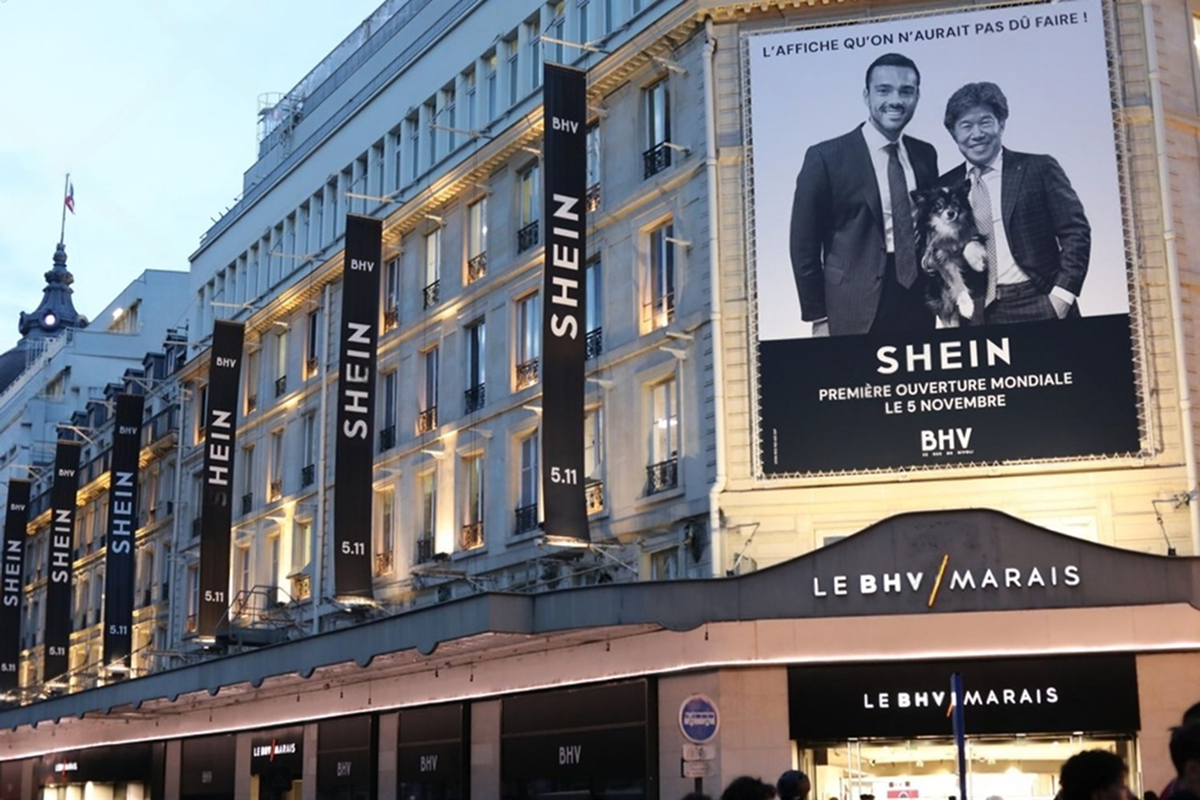
Shein is approaching a potential Hong Kong initial public offering at a significantly lower valuation than the peak it achieved in private markets, but the discount may not be enough to eliminate investor concerns. With sales growth slowing sharply, operating costs rising and the competitive environment changing, the fast-fashion company faces a critical test of whether its business model can support the valuation being considered for the offering.
Shein’s Growth Story Has Changed
The most significant issue confronting Shein is the sharp deceleration in revenue growth. The company’s revenue increased 41.1% in 2023 and 20.7% in 2024, but research firm Coresight expects growth to slow to approximately 2% this year.
The slowdown comes as changes to customs regimes increase costs in some of Shein’s key markets. The United States ended duty-free access for low-value parcels last year, while the European Union imposed new fees on e-commerce packages in July. Those changes directly affect Shein’s direct-shipping model and are encouraging the company to expand local warehousing capacity.
For prospective public-market investors, the question is whether the current slowdown represents a temporary disruption or a structural change in the company’s growth trajectory. That distinction is particularly important because the valuation framework for a rapidly expanding e-commerce company differs substantially from that of a more mature retailer.
IPO Valuation Faces Greater Scrutiny
Shein is reportedly considering a valuation of $30 billion to $40 billion, substantially below the nearly $100 billion valuation reached during its 2022 fundraising round. Even at that reduced range, some investors remain cautious about the company’s ability to justify a premium valuation.
Reuters reported that five investors who attended presentations or reviewed recent financial statements were not convinced that Shein could return to the growth rates that previously supported its higher private-market valuation. One investor described Shein as fundamentally a supply-chain company facing slowing sales and increasing competitive pressure.
Morgan Stanley analysts estimated a fair value range of $39 billion to $52 billion, based on 18 to 24 times projected 2027 earnings and comparisons with listed retailers including Inditex and H&M. Another investor cited in the Reuters report argued that Shein should trade closer to a single-digit price-to-earnings multiple similar to PDD Holdings, owner of Temu.
Customer Growth Has Not Yet Translated Into Deeper Engagement
Shein’s customer metrics provide another area of scrutiny. Annual active customers increased to 273 million in 2025 from 230 million a year earlier, indicating that the platform continues to attract shoppers. However, purchase frequency remained roughly unchanged at four orders per customer annually.
That combination suggests that customer acquisition has continued, but deeper engagement has yet to accelerate materially. At the same time, Shein increased marketing expenditure to $1.43 billion in the first quarter, up from $1.09 billion a year earlier. Investors will therefore want to assess whether higher marketing spending is generating sustainable demand rather than simply supporting user acquisition.
AI Investment Trend Creates a Different Market Environment
Shein is also entering public markets at a time when investor attention has increasingly shifted toward companies with direct exposure to artificial intelligence. Reuters reported that some investors viewed Shein’s presentations as emphasizing operational technology and data capabilities without offering the type of AI-driven growth narrative currently attracting substantial capital.
The company has not positioned itself as an AI business. A source close to Shein said the company instead views artificial intelligence as a tool for improving supply-chain efficiency. That distinction could become important in public markets, where investors are increasingly separating technology-enabled operational improvements from businesses whose primary growth thesis is directly linked to AI.
Looking ahead, the Hong Kong IPO will provide a closely watched test of how public-market investors value slowing growth, supply-chain efficiency and global e-commerce scale. The potential August 19 launch, if confirmed, will bring greater scrutiny to Shein’s pricing, demand from institutional investors and the company’s ability to demonstrate sustainable growth. Its ability to manage customs-related costs, convert customer growth into higher purchasing frequency and preserve margins will be central to determining whether the reduced valuation range is sufficient to attract investors in a more selective global capital market.
Comparison, examination, and analysis between investment houses
Leave your details, and an expert from our team will get back to you as soon as possible
* This article, in whole or in part, does not contain any promise of investment returns, nor does it constitute professional advice to make investments in any particular field.
To read more about the full disclaimer, click here
- sagi habasov
- •
- 8 Min Read
- •
- ago 16 minutes
SKN | ECB Moves Closer to Backing UniCredit’s Commerzbank Takeover
The European Central Bank is leaning toward approving UniCredit’s proposed takeover of Commerzbank, according to an internal document detailing
- ago 16 minutes
- •
- 8 Min Read

The European Central Bank is leaning toward approving UniCredit’s proposed takeover of Commerzbank, according to an internal document detailing

- fidji
- •
- 8 Min Read
- •
- ago 18 minutes
SKN | Ford to Shift Lincoln Production From China to U.S. as Tariffs Reshape Auto Strategy
Ford Motor is preparing to move production of some Lincoln models from China to the United States beginning in 2030,
- ago 18 minutes
- •
- 8 Min Read

Ford Motor is preparing to move production of some Lincoln models from China to the United States beginning in 2030,

- Lior mor
- •
- 7 Min Read
- •
- ago 1 hour
SKN | AI Optimism Pushes Global Stocks Toward Record Highs as Fed Rate-Hike Odds Ease
Global financial markets moved closer to record territory on August 12 as strong technology earnings and softer expectations for
- ago 1 hour
- •
- 7 Min Read

Global financial markets moved closer to record territory on August 12 as strong technology earnings and softer expectations for

- orshu
- •
- 6 Min Read
- •
- ago 1 day
SKN | European Markets Close Mixed as German Equities Lead While UK Stocks Ease
European markets closed with a mixed performance on August 11, reflecting modest gains across several major continental benchmarks alongside
- ago 1 day
- •
- 6 Min Read

European markets closed with a mixed performance on August 11, reflecting modest gains across several major continental benchmarks alongside


