


- Ronny Mor
- •
- 7 Min Read
- •
- 1 month ago
Key Points
- China has turned Hainan into the world’s largest free trade port with a separate customs system.
- The province combines zero tariffs, low taxes, and regulatory flexibility to attract global business.
- Hainan serves as a strategic gateway and testing ground as global trade becomes more fragmented.

As protectionist policies spread across major economies, China is moving decisively in the opposite direction. In December 2025, new laws came into force that formally transformed Hainan into a separate customs territory, laying the groundwork for what Beijing now bills as the world’s largest free trade port. The move signals a strategic bet that openness, scale, and regulatory experimentation can help China reshape global trade flows at a time of heightened geopolitical and economic uncertainty.
Hainan, China’s southernmost province, now operates under a fundamentally different trade and regulatory framework from the mainland. At more than 35,000 square kilometers, the province is slightly larger than Belgium and roughly fifty times the size of Singapore. Chinese policymakers are effectively attempting to replicate the success of compact, highly efficient trade hubs on a landmass closer to that of a European nation.
A Strategic Break From Global Trade Trends
The decision to elevate Hainan into a free trade port stands in sharp contrast to tightening investment screening, tariffs, and export controls elsewhere in the world. According to state media, the introduction of “special customs operations” is not a marginal policy adjustment but a re-engineering of how the province interfaces with global markets. Beijing is positioning Hainan as a demonstration that large-scale openness can coexist with a centrally managed economic system.
This approach builds on a familiar Chinese playbook. Since the late 1970s, special economic zones have allowed the country to test market-oriented mechanisms in controlled environments. Hainan represents the most ambitious iteration yet, shifting from a traditional SEZ to a comprehensive trade, tax, and regulatory ecosystem designed to compete with established hubs such as Singapore and Hong Kong.
The Two-Line Customs System
At the heart of Hainan’s model is a “two-line” customs system. The first line governs trade between Hainan and the rest of the world, where tariffs have largely been eliminated and a broad range of goods can enter duty-free. Raw materials, equipment, and consumer products benefit from expanded zero-tariff treatment, making the province an attractive entry point for global suppliers.
The second line separates Hainan from mainland China and functions as a controlled filter. Goods moving beyond the island are subject to standard customs rules unless they meet value-added requirements. Products that achieve at least 30% added value within Hainan can enter the mainland tariff-free, a provision designed to anchor manufacturing and processing activity locally rather than turning the province into a mere transshipment hub.
Beyond Trade: Taxes, Regulation, and Capital
Hainan’s appeal extends well beyond customs policy. The province applies a flat corporate tax rate of 15%, undercutting mainland China and rivaling the most competitive global jurisdictions. Regulatory flexibility is also a defining feature, particularly in sectors such as pharmaceuticals, education, finance, and digital services.
Companies operating in Hainan can access broader internet connectivity, foreign institutions can establish campuses without local partners, and capital accounts enjoy exemptions from many mainland foreign-exchange restrictions. Expanded visa-free access for travelers from 86 countries further reinforces the province’s role as a gateway for business, tourism, and investment.
A Pressure Valve for China’s Global Strategy
Beijing’s long-term vision is explicit: institutional maturity by 2035 and global influence by mid-century. In an era of fragmented supply chains and geopolitical rivalry, Hainan functions as a pressure valve for China’s economy, offering multinational firms a low-tax, low-barrier platform into Asia-Pacific markets without fully disengaging from China’s vast domestic base.
Whether Hainan ultimately rivals the world’s leading trade hubs will depend on execution, trust, and geopolitical stability. But the scale and ambition of the project underline a clear message: while others pull back from globalization, China is betting that controlled openness on an unprecedented scale can still shape the future of global trade.
Comparison, examination, and analysis between investment houses
Leave your details, and an expert from our team will get back to you as soon as possible
* This article, in whole or in part, does not contain any promise of investment returns, nor does it constitute professional advice to make investments in any particular field.
To read more about the full disclaimer, click here
- sagi habasov
- •
- 5 Min Read
- •
- ago 1 month
SKN | Global Market Outlook 2026: Goldman Sachs Sees Double-Digit Equity Returns
Macro View: Cautious Optimism for 2026 Goldman Sachs’ 2026 outlook reflects measured optimism toward global equity markets. According to the
- ago 1 month
- •
- 5 Min Read
Macro View: Cautious Optimism for 2026 Goldman Sachs’ 2026 outlook reflects measured optimism toward global equity markets. According to the
- sagi habasov
- •
- 7 Min Read
- •
- ago 1 month
The Elephant Overtakes the Dragon: India Eclipses China in Tech Exports to the U.S.
The chart released this morning by the U.S. Department of Commerce is nothing short of a geopolitical earthquake disguised as
- ago 1 month
- •
- 7 Min Read
The chart released this morning by the U.S. Department of Commerce is nothing short of a geopolitical earthquake disguised as

- Lior mor
- •
- 7 Min Read
- •
- ago 1 month
SKN | Can China’s Hainan Free Trade Port Rewrite the Rules of Global Trade?
China has taken a decisive step to reshape its role in global trade by transforming Hainan into a fully fledged,
- ago 1 month
- •
- 7 Min Read
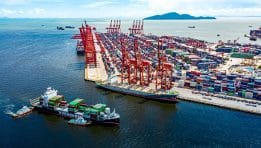
China has taken a decisive step to reshape its role in global trade by transforming Hainan into a fully fledged,
- Lior mor
- •
- 6 Min Read
- •
- ago 2 months
SKN | Strategists Turn Uniformly Bullish on Europe — But History Flashes a Warning
For the first time in nearly a decade, not a single major strategist expects European equities to fall in 2026
- ago 2 months
- •
- 6 Min Read
For the first time in nearly a decade, not a single major strategist expects European equities to fall in 2026

