


- Ronny Mor
- •
- 7 Min Read
- •
- 18 minutes ago
Key Points
- China’s overall exports grew 5.9% in November, but shipments to the U.S. fell nearly 29%.
- Emerging markets—Southeast Asia, Africa, Latin America—are increasingly offsetting weakness in U.S. demand.
- Analysts expect China’s long-term global export share to rise, despite ongoing geopolitical tensions.

China’s November trade figures offered a mixed but notable shift in global demand dynamics. While overall exports returned to growth after an unexpected contraction in October, shipments to the United States plunged nearly 29% from a year earlier — an eighth consecutive month of double-digit declines. The data underscores a widening divergence in China’s export markets, where weakening U.S. demand is increasingly offset by rising shipments to emerging regions such as Southeast Asia, Africa, and Latin America.
Customs data showed China’s exports rose 5.9% year-over-year in November to $330.3 billion, far exceeding economists’ expectations and reversing the previous month’s 1.1% decline. The rebound signals resilience in China’s manufacturing engine despite global uncertainties. Imports also grew 1.9%, improving slightly from October’s 1% rise, though domestic demand remains soft amid a prolonged slump in the property sector and uneven consumer confidence.
Trade Truce Brings Relief — But Base Effects Loom
November marked the first full month following the year-long trade truce reached between U.S. President Donald Trump and Chinese leader Xi Jinping in late October. Under the agreement, Washington lowered selected tariffs while Beijing committed to halting export controls on critical rare earth minerals. Economists expected this easing to support Chinese shipments, but they warn the improvement may be short-lived.
ING Bank economists Lynn Song and Deepali Bhargava noted that China is entering a period of “unfavorable base effects,” a reference to unusually strong export levels recorded ahead of the latest round of U.S. tariffs earlier in Trump’s second term. These distortions could temper growth rates in the months ahead, complicating assessments of true momentum.
Meanwhile, China’s factory activity contracted for an eighth straight month in November, according to the official manufacturing PMI. The continued decline suggests that external demand, despite recent improvements, has not yet stabilized at a pace strong enough to revive domestic industrial sentiment.
Shifting Global Trade Patterns
The sharp fall in U.S.-bound shipments reflects ongoing structural shifts in global trade realignments. Even with tariff relief, the U.S.–China relationship remains defined by strategic competition and persistent distrust. Companies in both countries continue diversifying supply chains, reducing exposure to geopolitical risk.
At the same time, China is expanding its footprint across emerging markets. Growing demand in Southeast Asia, Africa, and Latin America has increasingly supported Chinese exporters, helping mitigate losses from developed markets. This diversification aligns with Beijing’s broader push toward advanced manufacturing, a priority underscored at an October high-level policy meeting and expected to be detailed further in upcoming economic planning sessions.
Long-Term Trajectory Remains Intact
Despite near-term uncertainty, several major institutions believe China is positioned to expand its global export share over the next decade. Morgan Stanley forecasts China’s share of global goods exports rising to 16.5% by 2030, up from around 15% today, driven by continued dominance in high-growth sectors including electric vehicles, robotics, batteries, and broader advanced manufacturing.
Yet the outlook depends heavily on geopolitical stability. BNP Paribas strategist Chi Lo warns that the current trade calm is unlikely to last, as structural U.S.–China tensions remain unresolved. For now, however, November’s performance suggests China is on track to meet its 5% economic growth target for the year, buoyed by an export engine that continues to adapt to a shifting global landscape.
Comparison, examination, and analysis between investment houses
Leave your details, and an expert from our team will get back to you as soon as possible
* This article, in whole or in part, does not contain any promise of investment returns, nor does it constitute professional advice to make investments in any particular field.
To read more about the full disclaimer, click here
- omer bar
- •
- 6 Min Read
- •
- ago 2 minutes
SKN | China’s November Exports Surge Beyond Expectations Following U.S. Trade Truce
China’s export sector posted a notable recovery in November, significantly exceeding forecasts and drawing attention from global investors. The surge
- ago 2 minutes
- •
- 6 Min Read

China’s export sector posted a notable recovery in November, significantly exceeding forecasts and drawing attention from global investors. The surge

- Lior mor
- •
- 7 Min Read
- •
- ago 8 hours
SKN | Why the Fed’s Most Important Decision This Week May Have Nothing to Do With Interest Rates
The Federal Reserve is widely expected to deliver another quarter-point rate cut at its December 9–10 policy meeting, a move
- ago 8 hours
- •
- 7 Min Read

The Federal Reserve is widely expected to deliver another quarter-point rate cut at its December 9–10 policy meeting, a move
- Lior mor
- •
- 7 Min Read
- •
- ago 10 hours
SKN | Is the U.S.–China Trade Truce Holding? Washington Says Beijing Is Meeting Key Commitments
The U.S.–China trade relationship, long defined by friction, is experiencing a rare period of relative stability as senior U.S. officials
- ago 10 hours
- •
- 7 Min Read
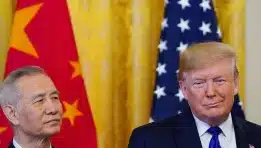
The U.S.–China trade relationship, long defined by friction, is experiencing a rare period of relative stability as senior U.S. officials

- sagi habasov
- •
- 7 Min Read
- •
- ago 1 day
SKN | Why More Americans Are Choosing a ‘Slow Fade’ Into Retirement While Collecting Social Security
An increasing share of older Americans is opting to work while receiving Social Security benefits, signaling a major behavioral
- ago 1 day
- •
- 7 Min Read

An increasing share of older Americans is opting to work while receiving Social Security benefits, signaling a major behavioral

