Key Points

  • BYD’s lawsuit directly challenges the use of emergency powers to impose trade tariffs.
  • The case underscores lingering legal and financial uncertainty from Trump-era trade policies.
  • A favorable ruling could embolden other global manufacturers to seek tariff refunds.
hero

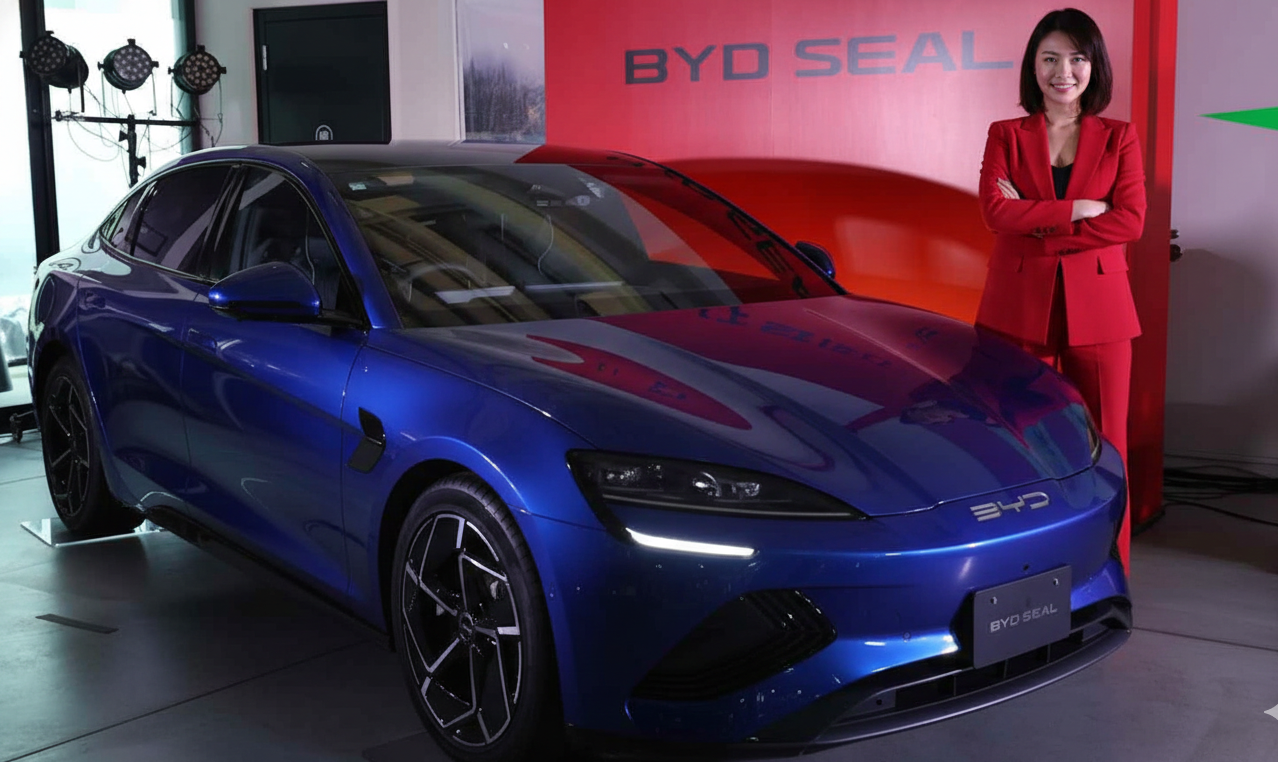
Chinese electric-vehicle giant BYD has taken a rare and aggressive legal step against the U.S. government, filing a lawsuit that seeks refunds for tariffs paid since April under policies introduced during the presidency of Donald Trump. The case arrives at a moment when trade policy, industrial strategy, and national security considerations are increasingly intertwined, and when global companies are reassessing how exposed they are to political risk in key markets.

Challenging the Legal Foundation of Tariffs

At the heart of BYD’s lawsuit is a challenge to the Trump administration’s use of the International Emergency Economic Powers Act, or IEEPA, to impose tariffs on imported goods. Filed at the U.S. Court of International Trade, the complaint argues that the statute does not explicitly authorize tariffs, noting that the law contains no reference to “tariffs” or equivalent language. BYD’s U.S. subsidiaries contend that the administration stretched emergency powers beyond their intended scope, effectively creating a new trade tool without congressional approval.

This legal argument mirrors claims brought by thousands of other companies with U.S. operations, but BYD’s filing stands out as the first by a Chinese automaker. By pursuing its own case, BYD aims to preserve its ability to reclaim duties already paid, rather than relying on broader rulings that may or may not guarantee refunds.

Why BYD Has Skin in the Game

Although BYD does not sell passenger cars in the U.S., its American footprint is far from marginal. The company operates in buses, commercial vehicles, batteries, energy storage systems, and solar panels, sectors that have been directly affected by tariffs. Its North American unit employs roughly 750 workers at a truck manufacturing facility in California, underscoring that the dispute is not purely theoretical but tied to real investment and jobs.

From a strategic perspective, the lawsuit reflects a calculation that legal action may be less risky than continued acceptance of uncertain trade costs. For BYD, which is expanding aggressively across Europe, Asia, and emerging markets, clarity around U.S. trade rules matters even if the American passenger-car market remains closed to it for now.

Broader Stakes for Trade and Markets

The timing of BYD’s move is notable. A separate, high-profile case challenging the same tariffs is expected to reach the U.S. Supreme Court, raising the possibility of a landmark ruling on the limits of executive power in trade policy. U.S. officials have acknowledged the enormous stakes, given how widely the tariffs have been applied.

For investors and executives, the case highlights a persistent risk: trade policy can shift abruptly, and the legal foundations of those shifts may be contested years later. That uncertainty affects capital allocation, supply-chain planning, and even decisions about where to build factories.

Looking ahead, the outcome of BYD’s lawsuit could influence whether companies view the U.S. as a predictable manufacturing base or a market where political cycles introduce lasting cost volatility. It may also shape how aggressively foreign firms are willing to challenge U.S. trade measures in court, rather than adapting quietly.


Comparison, examination, and analysis between investment houses

Leave your details, and an expert from our team will get back to you as soon as possible

    * This article, in whole or in part, does not contain any promise of investment returns, nor does it constitute professional advice to make investments in any particular field.

    To read more about the full disclaimer, click here
    SKN | Is the Prediction Market Model Facing a Regulatory Reckoning in the U.S.?
    • Ronny Mor
    • 7 Min Read
    • ago 1 week

    SKN | Is the Prediction Market Model Facing a Regulatory Reckoning in the U.S.? SKN | Is the Prediction Market Model Facing a Regulatory Reckoning in the U.S.?

    A Nevada state court’s decision to temporarily restrain Polymarket from operating in the state has sent a strong signal to

    • ago 1 week
    • 7 Min Read

    A Nevada state court’s decision to temporarily restrain Polymarket from operating in the state has sent a strong signal to

    SKN | Tesla Gets Breathing Room in US Self-Driving Probe — What the Delay Signals for Autonomy and Regulation
    • Lior mor
    • 6 Min Read
    • ago 3 weeks

    SKN | Tesla Gets Breathing Room in US Self-Driving Probe — What the Delay Signals for Autonomy and Regulation SKN | Tesla Gets Breathing Room in US Self-Driving Probe — What the Delay Signals for Autonomy and Regulation

      Tesla has been granted more time by US regulators as part of an ongoing investigation into its self-driving technology,

    • ago 3 weeks
    • 6 Min Read

      Tesla has been granted more time by US regulators as part of an ongoing investigation into its self-driving technology,

    SKN | Oracle Faces Lawsuit Over 2025 Bond Offering Disclosures — What It Means for Credit Markets and Investor Trust
    • sagi habasov
    • 6 Min Read
    • ago 4 weeks

    SKN | Oracle Faces Lawsuit Over 2025 Bond Offering Disclosures — What It Means for Credit Markets and Investor Trust SKN | Oracle Faces Lawsuit Over 2025 Bond Offering Disclosures — What It Means for Credit Markets and Investor Trust

      Oracle has been sued over disclosures related to its 2025 bond offering, adding a legal dimension to investor scrutiny

    • ago 4 weeks
    • 6 Min Read

      Oracle has been sued over disclosures related to its 2025 bond offering, adding a legal dimension to investor scrutiny

    SKN | Johnson & Johnson Faces Renewed Legal Pressure After $1.5 Billion Talc Verdict
    • Ronny Mor
    • 6 Min Read
    • ago 2 months

    SKN | Johnson & Johnson Faces Renewed Legal Pressure After $1.5 Billion Talc Verdict SKN | Johnson & Johnson Faces Renewed Legal Pressure After $1.5 Billion Talc Verdict

      Johnson & Johnson (J&J) has been ordered to pay over $1.5 billion in a US talc lawsuit, marking a

    • ago 2 months
    • 6 Min Read

      Johnson & Johnson (J&J) has been ordered to pay over $1.5 billion in a US talc lawsuit, marking a