





- omer bar
- •
- 6 Min Read
- •
- 11 hours ago
Key Points
- The British Pound Currency Index (^XDB) ended the week at 131.95, posting a marginal 0.05% gain despite heightened global market uncertainty.
- Mid-week volatility reflected shifting expectations surrounding Bank of England policy and broader U.S. dollar movements.
- Currency traders remain focused on inflation trends, central bank guidance, and geopolitical risks, all of which could shape sterling's near-term direction.
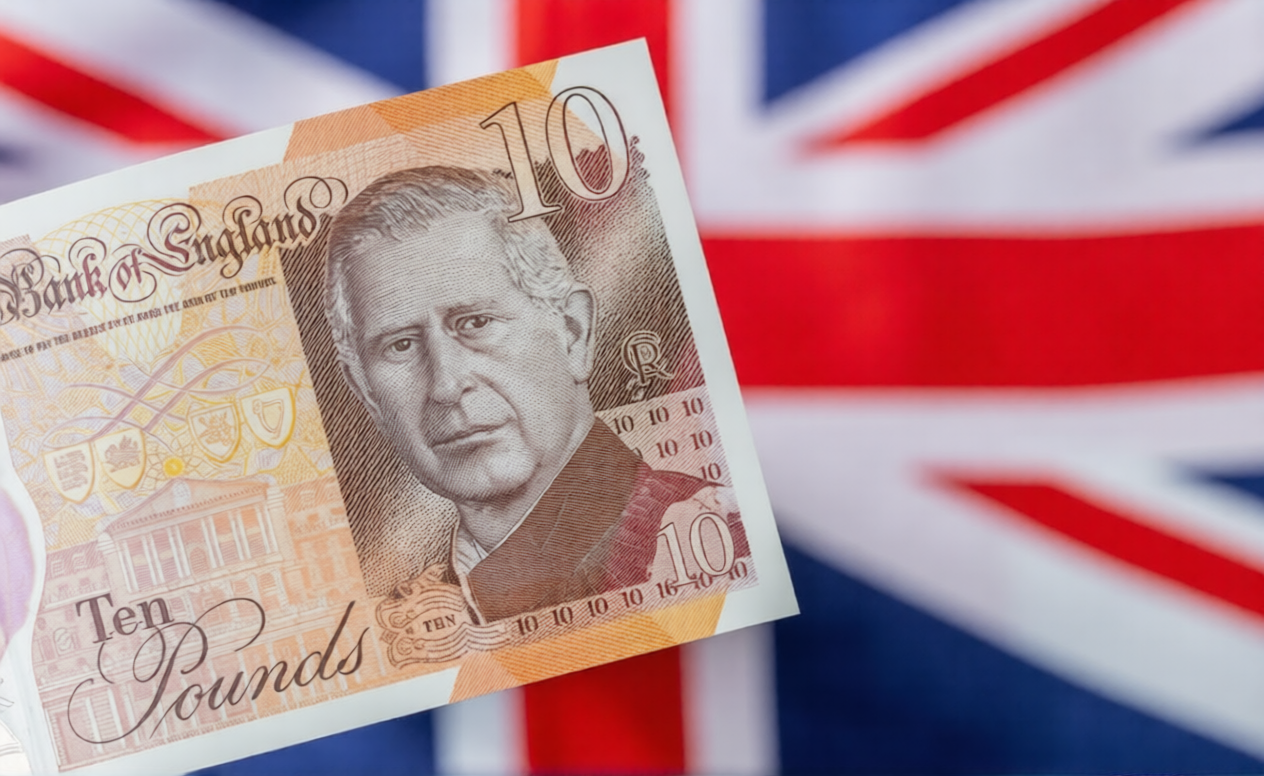
The British Pound Currency Index (^XDB) finished the week broadly unchanged at 131.95, reflecting a resilient but cautious performance in global foreign exchange markets. Although sterling experienced several sharp intraday swings during the week, the currency ultimately stabilized as investors balanced expectations for monetary policy with a complex macroeconomic backdrop that continues to influence global capital flows.
Sterling Demonstrates Stability in a Volatile FX Environment
The five-day trading pattern highlighted a market searching for direction. Early-week weakness pushed the index toward the 131.5 area before buyers returned, allowing the pound to recover and trade near 132.2 during mid-week sessions. By Friday, the currency had settled close to its weekly average, suggesting that neither bullish nor bearish forces established lasting control.
This relatively stable performance came despite ongoing volatility across global equity, bond and commodity markets. Investors continued adjusting positions as economic releases from both the United Kingdom and the United States provided mixed signals regarding inflation persistence and the future path of interest rates.
Interest-Rate Expectations Continue to Drive Currency Markets
Sterling remains highly sensitive to expectations surrounding the Bank of England’s policy outlook. Investors continue evaluating whether inflation is moderating sufficiently to justify additional monetary easing over coming quarters while also comparing UK policy prospects with those of the U.S. Federal Reserve.
Movements in the U.S. dollar also remained an important external driver. Any widening or narrowing of expected interest-rate differentials between the United Kingdom and the United States can significantly influence capital flows into sterling-denominated assets. While recent price action suggests markets have adopted a more balanced view, uncertainty surrounding future policy decisions remains elevated.
Global Risks Continue to Shape Sterling’s Outlook
Beyond monetary policy, investors remain attentive to broader macroeconomic developments. Persistent geopolitical tensions, fluctuations in global energy prices, and concerns over slowing international growth continue to influence risk sentiment across currency markets. Although the British economy has demonstrated resilience in several sectors, slower business investment and uneven consumer demand could still weigh on longer-term growth prospects.
For Israeli institutional investors and internationally diversified portfolios, the pound remains an important developed-market currency whose performance may affect both overseas investments and currency-hedging strategies. Stable exchange-rate behavior can reduce portfolio volatility, but sudden shifts in global risk appetite could quickly alter market dynamics.
Outlook: Looking ahead, the outlook for the British pound remains constructively balanced, but continued stability will likely depend on incoming inflation data, labor-market trends, and future guidance from the Bank of England. Markets will also monitor U.S. monetary policy, fiscal developments, and geopolitical events that may influence global currency flows. While sterling has demonstrated resilience this week, downside risks remain meaningful if inflation reaccelerates, global growth weakens, or financial-market volatility intensifies. Conversely, evidence of sustained disinflation and improving economic activity could provide additional support for the currency, although future gains are likely to remain gradual rather than linear.
Comparison, examination, and analysis between investment houses
Leave your details, and an expert from our team will get back to you as soon as possible
* This article, in whole or in part, does not contain any promise of investment returns, nor does it constitute professional advice to make investments in any particular field.
To read more about the full disclaimer, click here
- Arik Arkadi Sluzki
- •
- 6 Min Read
- •
- ago 1 hour
SKN | Nikkei 225 Sharpens Correction as Bank of Japan Normalization and Global Tech De-risking Weigh on Japanese Equities
The Japanese benchmark Nikkei 225 Index (^N225) finished the week sharply lower at 69,360.88, reflecting a highly pressured and
- ago 1 hour
- •
- 6 Min Read

The Japanese benchmark Nikkei 225 Index (^N225) finished the week sharply lower at 69,360.88, reflecting a highly pressured and

- sagi habasov
- •
- 6 Min Read
- •
- ago 2 hours
SKN | KOSPI Composite Index Sharpens Decline as Tech Sector Pressures and Global Macro Headwinds Weigh on South Korean Equities
The South Korean benchmark KOSPI Composite Index (^KS11) finished the week sharply lower at 8,411.21, reflecting a highly pressured
- ago 2 hours
- •
- 6 Min Read

The South Korean benchmark KOSPI Composite Index (^KS11) finished the week sharply lower at 8,411.21, reflecting a highly pressured

- orshu
- •
- 6 Min Read
- •
- ago 2 hours
SKN | Japanese Yen Index Hovers Near Annual Lows as Markets Reassess Global Rate Trajectories
The Japanese Yen Currency Index (^XDN) finished the week marginally lower at 61.82, reflecting a pressured and cautious performance
- ago 2 hours
- •
- 6 Min Read

The Japanese Yen Currency Index (^XDN) finished the week marginally lower at 61.82, reflecting a pressured and cautious performance

- Ronny Mor
- •
- 6 Min Read
- •
- ago 2 hours
SKN | SSE Composite Index Retreets as Growth Concerns and Policy Uncertainties Weigh on Chinese Equities
The Chinese benchmark SSE Composite Index (000001.SS) finished the week lower at 4,027.27, reflecting a pressured and cautious performance
- ago 2 hours
- •
- 6 Min Read

The Chinese benchmark SSE Composite Index (000001.SS) finished the week lower at 4,027.27, reflecting a pressured and cautious performance


