


- omer bar
- •
- 8 Min Read
- •
- 59 seconds ago
Key Points
- Jeff Bezos is reportedly overhauling Blue Origin’s employee incentive structure ahead of a potential SpaceX IPO
- The move reflects intensifying competition in the global space economy and talent market
- Space industry valuations and compensation strategies are increasingly tied to capital market expectations

Jeff Bezos is reportedly reshaping incentive structures at Blue Origin as competitive pressure builds ahead of a widely anticipated SpaceX IPO, according to industry reports. The adjustments come at a time when private space companies are increasingly aligning internal compensation and retention strategies with capital market expectations, as the sector moves closer to mainstream public market participation.
The developments highlight how the commercial space industry is entering a new phase of financial maturity, where talent competition, valuation dynamics, and IPO positioning are becoming closely interconnected across leading players in the sector.
Talent Competition Intensifies Across the Space Sector
Blue Origin’s reported incentive overhaul reflects growing competition for engineering, aerospace, and software talent across the global space industry. As companies such as SpaceX, Blue Origin, and other private aerospace firms expand ambitious launch, satellite, and infrastructure programs, demand for highly specialized labor has intensified significantly.
In this environment, compensation structures are increasingly being used as strategic tools to retain key personnel and attract new talent. Equity-linked incentives, long-term performance awards, and mission-based compensation models are becoming more common as firms compete not only on technology but also on organizational appeal.
The reported adjustments at Blue Origin suggest a broader recognition that talent retention is now a core competitive factor in an industry where execution speed and technical expertise directly influence market positioning and long-term valuation potential.
SpaceX IPO Expectations Reshape Industry Dynamics
The anticipated SpaceX IPO is widely viewed as a potential inflection point for the global space economy. While timing remains unconfirmed, market expectations around a public listing have already influenced how competitors structure compensation, capital allocation, and strategic planning.
A public SpaceX valuation could establish a new benchmark for the sector, influencing investor sentiment toward space-related assets and potentially reshaping private market valuations. For rival firms, this creates both opportunity and pressure, as employees and investors reassess relative value propositions across competing platforms.
In this context, Blue Origin’s incentive adjustments can be interpreted as part of a broader effort to maintain competitiveness in a market where public equity signals may increasingly define industry hierarchy.
For global investors, including those in Israel’s growing aerospace and deep-tech ecosystem, the evolution of space-sector financing underscores the increasing convergence between frontier technology and capital markets.
Private Space Companies Move Closer to Capital Market Discipline
The space industry has historically operated within long development cycles and high capital intensity, but the approach of potential IPOs is introducing greater capital market discipline. Companies are increasingly being evaluated not only on technological milestones but also on financial efficiency, scalability, and workforce stability.
This shift is influencing how firms structure internal incentives, particularly as equity-based compensation becomes more closely tied to perceived exit valuations. As a result, employee retention strategies are now indirectly linked to broader market expectations around future public offerings.
At the same time, rising development costs, supply chain complexity, and competition for launch infrastructure are placing additional pressure on private space companies to optimize both operational performance and financial positioning.
Outlook: IPO Pipeline and Competitive Positioning in Focus
Looking ahead, attention will remain centered on the timing and structure of a potential SpaceX IPO, as well as how competing firms adjust their strategies in response. Any movement toward public listing could reset valuation benchmarks across the space industry and intensify competition for both capital and talent.
Key risks include volatility in capital markets, regulatory constraints in aerospace and defense-linked technologies, and the high cost of sustained innovation in orbital and satellite infrastructure. On the opportunity side, successful IPO execution could unlock significant liquidity across the sector and accelerate investment into next-generation space systems.
Overall, the reported changes at Blue Origin underscore how the global space race is increasingly being shaped not only by engineering breakthroughs but also by capital market expectations and workforce economics.
Comparison, examination, and analysis between investment houses
Leave your details, and an expert from our team will get back to you as soon as possible
* This article, in whole or in part, does not contain any promise of investment returns, nor does it constitute professional advice to make investments in any particular field.
To read more about the full disclaimer, click here
- Lior mor
- •
- 8 Min Read
- •
- ago 3 hours
SKN | Rivian Explores In-House LiDAR Production as EV Maker Weighs China Partnerships
Rivian Automotive is evaluating a strategic shift into in-house LiDAR sensor development, potentially in collaboration with Chinese technology partners, according
- ago 3 hours
- •
- 8 Min Read

Rivian Automotive is evaluating a strategic shift into in-house LiDAR sensor development, potentially in collaboration with Chinese technology partners, according

- sagi habasov
- •
- 7 Min Read
- •
- ago 4 hours
SKN | Samsung Surpasses $1 Trillion Market Cap as AI Chip Rally Lifts Global Semiconductor Stocks
Samsung Electronics has crossed the $1 trillion market capitalization threshold, marking a significant milestone fueled by a broad-based rally in
- ago 4 hours
- •
- 7 Min Read
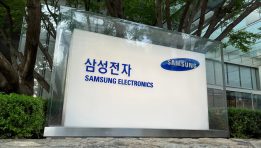
Samsung Electronics has crossed the $1 trillion market capitalization threshold, marking a significant milestone fueled by a broad-based rally in

- omer bar
- •
- 4 Min Read
- •
- ago 8 hours
SKN | AMD Earnings Beat Signals Rising Pressure on Nvidia in AI Chip Race
AMD Delivers Strong First-Quarter Results Advanced Micro Devices reported first-quarter earnings that exceeded Wall Street expectations, reinforcing its position as
- ago 8 hours
- •
- 4 Min Read
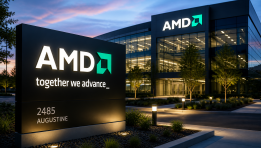
AMD Delivers Strong First-Quarter Results Advanced Micro Devices reported first-quarter earnings that exceeded Wall Street expectations, reinforcing its position as

- Ronny Mor
- •
- 6 Min Read
- •
- ago 11 hours
SKN | Coinbase Weighs In on NY Prediction Markets Lawsuit—Is Regulatory Pressure Reshaping Crypto’s Future?
A lawsuit in New York targeting prediction markets platforms has sparked broader debate across the cryptocurrency industry, with a
- ago 11 hours
- •
- 6 Min Read

A lawsuit in New York targeting prediction markets platforms has sparked broader debate across the cryptocurrency industry, with a


