


- sagi habasov
- •
- 8 Min Read
- •
- 2 hours ago
Key Points
- South Korea’s KOSPI leads regional gains during Monday’s morning trading session.
- Chinese and Hong Kong equities decline as investors weigh economic momentum concerns.
- Currency weakness in the Australian dollar and Japanese yen reflects cautious regional sentiment.
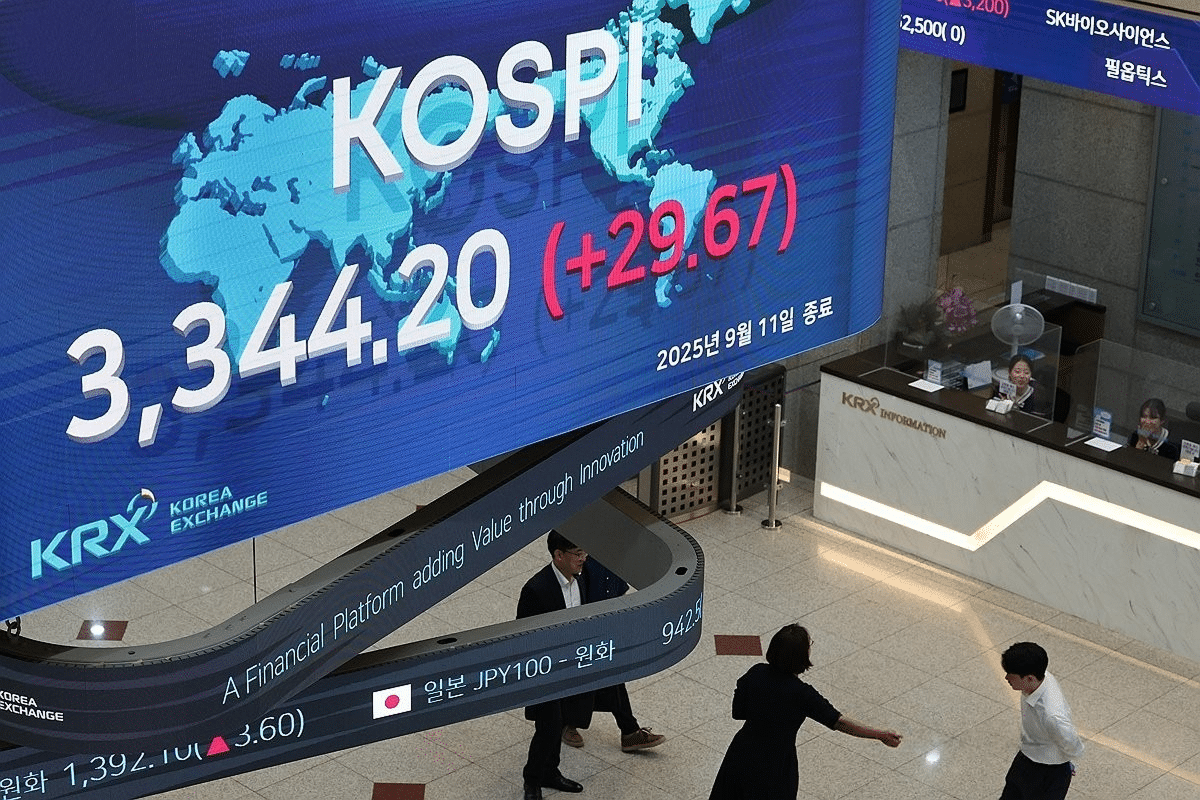
Asian markets opened the week with mixed performance on Monday, March 16, as investors navigated diverging economic signals across the region. While South Korean equities pushed higher during the morning session, mainland Chinese and Hong Kong markets retreated, highlighting persistent uncertainty surrounding growth expectations and investor risk appetite.
The uneven trading environment comes as global investors also monitor developments across North America, where Mexico observes Benito Juarez’s Birthday, closing the Mexico Stock Exchange for the holiday. With North American activity partially muted, Asian markets have taken center stage in setting the tone for global trading early in the week.
KOSPI Advances While Japan Remains Stable
South Korea emerged as one of the morning session’s strongest performers, with the KOSPI Composite Index rising 0.79 percent to 5,530.58. The gains reflect renewed investor interest in technology and export-oriented sectors that continue to benefit from resilient global demand for semiconductors and advanced electronics.
South Korean equities have increasingly attracted international capital flows in recent months as investors search for growth opportunities within Asia’s developed markets. Analysts note that the country’s strong manufacturing base and global technology leadership continue to support market confidence despite broader regional volatility.
Japan’s Nikkei 225, however, traded relatively flat during the early hours, slipping slightly by 0.06 percent to 53,788.48. The minor decline indicates a pause following the market’s recent rally, with investors evaluating currency movements and corporate outlooks ahead of upcoming economic indicators.
Currency markets also reflected a cautious tone in Japan. The Japanese Yen Index fell 0.27 percent to 62.61, suggesting continued pressure on the currency as traders assess interest rate differentials and global monetary policy expectations.
Chinese and Hong Kong Stocks Face Downward Pressure
Mainland Chinese equities struggled during the morning session, with the SSE Composite Index declining 0.81 percent to 4,095.45. The drop underscores lingering concerns about economic momentum in China, particularly as investors await additional policy support measures aimed at stabilizing growth and boosting domestic demand.
Market participants continue to watch for signals from Beijing regarding fiscal stimulus, infrastructure investment, and regulatory adjustments that could help support corporate earnings and investor sentiment.
Hong Kong’s Hang Seng Index also moved lower, falling 0.98 percent to 25,465.60. Technology and property-related stocks contributed to the decline, as international investors remain cautious about exposure to sectors that have faced structural challenges in recent quarters.
The performance of Chinese and Hong Kong equities often sets the broader tone for emerging Asian markets, and Monday’s weakness highlights how fragile investor confidence remains despite signs of stabilization in certain economic indicators.
Australia and India Reflect Broader Regional Caution
Australia’s S&P/ASX 200 edged slightly lower by 0.10 percent to 8,608.20, reflecting modest selling pressure in resource and financial stocks. Commodity-linked markets such as Australia frequently respond to shifts in Chinese economic expectations, making the country’s equity market particularly sensitive to developments in mainland China.
Currency markets also signaled caution. The Australian Dollar Index dropped sharply by 1.35 percent to 69.82, indicating a pullback in demand for risk-sensitive currencies across the region.
India’s benchmark S&P BSE SENSEX posted the steepest decline among major Asian indices during the morning session, sliding 1.93 percent to 74,563.92. The move suggests profit-taking following recent gains as investors reassess valuations in one of Asia’s fastest-growing equity markets.
Investors Focus on Global Signals and Policy Developments
Looking ahead, investors will closely monitor upcoming economic data releases, central bank signals, and geopolitical developments that could influence global capital flows. Market participants are also watching for policy updates from China aimed at stabilizing growth and supporting financial markets.
Currency movements across Asia will remain another critical factor, particularly as fluctuations in the Japanese yen and Australian dollar continue to shape export competitiveness and investor sentiment.
With North American markets partially quiet due to Mexico observing Benito Juarez’s Birthday and the closure of the Mexico Stock Exchange, Asian trading activity may play a more prominent role in determining the global market tone early this week.
For investors in Israel and around the world, the coming sessions will likely hinge on whether Asian markets can regain upward momentum or if broader concerns about global growth will continue to weigh on risk assets. Monitoring developments in Chinese policy, currency volatility, and sector-specific performance will remain essential as the week unfolds.
Comparison, examination, and analysis between investment houses
Leave your details, and an expert from our team will get back to you as soon as possible
* This article, in whole or in part, does not contain any promise of investment returns, nor does it constitute professional advice to make investments in any particular field.
To read more about the full disclaimer, click here
- orshu
- •
- 7 Min Read
- •
- ago 2 minutes
SKN | Federal Reserve Policy Decision and Global Central Bank Super-Thursday to Dictate Q1 Market Direction
Global financial markets enter the third week of March 2026 facing a historic convergence of monetary policy events that will
- ago 2 minutes
- •
- 7 Min Read

Global financial markets enter the third week of March 2026 facing a historic convergence of monetary policy events that will

- Arik Arkadi Sluzki
- •
- 6 Min Read
- •
- ago 4 hours
SKN | Google Maps Introduces Conversational AI and 3D Navigation in Major Platform Upgrade
Google has rolled out one of the most significant updates to Google Maps in recent years, introducing conversational artificial
- ago 4 hours
- •
- 6 Min Read

Google has rolled out one of the most significant updates to Google Maps in recent years, introducing conversational artificial
- orshu
- •
- 6 Min Read
- •
- ago 4 hours
SKN | Rising Demand for 24K Gold Assets Drives Expansion of High-Security Buying Services
Demand for physical gold assets continues to grow as investors, collectors, and estate holders increasingly turn to precious metals
- ago 4 hours
- •
- 6 Min Read

Demand for physical gold assets continues to grow as investors, collectors, and estate holders increasingly turn to precious metals
- orshu
- •
- 7 Min Read
- •
- ago 6 hours
SKN | U.S. Clarifies Iran War Oil Reserve Release Will Be Structured as an Exchange, Not a Sale
The United States has reaffirmed that any crude oil released from the Strategic Petroleum Reserve (SPR) in response to
- ago 6 hours
- •
- 7 Min Read

The United States has reaffirmed that any crude oil released from the Strategic Petroleum Reserve (SPR) in response to

