


- orshu
- •
- 7 Min Read
- •
- 14 minutes ago
Key Points
- Chinese automakers are eyeing U.S. expansion, potentially within five to ten years.
- Building factories in America may bypass 100% tariffs and ease political resistance.
- Increased competition could lower EV prices but pressure U.S. automaker margins and jobs.
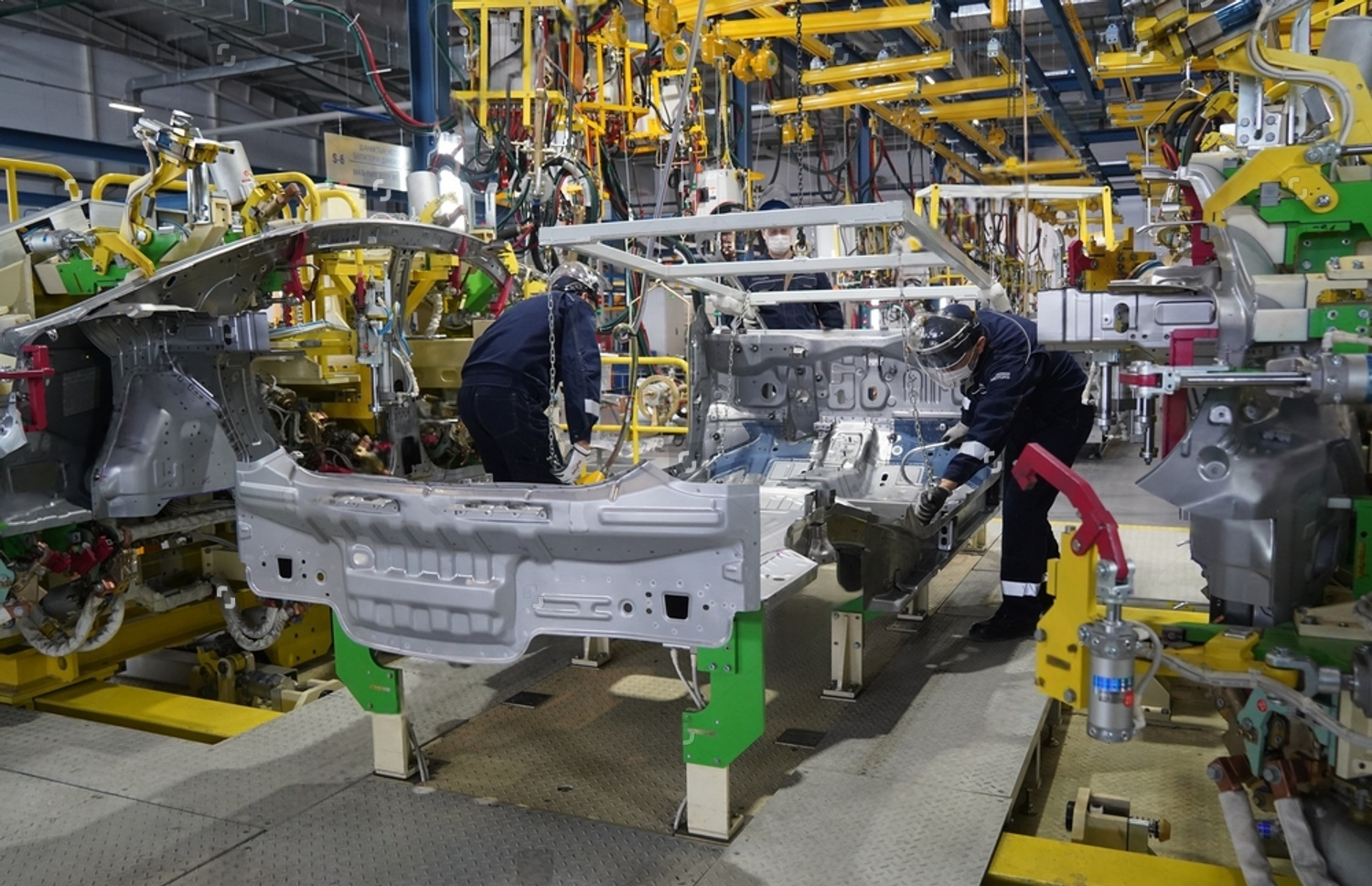
Chinese automakers may be closer to entering the U.S. market than many investors assume. While steep tariffs and tense trade relations have kept them out for years, industry analysts increasingly believe that Chinese brands could appear in American dealerships within the next five to ten years — potentially reshaping competition in the world’s most profitable auto market.
China already produces roughly one-third of the world’s vehicles and exported more than 8 million units last year, surpassing Japan as the largest auto exporter. With domestic overcapacity and fierce price competition among more than 100 local brands, global expansion has shifted from ambition to necessity.
Tariffs Block Imports — Factories Could Open the Door
Currently, Chinese-built vehicles face a 100% U.S. tariff, effectively shutting them out of the American retail market. However, the calculus changes if companies build production plants inside the United States. President Donald Trump recently signaled openness to Chinese investment, provided national and economic security concerns are addressed.
Constructing a U.S. factory would take years, but the groundwork may already be underway. Chinese-owned automakers such as Geely have an existing footprint through Volvo’s South Carolina plant, which is undergoing a $1.3 billion expansion. Analysts view this facility as a potential entry point for additional brands under Geely’s umbrella, including Zeekr and Lynk & Co.
This strategy mirrors how Japanese and Korean automakers successfully established U.S. manufacturing decades ago to defuse political resistance and embed themselves within local supply chains. For Chinese firms, domestic production could neutralize tariff barriers while improving brand perception.
EV Dominance Raises Competitive Stakes
China’s strongest advantage lies in electric vehicles. BYD recently overtook Tesla in global EV sales and surpassed Ford in overall global deliveries, underscoring China’s accelerating scale. The average Chinese export vehicle costs around $19,000, compared with roughly $50,000 for a new car sold in the U.S., highlighting significant pricing power.
If Chinese EV makers enter the U.S. with competitive pricing and modern battery technology, American consumers could benefit from greater choice and lower prices. However, the competitive shock would likely compress margins for domestic automakers, which collectively employ nearly one million workers in the United States.
For investors, the implications extend beyond auto stocks. Increased EV competition could pressure legacy automakers while accelerating infrastructure investment and battery innovation. Supply chains for semiconductors, rare earth materials and charging networks would also feel secondary effects.
Brand Trust vs. Value Proposition
A key uncertainty remains consumer acceptance. While U.S. buyers are price-sensitive, automotive purchases also depend heavily on brand trust, perceived quality and resale value. Analysts suggest that skepticism toward unfamiliar Chinese brands could initially limit penetration.
Yet history suggests that value often outweighs hesitation. Japanese and Korean automakers once faced similar doubts before capturing substantial U.S. market share. If Chinese manufacturers deliver competitive quality at lower prices, resistance may fade faster than anticipated.
The broader geopolitical backdrop will also influence timing. Trade policy, national security reviews and election dynamics could either accelerate or delay approvals. Still, strategic signals from policymakers suggest that localized production may provide a politically viable path forward.
Over the next three to five years, investors should watch for land acquisitions, joint ventures and factory announcements as leading indicators. A confirmed U.S. manufacturing commitment from a major Chinese automaker would mark a structural shift in global auto competition — one that could redefine pricing power, supply chains and market leadership well into the next decade.
Comparison, examination, and analysis between investment houses
Leave your details, and an expert from our team will get back to you as soon as possible
* This article, in whole or in part, does not contain any promise of investment returns, nor does it constitute professional advice to make investments in any particular field.
To read more about the full disclaimer, click here
- orshu
- •
- 8 Min Read
- •
- ago 2 hours
SKN | Global Week Ahead: Markets Brace for Another Wave of AI Volatility and “Panic Trading”
Global markets enter the week on edge, preparing for another round of artificial intelligence-driven turbulence. After two weeks of sharp
- ago 2 hours
- •
- 8 Min Read

Global markets enter the week on edge, preparing for another round of artificial intelligence-driven turbulence. After two weeks of sharp

- sagi habasov
- •
- 5 Min Read
- •
- ago 1 month
SKN | Global Market Outlook 2026: Goldman Sachs Sees Double-Digit Equity Returns
Macro View: Cautious Optimism for 2026 Goldman Sachs’ 2026 outlook reflects measured optimism toward global equity markets. According to the
- ago 1 month
- •
- 5 Min Read

Macro View: Cautious Optimism for 2026 Goldman Sachs’ 2026 outlook reflects measured optimism toward global equity markets. According to the
- sagi habasov
- •
- 7 Min Read
- •
- ago 1 month
The Elephant Overtakes the Dragon: India Eclipses China in Tech Exports to the U.S.
The chart released this morning by the U.S. Department of Commerce is nothing short of a geopolitical earthquake disguised as
- ago 1 month
- •
- 7 Min Read

The chart released this morning by the U.S. Department of Commerce is nothing short of a geopolitical earthquake disguised as

- Lior mor
- •
- 7 Min Read
- •
- ago 1 month
SKN | Can China’s Hainan Free Trade Port Rewrite the Rules of Global Trade?
China has taken a decisive step to reshape its role in global trade by transforming Hainan into a fully fledged,
- ago 1 month
- •
- 7 Min Read
China has taken a decisive step to reshape its role in global trade by transforming Hainan into a fully fledged,

