


- Lior mor
- •
- 7 Min Read
- •
- 37 minutes ago
Key Points
- Anthropic updated its Responsible Scaling Policy to allow continued development if competitors are close behind.
- The company faces mounting pressure from rivals and potential IPO ambitions.
- Tensions with the US Defense Department underscore AI’s growing national security role.

Anthropic has softened one of its core safety commitments, marking a significant shift for a company that once positioned itself as the responsible counterweight in the artificial intelligence race. The move highlights how competitive and commercial pressures are reshaping the priorities of leading AI startups.
From Safety-First to Competitive Parity
In 2023, Anthropic introduced its Responsible Scaling Policy, pledging to slow or delay AI development if systems appeared potentially dangerous. That stance helped differentiate the company from rivals and reinforced its branding as a safety-focused alternative in the rapidly advancing AI sector.
In a new blog post released Tuesday, Anthropic said it would no longer automatically delay development if it believes it lacks a “significant lead” over competitors. The updated language signals a shift from unilateral restraint toward a more competition-aware approach.
The company cited a broader policy environment increasingly focused on AI competitiveness and economic growth rather than federal-level safety mandates. In effect, Anthropic is recalibrating its strategy in response to industry and political momentum favoring speed and scale.
IPO Ambitions and Industry Pressure
The change underscores the growing tension between AI idealism and commercial reality. Anthropic is competing directly with OpenAI, Google, and xAI in what has become one of the most capital-intensive technology races in history.
CEO Dario Amodei, who left OpenAI in 2020 partly over safety concerns, originally framed Anthropic as a mission-driven alternative. Yet the startup is now reportedly preparing for a potential public offering and was recently valued at $380 billion. OpenAI, which began as a nonprofit before transitioning to a for-profit structure, is raising funds at a valuation exceeding $850 billion.
Notably, OpenAI also revised its mission statement last year, removing the word “safely” from its goal of ensuring artificial general intelligence benefits humanity. Both companies’ policy adjustments reflect how investor expectations and market competition are reshaping strategic messaging.
Anthropic said it always anticipated revising its scaling policy as the industry evolved, describing the update as part of an ongoing process rather than a retreat from safety.
Defense Department Tensions Add Pressure
The policy shift coincides with mounting friction between Anthropic and the US Defense Department over guardrails on military use of its Claude AI system. According to reports, Pentagon officials have warned they may invoke the Defense Production Act if the company does not comply with government terms.
US officials reportedly discussed consequences ranging from declaring Anthropic a supply-chain risk to compelling access under Cold War-era authorities. The dispute illustrates the increasingly strategic role AI companies play in national security.
Meanwhile, OpenAI is participating in a separate defense-linked initiative through a submission tied to Applied Intuition, though its involvement is limited to mission-control software.
Safety vs. Speed in the AI Era
Anthropic’s pivot signals a broader transformation across the AI landscape. Early narratives centered on existential risk and ethical guardrails are now competing with geopolitical rivalry, corporate valuations, and shareholder expectations.
The central question is no longer whether AI leaders value safety — but how much competitive disadvantage they are willing to tolerate in its name.
As IPO plans accelerate and governments assert greater control over AI infrastructure, the industry’s founding principles are increasingly tested against the realities of global competition.
Comparison, examination, and analysis between investment houses
Leave your details, and an expert from our team will get back to you as soon as possible
* This article, in whole or in part, does not contain any promise of investment returns, nor does it constitute professional advice to make investments in any particular field.
To read more about the full disclaimer, click here
- Ronny Mor
- •
- 6 Min Read
- •
- ago 3 hours
SKN | AI Transformation Drives 2,000 Job Cuts at WiseTech as Automation Reshapes Australia’s Tech Workforce
WiseTech Global will eliminate roughly 2,000 positions — nearly 29% of its global workforce — as part of a two-year
- ago 3 hours
- •
- 6 Min Read
WiseTech Global will eliminate roughly 2,000 positions — nearly 29% of its global workforce — as part of a two-year

- sagi habasov
- •
- 6 Min Read
- •
- ago 5 hours
SKN | Doubao Tops 100 Million Users: Has ByteDance Won China’s Holiday AI War?
ByteDance’s AI chatbot Doubao surpassed 100 million daily active users during China’s Lunar New Year holiday, marking a decisive moment
- ago 5 hours
- •
- 6 Min Read
ByteDance’s AI chatbot Doubao surpassed 100 million daily active users during China’s Lunar New Year holiday, marking a decisive moment

- Arik Arkadi Sluzki
- •
- 6 Min Read
- •
- ago 18 hours
SKN | AMD Stock Surges on AI Momentum — Is This the Start of a New Competitive Phase?
Advanced Micro Devices (AMD) rallied strongly in today’s session, outperforming broader semiconductor indices as investor enthusiasm around artificial intelligence
- ago 18 hours
- •
- 6 Min Read
Advanced Micro Devices (AMD) rallied strongly in today’s session, outperforming broader semiconductor indices as investor enthusiasm around artificial intelligence

- Lior mor
- •
- 7 Min Read
- •
- ago 18 hours
SKN | Will Micron Technology Announce a Stock Split as AI-Driven Momentum Lifts Shares?
As semiconductor stocks rally on the back of artificial intelligence demand, investors are increasingly asking whether Micron Technology could
- ago 18 hours
- •
- 7 Min Read
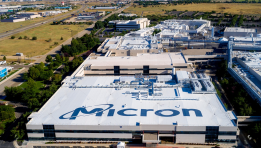
As semiconductor stocks rally on the back of artificial intelligence demand, investors are increasingly asking whether Micron Technology could

