





- omer bar
- •
- 7 Min Read
- •
- 2 months ago


Key Points
- AMD is considering raising up to $5 billion through an investment-grade bond offering, potentially its largest debt sale to date.
- The financing comes as AMD expands its AI strategy through agreements with Anthropic and Microsoft and prepares to invest heavily in computing capacity.
- The new debt could provide greater financial flexibility, but investors will increasingly evaluate whether AMD's AI investments generate enough revenue and cash flow to justify higher financial obligations.

Advanced Micro Devices is preparing to raise as much as $5 billion through a new investment-grade bond offering, potentially marking the company’s largest debt sale to date. The planned financing comes as AMD expands its artificial intelligence business and commits additional resources to meet growing demand for computing capacity. The move also highlights a broader trend across the technology sector, where companies are increasingly turning to debt markets to finance the capital-intensive AI infrastructure cycle.
AMD Turns to Debt as AI Spending Expands
AMD is considering a bond sale of up to $5 billion, although the final size could change depending on investor demand. The proposed offering is expected to consist of four tranches with maturities ranging from three to 10 years. Initial pricing discussions for the longest maturity indicate a yield premium of approximately 1.15 percentage points over comparable U.S. Treasury securities.
The financing arrives as AMD increases investment around its AI chip business. The company recently announced agreements with Anthropic and Microsoft that are expected to expand the deployment of its AI processors. AMD has also committed as much as $5 billion toward its agreement with Anthropic, underscoring the scale of capital being directed toward the company’s AI strategy.
Debt Provides Flexibility but Adds Financial Commitments
AMD has indicated that proceeds from the bond offering would be used for general corporate purposes, which could include repaying existing debt. The timing is notable because the company has $875 million of bonds scheduled to mature next month.
Using debt markets can provide AMD with additional financial flexibility without immediately issuing new equity. That distinction is particularly relevant as semiconductor companies compete for capital to expand production, develop advanced processors and secure positions within the rapidly growing AI infrastructure market.
However, additional borrowing also introduces future interest and repayment obligations. The economics of the financing will therefore depend partly on whether AMD can convert its expanding AI opportunity into sufficient revenue and cash generation. Strong demand could make the additional leverage manageable, while a slowdown in AI infrastructure spending would make the financial commitments more consequential.
AI Infrastructure Is Reshaping Corporate Financing
AMD’s planned offering is part of a much broader financing trend surrounding the AI boom. Building the infrastructure required for advanced computing requires substantial spending on chips, data centers, networking equipment, power and manufacturing capacity. As these investments grow, technology companies are increasingly accessing bond markets rather than relying exclusively on operating cash flow.
For AMD, the strategy reflects an effort to position its balance sheet behind its competitive ambitions. The company is attempting to capture additional share of a market increasingly dominated by large-scale AI infrastructure investments, while partnerships with major technology companies could provide greater visibility into future demand.
Market Outlook
AMD’s proposed debt offering will give investors another measure of how aggressively the company intends to finance its AI expansion. The critical question will be whether new borrowing translates into stronger competitive positioning and higher long-term cash generation. Investor demand for the bonds should also provide a useful signal regarding the market’s confidence in AMD’s financial strength. As AI spending continues to reshape the technology sector, AMD’s ability to balance investment, debt management and operating growth could become increasingly important to its valuation and shareholder returns.
Comparison, examination, and analysis between investment houses
Leave your details, and an expert from our team will get back to you as soon as possible
* This article, in whole or in part, does not contain any promise of investment returns, nor does it constitute professional advice to make investments in any particular field.
To read more about the full disclaimer, click here
- orshu
- •
- 7 Min Read
- •
- ago 11 hours
SKN | Germany Seeks ECB Executive Board Seat as Succession Debate Takes Shape
Germany is preparing to put forward a candidate for a vacant seat on the European Central Bank’s executive board,
- ago 11 hours
- •
- 7 Min Read

Germany is preparing to put forward a candidate for a vacant seat on the European Central Bank’s executive board,

- sagi habasov
- •
- 7 Min Read
- •
- ago 11 hours
SKN | Four Warning Signs Point to Further Stress in the U.S. Bond Market
The U.S. Treasury market is entering a period of heightened pressure as rapidly rising yields raise concerns that bond
- ago 11 hours
- •
- 7 Min Read

The U.S. Treasury market is entering a period of heightened pressure as rapidly rising yields raise concerns that bond
- sagi habasov
- •
- 6 Min Read
- •
- ago 1 day
SKN | China Bond Yields Fall as Global Borrowing Costs Rise
The contrast is particularly striking as government bond markets elsewhere face renewed selling pressure. In the United States, the 10-year
- ago 1 day
- •
- 6 Min Read

The contrast is particularly striking as government bond markets elsewhere face renewed selling pressure. In the United States, the 10-year

- Ronny Mor
- •
- 6 Min Read
- •
- ago 1 day
SKN | Fed’s Musalem Says More Rate Hikes May Be Needed to Bring Inflation Back to 2%
Federal Reserve Bank of St. Louis President Alberto Musalem said Thursday that the U.S. central bank will need to
- ago 1 day
- •
- 6 Min Read
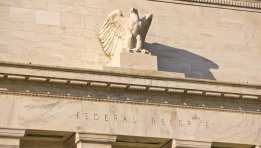
Federal Reserve Bank of St. Louis President Alberto Musalem said Thursday that the U.S. central bank will need to

