


- Ronny Mor
- •
- 7 Min Read
- •
- 13 minutes ago
Key Points
- AMD and Meta’s reported $100 billion AI infrastructure partnership signals intensifying competition in high-performance AI chips.
- The deal challenges Nvidia’s dominance in data center GPUs and reshapes hyperscaler procurement strategies.
- Broader semiconductor and global tech ecosystems, including Israel’s AI sector, could feel the ripple effects.
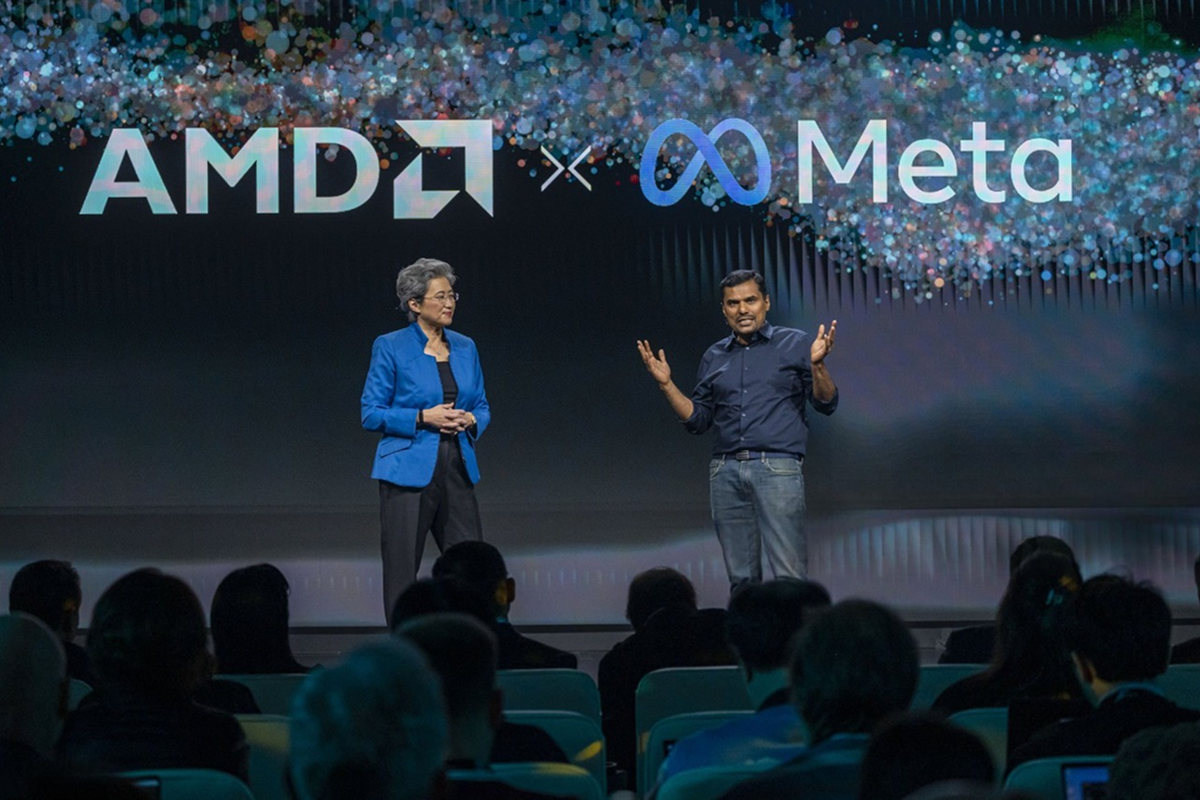
A reported $100 billion AI infrastructure collaboration between AMD and Meta has sent a strong message across the semiconductor industry, widely interpreted as a strategic counterweight to Nvidia’s dominance. The scale of the agreement underscores the escalating capital commitments hyperscalers are deploying to secure AI computing capacity. In an environment where AI infrastructure spending is becoming the defining growth driver for global technology markets, the competitive landscape may be entering a new phase.
Strategic Realignment in the AI Chip Race
For years, Nvidia has maintained a commanding position in AI accelerators, benefiting from early investment in GPU architecture optimized for machine learning workloads. However, AMD has steadily expanded its data center footprint with its Instinct series accelerators and high-performance CPUs, targeting both training and inference markets.
Meta’s reported multi-year AI infrastructure commitment to AMD suggests diversification away from single-supplier dependency. Hyperscalers are increasingly motivated to secure supply resilience, negotiate pricing leverage, and customize silicon solutions. A deal of this magnitude, if fully executed, may accelerate AMD’s revenue visibility and market share within AI clusters.
The implications extend beyond revenue figures. AI infrastructure spending is capital-intensive, and hyperscalers’ vendor choices influence broader ecosystem development, including software optimization, chip design partnerships, and long-term hardware roadmaps.
Market Reaction and Valuation Sensitivity
The announcement reverberated through semiconductor equities, with investors recalibrating expectations for Nvidia’s near-monopoly pricing power. While Nvidia retains technological leadership and robust ecosystem integration through CUDA and enterprise AI solutions, incremental competitive pressure may compress long-term margin assumptions.
At the same time, AMD’s positioning as a credible large-scale alternative may enhance its valuation narrative. Investors often reward diversified AI exposure, particularly when backed by binding hyperscaler commitments.
Given Nvidia’s substantial weighting within major indices such as the Nasdaq and S&P 500, any perceived erosion of dominance can influence broader equity sentiment. Semiconductor ETFs and AI-themed funds may experience increased volatility as portfolio allocations adjust.
Global and Israeli Tech Ecosystem Implications
The AI chip competition holds particular relevance for Israel’s technology sector, which is deeply integrated into global semiconductor research, cybersecurity infrastructure, and AI application development. Many Israeli startups rely on high-performance compute infrastructure, making vendor diversification strategically significant.
Increased competition among chipmakers could lead to improved pricing efficiency and broader accessibility of AI computing resources. Conversely, intensified capital expenditure cycles among hyperscalers could heighten macro sensitivity, especially if interest rates remain elevated and financing costs rise.
Beyond the immediate competitive narrative, the agreement reflects a broader structural shift: AI is no longer experimental infrastructure but a core capital allocation priority. Annual AI spending commitments from leading tech firms now rival traditional energy or industrial investment cycles in scale.
Looking ahead, the durability of AMD’s expanded AI positioning will depend on execution, performance benchmarks, and sustained hyperscaler adoption. Nvidia remains deeply entrenched with established software ecosystems and customer loyalty, limiting near-term displacement risk. However, competitive intensity may moderate pricing power across the sector. Investors will monitor supply chain capacity, next-generation chip launches, and capital expenditure guidance from hyperscalers to assess whether this alliance marks the beginning of a multi-vendor AI equilibrium or simply a tactical diversification within an AI market still largely shaped by Nvidia’s technological lead.
Comparison, examination, and analysis between investment houses
Leave your details, and an expert from our team will get back to you as soon as possible
* This article, in whole or in part, does not contain any promise of investment returns, nor does it constitute professional advice to make investments in any particular field.
To read more about the full disclaimer, click here
- omer bar
- •
- 7 Min Read
- •
- ago 1 minute
SKN | PayPal as a Takeover Target? What Acquisition Speculation Means for Valuation and Strategy
Renewed market chatter that PayPal could become a takeover target has reignited interest in the fintech giant’s valuation dynamics.
- ago 1 minute
- •
- 7 Min Read
Renewed market chatter that PayPal could become a takeover target has reignited interest in the fintech giant’s valuation dynamics.

- sagi habasov
- •
- 7 Min Read
- •
- ago 26 minutes
SKN | Nvidia Q4 Earnings Loom Ahead of GTC — Can AI Momentum Justify Elevated Expectations?
Nvidia is preparing to release its fourth-quarter earnings results just weeks before its highly anticipated annual GTC conference, placing
- ago 26 minutes
- •
- 7 Min Read
Nvidia is preparing to release its fourth-quarter earnings results just weeks before its highly anticipated annual GTC conference, placing

- orshu
- •
- 7 Min Read
- •
- ago 1 hour
SKN | Intel Surges 6% on AI Partnership Momentum — Is a Turnaround Finally Taking Shape?
Intel Corporation rose sharply on February 24, climbing approximately 6% to 46.22 during afternoon trading. The rally follows renewed
- ago 1 hour
- •
- 7 Min Read
Intel Corporation rose sharply on February 24, climbing approximately 6% to 46.22 during afternoon trading. The rally follows renewed
- sagi habasov
- •
- 7 Min Read
- •
- ago 2 hours
SKN | Could Bayer’s ERLEADA Lawsuit Disrupt Johnson & Johnson’s Oncology Growth Story?
Johnson & Johnson faces renewed legal scrutiny after Bayer filed a federal lawsuit accusing the company and its Janssen Biotech
- ago 2 hours
- •
- 7 Min Read

Johnson & Johnson faces renewed legal scrutiny after Bayer filed a federal lawsuit accusing the company and its Janssen Biotech

