


- Ronny Mor
- •
- 7 Min Read
- •
- 1 hour ago
Key Points
- Alphabet’s bond sale highlights extraordinary demand for top-tier tech credit.
- A potential 100-year bond reflects deep market trust in Alphabet’s long-term stability.
- AI-driven capex is transforming global corporate debt markets.
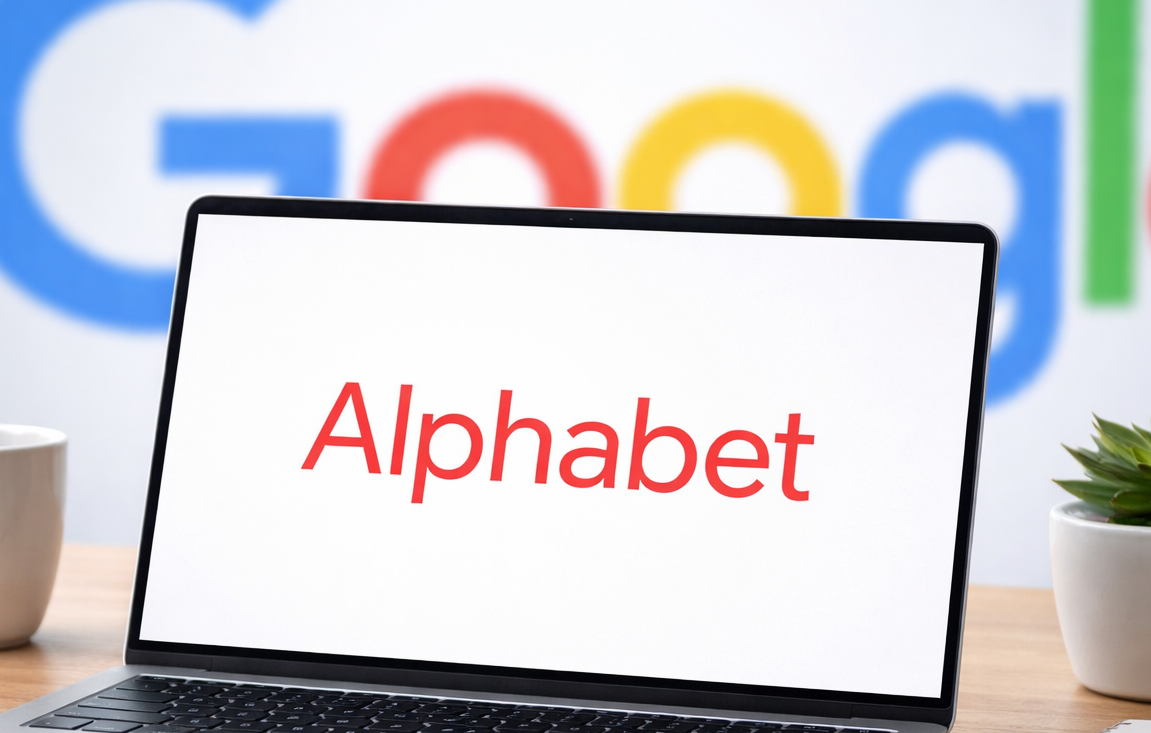
Alphabet is pushing the boundaries of corporate finance as it deepens its reliance on global debt markets to fund an unprecedented artificial intelligence investment cycle. The Google parent has upsized its latest bond offering to roughly $20 billion from an initially planned $15 billion, after demand reportedly surged beyond $100 billion. The move underscores how investor appetite for high-grade technology debt remains remarkably strong, even as borrowing needs across the sector accelerate.
A Rare Return of the Century Bond
At the center of Alphabet’s strategy is a potential sterling-denominated 100-year bond, a structure almost unheard of in the technology sector. If completed, it would mark the first century bond issuance by a tech company since Motorola in 1997. The significance is less about novelty and more about confidence: issuing debt that matures in the next century signals that markets view Alphabet as a durable, quasi-sovereign credit.
The U.S. dollar portion of the deal has been split into seven tranches, with the longest maturing in 2066. Initial pricing discussions pointed to a spread of about 1.2 percentage points over Treasuries, but tightening demand has reportedly pulled that closer to 0.95%. Shorter maturities proved even more attractive, with three-year bonds pricing just 0.27% above Treasuries, highlighting investors’ preference for near-term safety combined with elite credit quality.
Why Multi-Currency Matters Now
By tapping sterling and Swiss franc markets alongside U.S. dollars, Alphabet is executing a classic but increasingly important playbook: diversify funding sources to avoid saturating any single market. With hyperscalers collectively spending more than $650 billion this year on AI infrastructure, repeated dollar issuance risks overwhelming demand and pushing borrowing costs higher.
Sterling markets, in particular, offer structurally lower yields than U.S. equivalents, making them attractive for ultra-long maturities such as a 100-year bond. This allows Alphabet to lock in funding at relatively favorable rates while appealing to long-duration investors such as pension funds and insurers seeking predictable cash flows.
The transaction is being led by JPMorgan Chase, Goldman Sachs, and Bank of America, underscoring how marquee banks are positioning themselves at the center of Big Tech’s financing wave.
AI Spending Reshapes Credit Markets
Alphabet’s borrowing comes on the heels of its announcement that capital expenditure will reach about $185 billion this year, nearly double the prior year, as it scales Gemini AI models and cloud data centers. Despite holding more than $125 billion in cash, the company has opted to layer in cheap, long-term debt rather than draw down liquidity, a strategic choice that preserves flexibility while exploiting favorable credit conditions.
This approach is rapidly becoming industry standard. Oracle recently raised $25 billion in a bond deal that drew a record $129 billion in orders, while Morgan Stanley estimates hyperscalers could borrow around $400 billion in 2026 alone. If realized, that surge may drive U.S. investment-grade bond issuance to a record $2.25 trillion.
What Investors Should Watch Next
The critical question is not whether markets will absorb Big Tech debt, but how long enthusiasm can outpace concerns about AI returns. For now, Alphabet’s ability to contemplate a century bond suggests trust in both its balance sheet and its strategic direction. Still, investors will be watching closely for signs that AI spending translates into durable cash flows rather than inflated expectations.
As credit markets stretch further into the future, Alphabet’s deal may become a benchmark for how far confidence in Big Tech truly extends.
Comparison, examination, and analysis between investment houses
Leave your details, and an expert from our team will get back to you as soon as possible
* This article, in whole or in part, does not contain any promise of investment returns, nor does it constitute professional advice to make investments in any particular field.
To read more about the full disclaimer, click here
- Ronny Mor
- •
- 6 Min Read
- •
- ago 1 day
SKN | Why Are US Treasuries Sliding as China Moves to Rein in Bank Bond Holdings?
US Treasury prices fell as global bond markets reacted to reports that Chinese authorities have asked domestic banks to
- ago 1 day
- •
- 6 Min Read

US Treasury prices fell as global bond markets reacted to reports that Chinese authorities have asked domestic banks to
- Ronny Mor
- •
- 7 Min Read
- •
- ago 1 day
SKN | Is the Strong-Dollar Era Fading Despite White House Rhetoric?
The White House continues to insist it supports a strong U.S. dollar, but markets are sending a different message. After
- ago 1 day
- •
- 7 Min Read

The White House continues to insist it supports a strong U.S. dollar, but markets are sending a different message. After

- orshu
- •
- 6 Min Read
- •
- ago 4 days
SKN | Australian Dollar Index Rallies as Risk Appetite Improves and Dollar Pressure Eases
The Australian Dollar Currency Index posted a notable gain on February 6, rising sharply as global markets leaned toward
- ago 4 days
- •
- 6 Min Read
The Australian Dollar Currency Index posted a notable gain on February 6, rising sharply as global markets leaned toward

- Lior mor
- •
- 7 Min Read
- •
- ago 6 days
SKN | Treasury Yields Steady as Markets Brace for Key U.S. Economic Signals
U.S. Treasury yields held in a narrow range as investors paused ahead of a dense stretch of economic data that
- ago 6 days
- •
- 7 Min Read
U.S. Treasury yields held in a narrow range as investors paused ahead of a dense stretch of economic data that

