


- omer bar
- •
- 7 Min Read
- •
- 9 hours ago
Key Points
- Africa led global solar growth in 2025 with 17% capacity expansion despite a broader slowdown.
- Falling Chinese panel and battery prices are transforming energy economics across multiple countries.
- Policy stability and regulatory clarity will determine whether growth accelerates or stalls.
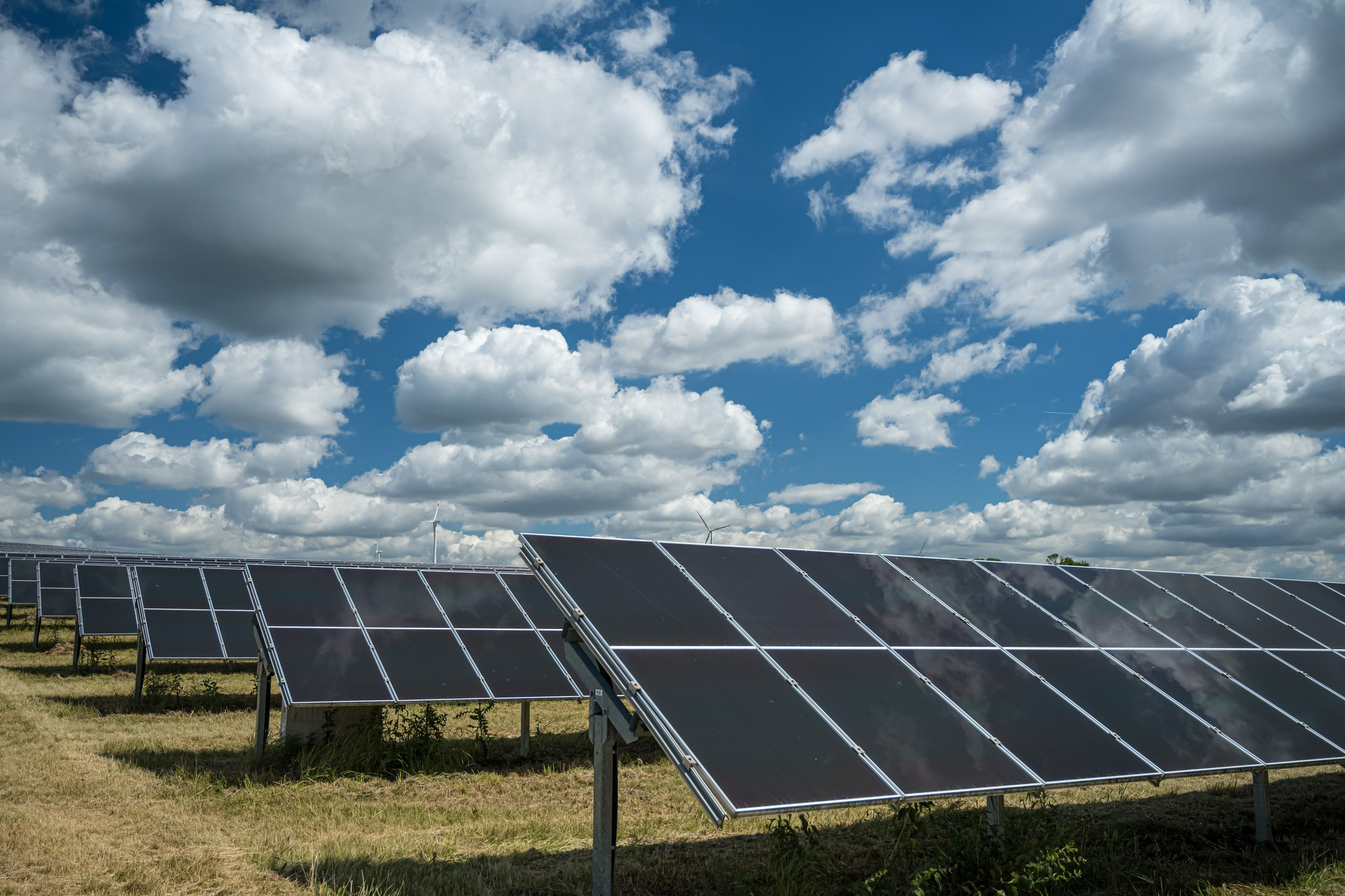
Africa became the world’s fastest-growing solar market in 2025, expanding installed capacity by 17% even as global solar growth slowed sharply. While worldwide solar capacity rose 23% to 618 gigawatts — down from 44% growth in 2024 — momentum has shifted toward emerging markets, with Africa increasingly positioned as a central player in the next phase of renewable energy expansion.
The surge has been fueled largely by imports of competitively priced Chinese solar panels and declining battery storage costs, allowing households and businesses to bypass unreliable grids and expensive diesel generation. The transformation reflects both economic necessity and evolving policy frameworks across multiple African economies.
Demand Broadens Beyond South Africa
For years, South Africa dominated the continent’s solar imports, at times accounting for nearly half of all shipments. That concentration is now easing. Its share has fallen below one-third as demand accelerates across Nigeria, Algeria, Zambia and Botswana. Twenty African nations set new annual solar import records in 2025, while 25 countries imported at least 100 megawatts of capacity.
Nigeria has overtaken Egypt as Africa’s second-largest solar importer. The gradual removal of diesel subsidies has significantly altered the economics of off-grid power, pushing businesses toward solar-plus-storage systems. In Algeria, imports surged more than 30-fold year-over-year, underscoring the speed of adoption once cost barriers decline.
Yet installed capacity still lags shipments. Since 2017, approximately 64 gigawatts peak (GWp) of solar equipment has been delivered to Africa, but only 23.4 GWp is currently operational. This gap highlights both execution challenges and the pipeline potential for continued growth.
Falling Storage Costs Reshape the Energy Equation
Battery storage prices in Africa fell to $112 per kilowatt-hour in 2025 from $144 in 2023, dramatically improving the viability of round-the-clock renewable power. For a continent where baseload reliability remains a critical constraint on industrial and economic growth, cheaper storage is arguably as transformative as panel affordability.
At least 23 African countries now generate more than 5% of their electricity from solar, marking a structural shift in energy diversification. Unlike regions with long-term government roadmaps, Africa’s momentum is being driven by market economics aligning with incremental policy improvements rather than centralized strategic planning.
However, regulatory unpredictability remains a core risk. Shifting import duties, inconsistent tax regimes and unclear long-term energy commitments continue to weigh on investor confidence. For international capital — including Israeli renewable developers and U.S. infrastructure funds increasingly scouting emerging markets — policy visibility is essential.
Manufacturing Ambitions and Job Creation
Africa is not only consuming solar technology; it is beginning to build it. Nigeria has announced plans for a 1 GW solar panel factory, while facilities are under development in Egypt, South Africa and Ethiopia. The longer-term objective is technology transfer from China to reduce import dependence.
The employment impact extends well beyond manufacturing. Installation, maintenance, distribution and financing are fueling a growing ecosystem of small and medium-sized enterprises. This distributed job creation model may offer broader economic multipliers than traditional centralized energy projects.
Still, sustaining growth will require clearer regulatory frameworks and stable policy commitments. Investors will be watching whether governments can provide consistent long-term signals comparable to those in the Middle East or Europe.
Africa’s solar acceleration may mark the beginning of a structural realignment in global renewable energy demand. The next phase hinges less on equipment availability and more on governance, grid integration and capital discipline — factors that will determine whether 2025 was a breakout year or merely an early inflection point.
Comparison, examination, and analysis between investment houses
Leave your details, and an expert from our team will get back to you as soon as possible
* This article, in whole or in part, does not contain any promise of investment returns, nor does it constitute professional advice to make investments in any particular field.
To read more about the full disclaimer, click here
- sagi habasov
- •
- 7 Min Read
- •
- ago 2 minutes
SKN | Is Oil Entering a Cooling Phase as Iran Talks and OPEC+ Supply Plans Shift the Balance?
Oil prices are heading toward their first back-to-back weekly decline of 2026, signaling a shift in market psychology after months
- ago 2 minutes
- •
- 7 Min Read

Oil prices are heading toward their first back-to-back weekly decline of 2026, signaling a shift in market psychology after months

- Ronny Mor
- •
- 7 Min Read
- •
- ago 2 days
SKN | Is Europe’s Naval Rearmament Driving TKMS Toward a New Growth Cycle?
Germany’s Thyssenkrupp Marine Systems (TKMS) has reached a record $22 billion order backlog and upgraded its sales outlook for 2026,
- ago 2 days
- •
- 7 Min Read

Germany’s Thyssenkrupp Marine Systems (TKMS) has reached a record $22 billion order backlog and upgraded its sales outlook for 2026,

- omer bar
- •
- 9 Min Read
- •
- ago 3 days
SKN | Why U.S. Natural Gas Futures Are Slipping Amid Political Shifts and Sanctions Changes
U.S. natural gas futures eased this week as traders contended with a more complex energy landscape marked by softer short-term
- ago 3 days
- •
- 9 Min Read

U.S. natural gas futures eased this week as traders contended with a more complex energy landscape marked by softer short-term
- Ronny Mor
- •
- 5 Min Read
- •
- ago 3 days
SKN | Offshore Giant: Transocean (RIG) to Acquire Valaris in $5.8 Billion Deal
In a dramatic move for the energy sector, offshore drilling giant Transocean Ltd. (RIG) has announced the acquisition of its
- ago 3 days
- •
- 5 Min Read

In a dramatic move for the energy sector, offshore drilling giant Transocean Ltd. (RIG) has announced the acquisition of its

