


- Lior mor
- •
- 8 Min Read
- •
- 2 months ago
Key Points
- Fed officials quietly welcome calls for a “backseat” role after a year of intense White House pressure.
- Political scrutiny has reinforced the importance of central bank independence for market confidence.
- Leadership uncertainty in 2026 could test cohesion within the Federal Reserve and unsettle investors.
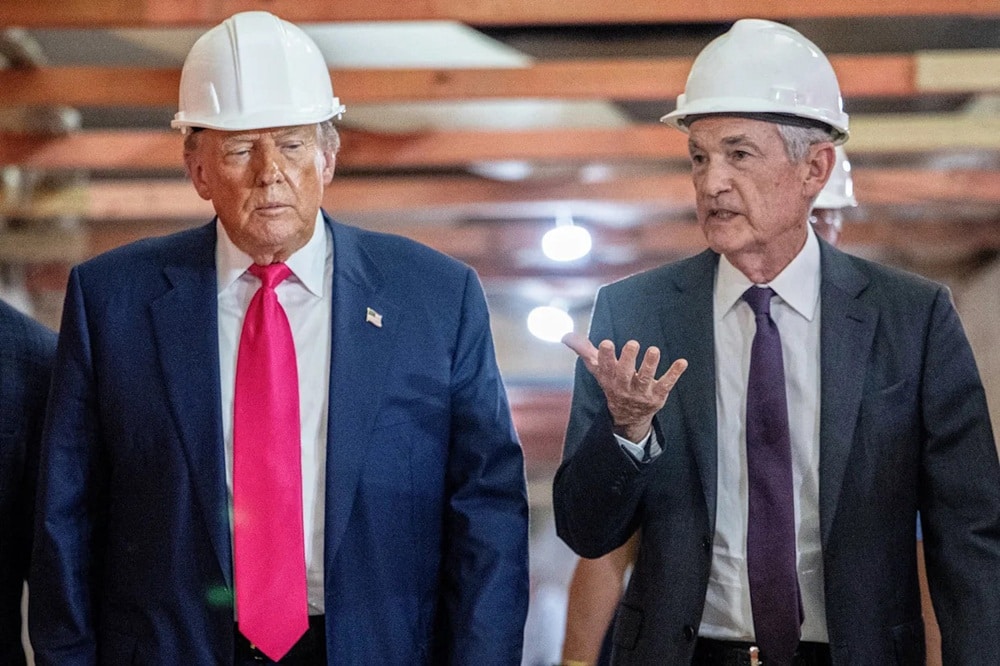
Calls for a more restrained, lower-profile Federal Reserve have gained traction as Washington recalibrates its approach to monetary authority under a second Trump administration. Yet behind the scenes, few are more relieved by the prospect of a “backseat Fed” than central bank officials themselves, many of whom spent much of the past year bracing for unprecedented political pressure, personal attacks, and challenges to the institution’s independence.
The tension came into full public view last summer when President Donald Trump made a rare and highly symbolic visit to the Federal Reserve’s headquarters. Standing alongside Chair Jerome Powell on a construction site, the president openly questioned renovation costs, implying managerial failure. While Powell calmly rebutted the claims, the moment crystallized what insiders describe as months of escalating scrutiny that blurred the line between political theater and institutional intimidation.
Political Pressure Tests the Fed’s Independence
Trump’s criticism of the Fed went far beyond policy disagreement. During the election campaign and its aftermath, Powell was accused of political bias for rate cuts, despite the Fed’s statutory independence. Other officials were not spared. Governor Lisa Cook became the target of public allegations and a legal challenge that has now escalated to the Supreme Court, raising concerns within the central bank and across other independent agencies that no institution was entirely off-limits.
For markets, the discomfort was palpable. Investors may debate the appropriate path of interest rates, but the credibility of the Fed as an independent arbiter is widely seen as non-negotiable. Any perception that monetary policy could be subordinated to political objectives risks undermining confidence, inflating risk premiums, and destabilizing inflation expectations.
Selective Silence as a Defensive Strategy
In response, Fed officials have increasingly adopted a posture of disciplined restraint. Public remarks have stayed tightly focused on data, mandates, and process, while politically charged questions have been deflected. Powell’s repeated insistence that policy decisions are driven solely by economic indicators has become both a reassurance to markets and a shield against provocation.
This selective silence aligns, perhaps ironically, with criticism from some policymakers who argue the Fed communicates too much. Treasury Secretary Scott Bessent’s advocacy for a quieter central bank has found a receptive audience inside the institution, where staff see reduced visibility as a way to lower political temperature without compromising policy substance.
Leadership Uncertainty Looms Over 2026
Complicating matters further is the looming transition at the top. With Powell’s term as chair ending in May, the administration has openly floated the idea of a “shadow chair,” effectively signaling a shift in influence before formal authority changes hands. The unusually public nature of the search has injected uncertainty, placing pressure on potential successors before they wield any institutional power.
Market participants are watching closely. Recent policy meetings have revealed more dissent within the Federal Open Market Committee than in past years, a trend that could intensify under a new chair who lacks Powell’s internal standing. Analysts warn that a less unified Fed could struggle to anchor expectations during the next economic downturn or inflationary flare-up.
Balancing Accountability and Stability
The Federal Reserve remains accountable to Congress and the public, and total opacity carries its own risks in an environment already fraught with economic uncertainty. Yet many insiders argue that a lower-profile Fed, focused on execution rather than constant signaling, may ultimately strengthen credibility rather than weaken it.
For now, the uneasy equilibrium holds. Political pressure has eased, but few inside the Fed believe it has disappeared. As attention shifts to leadership succession and broader fiscal debates, central bankers appear united around one pragmatic goal: doing their jobs with as little interference as possible, even if that means embracing the paradox of being most effective when they are least visible.
Comparison, examination, and analysis between investment houses
Leave your details, and an expert from our team will get back to you as soon as possible
* This article, in whole or in part, does not contain any promise of investment returns, nor does it constitute professional advice to make investments in any particular field.
To read more about the full disclaimer, click here
- Lior mor
- •
- 7 Min Read
- •
- ago 2 hours
SKN | $166 Billion in Tariff Refunds at Stake: How the U.S. Plans to Process Claims After Court Ruling
The U.S. government is preparing to roll out a new system that could return billions of dollars in tariffs to
- ago 2 hours
- •
- 7 Min Read

The U.S. government is preparing to roll out a new system that could return billions of dollars in tariffs to

- sagi habasov
- •
- 6 Min Read
- •
- ago 2 months
SKN | Intel’s Strategic Gamble: Why Some Investors Remain Deeply Skeptical
Intel’s stock continues to divide investors, but skepticism remains pronounced among those focused on execution risk and capital discipline.
- ago 2 months
- •
- 6 Min Read

Intel’s stock continues to divide investors, but skepticism remains pronounced among those focused on execution risk and capital discipline.

- Ronny Mor
- •
- 7 Min Read
- •
- ago 2 months
SKN | Is Washington Late to the AI Bubble Debate as Tech and Markets Race Ahead?
The question of whether artificial intelligence has entered bubble territory has dominated conversations in Silicon Valley and on Wall Street
- ago 2 months
- •
- 7 Min Read

The question of whether artificial intelligence has entered bubble territory has dominated conversations in Silicon Valley and on Wall Street
- sagi habasov
- •
- 7 Min Read
- •
- ago 3 months
SKN | Will Chile’s Markets Enter a New Pro-Business Cycle After Kast’s Decisive Election Win?
Chilean financial markets reacted positively after right-wing candidate José Antonio Kast won the presidency by a wide margin, delivering clarity
- ago 3 months
- •
- 7 Min Read

Chilean financial markets reacted positively after right-wing candidate José Antonio Kast won the presidency by a wide margin, delivering clarity

