


- Lior mor
- •
- 8 Min Read
- •
- 3 months ago
Key Points
- Policy reversals and the loss of EV tax credits in 2025 sharply reduced electric vehicle demand in the U.S.
- Ford, GM, and Stellantis each scaled back EV investments, booking billions in charges and pivoting toward hybrids and gas-powered vehicles.
- The strategic pullback improves near-term financial stability but could leave automakers underexposed if EV demand rebounds later in the decade.
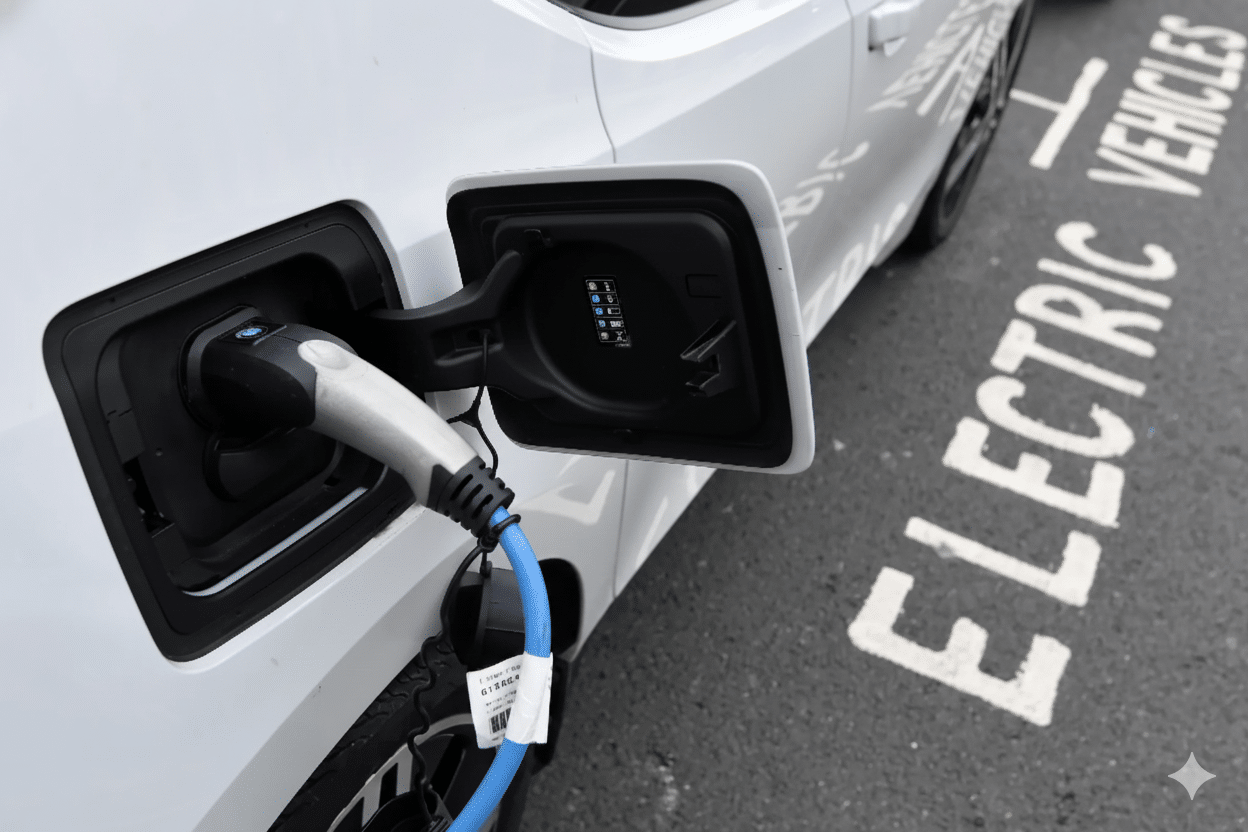
The final weeks of the year are usually quiet for the auto industry. In 2025, that pattern broke decisively. Policy reversals, weakening consumer demand, and the removal of government incentives combined to force a strategic rethink across the U.S. auto sector, particularly for Detroit’s Big Three. Electric vehicles, once positioned as the centerpiece of long-term growth, moved from bold expansion plans to damage control and retrenchment.
The shift was not driven by a single event. In Europe, regulators scrapped the EU’s 2025 EV mandate, easing pressure on manufacturers already struggling with affordability and infrastructure challenges. In the United States, the rollback of fuel economy standards and the expiration of federal EV tax credits removed key policy supports almost simultaneously. The result was a sharp slowdown in EV adoption, leaving automakers with excess capacity, heavy sunk costs, and hard choices about capital allocation.
Ford Resets Its EV Ambitions
Ford Motor Company moved most aggressively to reset expectations. In mid-December, CEO Jim Farley announced a pivot away from full battery-electric vehicles toward hybrids and extended-range EVs. The decision came with a staggering $19.5 billion in charges tied to canceled programs, downsized platforms, and underutilized assets.
Ford scrapped plans for several high-profile EVs, including a three-row electric SUV and a next-generation version of the Lightning pickup. The company also shelved an electric commercial van program, citing weak consumer willingness to pay and deteriorating unit economics. While the magnitude of the charges was large, investor reaction was muted, reflecting a belief that decisive action was preferable to prolonged losses.
The longer-term risk for Ford is strategic optionality. By pulling back so sharply, the company could find itself underexposed if EV demand rebounds later in the decade. While hybrids and existing models like the Mach-E provide some flexibility, Ford’s future EV footprint will be narrower than originally planned.
General Motors Slows, but Keeps Its Foot in the Door
General Motors chose a more measured approach. In October, the company disclosed $1.6 billion in charges related to reassessing EV capacity and canceling or modifying supplier contracts. Unlike Ford, GM did not abandon its EV roadmap entirely, continuing development of vehicles ranging from the affordable Chevrolet Bolt to ultra-luxury offerings under Cadillac.
At the same time, GM acknowledged reality by embracing hybrids, a technology it once dismissed as a temporary bridge. CEO Mary Barra committed roughly $4 billion toward expanding hybrid and internal combustion production, emphasizing disciplined capital deployment and margin protection.
Credit analysts remain cautious. Regulatory filings have left the door open to additional charges if further program cancellations occur. Still, GM’s relatively consistent execution over the past decade has given investors confidence that it can adjust production mix and technology strategy without destabilizing the core business.
Stellantis Rewrites Its U.S. Strategy
Stellantis entered 2025 already facing uneven EV momentum, and the company used the demand slowdown to rethink its North American lineup. Under new leadership, Stellantis reversed several EV-only decisions, reintroducing internal combustion options and delaying or canceling electric pickups and performance models.
The Dodge Charger was reengineered to accommodate gasoline engines, the Ram EV pickup was discontinued, and the Ramcharger extended-range model was pushed into 2026. Even the iconic Hemi V8, previously retired, is making a return. In the U.S., Stellantis now offers only a limited number of EVs, while maintaining a broader electric strategy in Europe where regulations remain stricter.
The company has warned of one-time charges tied to these changes, though it has not disclosed specific figures. The underlying goal is clear: reduce complexity, protect margins, and align production with what consumers are actually buying.
An Industry Hits Pause on Electrification
What unites Ford, GM, and Stellantis in 2025 is not an abandonment of electrification, but a recognition that the transition will be slower, more cyclical, and more politically sensitive than previously assumed. EV adoption has not disappeared, but it has stalled at a level that makes large-scale, capital-intensive bets difficult to justify without strong policy support.
By stepping back now, the Big Three are prioritizing financial resilience over technological leadership. The risk is that if demand accelerates later in the decade, these companies may need to reinvest quickly and at higher cost. For now, however, 2025 will be remembered as the year Detroit put the brakes on its EV ambitions.
Comparison, examination, and analysis between investment houses
Leave your details, and an expert from our team will get back to you as soon as possible
* This article, in whole or in part, does not contain any promise of investment returns, nor does it constitute professional advice to make investments in any particular field.
To read more about the full disclaimer, click here
- omer bar
- •
- 6 Min Read
- •
- ago 14 minutes
SKN | Is the Greenback Regaining Dominance? US Dollar Index Surges Past 100 in Strong Weekly Rally
The US Dollar Index demonstrated formidable upward momentum this week, decisively breaking through key resistance levels to close at
- ago 14 minutes
- •
- 6 Min Read

The US Dollar Index demonstrated formidable upward momentum this week, decisively breaking through key resistance levels to close at

- Arik Arkadi Sluzki
- •
- 7 Min Read
- •
- ago 9 hours
SKN | Formula 1 Faces Strategic Test as Middle East Tensions Intensify
Global sporting events are increasingly intersecting with geopolitical risk, and Formula 1 is now facing the possibility of significant calendar
- ago 9 hours
- •
- 7 Min Read
Global sporting events are increasingly intersecting with geopolitical risk, and Formula 1 is now facing the possibility of significant calendar

- Lior mor
- •
- 7 Min Read
- •
- ago 10 hours
SKN | Uber Co-Founder Travis Kalanick Launches Atoms: A New Bet on Specialized Robotics
The global race to develop advanced automation technologies is accelerating as companies search for ways to improve productivity and
- ago 10 hours
- •
- 7 Min Read

The global race to develop advanced automation technologies is accelerating as companies search for ways to improve productivity and

- orshu
- •
- 6 Min Read
- •
- ago 10 hours
SKN | Markets Extend Decline on March 13, 2026 as Dollar Surges and Volatility Stays Elevated
U.S. equity markets closed lower on Friday, March 13, 2026, extending the week’s losses as investors remained cautious amid rising
- ago 10 hours
- •
- 6 Min Read

U.S. equity markets closed lower on Friday, March 13, 2026, extending the week’s losses as investors remained cautious amid rising

