




- orshu
- •
- 9 Min Read
- •
- 1 year ago



Johnson & Johnson Beats Q1 Expectations but Faces Mounting Challenges Ahead
Johnson & Johnson (NYSE: JNJ), one of the world’s largest and most established healthcare companies, reported its financial results for the first quarter of 2025 this week. The company posted modest top-line and adjusted earnings growth, surpassing analysts’ expectations. However, mounting competitive pressure and regulatory headwinds suggest that the road ahead may be less predictable.
Company Overview
Founded in 1886 and headquartered in New Jersey, Johnson & Johnson is a global healthcare conglomerate operating in three core segments: Innovative Medicine, MedTech, and formerly Consumer Health—now spun off as Kenvue. With a footprint in over 150 countries, extensive research partnerships, and a diversified portfolio of pharmaceutical and medical technologies, J&J remains a key player in the global healthcare landscape.
Revenue and Earnings: Modest Growth, Sharp Profit Surge
Total revenue for Q1 reached $21.9 billion, representing a 2.4% year-over-year increase. On an operational basis, revenue grew 4.2%. Net income soared to $11.0 billion, up from $3.3 billion in Q1 2024—a staggering 238% jump, largely attributable to one-time gains reported under “other income.”
GAAP earnings per share (EPS) surged to $4.54, up from $1.34 a year earlier. Adjusted EPS came in at $2.77, a 2.2% year-over-year increase and above market expectations.
Innovative Medicine: Oncology Leads, But Key Brands Under Pressure
The Innovative Medicine segment generated $13.87 billion in revenue—up 2.3% on a reported basis and 4.2% operationally. The growth was led by strong performance in oncology, particularly from therapies such as DARZALEX, ERLEADA, and CARVYKTI, supported by expanding market share and new product launches.
Conversely, legacy brands like STELARA showed weakness due to biosimilar competition and adverse effects from Medicare’s Part D redesign, which affected reimbursement structures for patients.
MedTech: Innovation Drives Growth Amid Operational Disruptions
The MedTech division recorded operational growth of 4.1%, with revenues reaching approximately $8 billion. The acquisition of Shockwave, as well as strong execution from subsidiaries Abiomed and Vision, contributed positively. However, orthopedic devices faced ongoing pressure from structural transformation initiatives, fewer selling days, and inventory timing issues.
CEO Commentary
Chairman and CEO Joaquin Duato emphasized the company’s long-term positioning, stating, “Our organic growth, bolstered by a robust innovation pipeline and strategic acquisitions, positions us well for sustainable value creation.” He also noted that J&J expects to accelerate new product launches in the second half of the year, particularly in oncology and mental health.
No Direct Impact from Tariffs – But Geopolitical Risks Loom
The earnings presentation did not cite any direct impact from U.S. tariffs on the company’s Q1 performance. However, management noted that currency volatility, global regulation, and shifting consumer behaviors—often driven by geopolitical friction—remain ongoing risks. While no immediate disruptions were observed, the company may need to reconfigure certain supply chains should new tariffs be imposed on pharmaceuticals or medical devices.
2025 Outlook: Upward Revisions, But Headwinds Persist
J&J raised its full-year 2025 revenue guidance to a range of $91.6–$92.4 billion, implying growth of up to 4.3%. Adjusted EPS is projected to range from $10.50 to $10.70. Nonetheless, management cautioned that biosimilar erosion and continued reimbursement reforms will remain significant hurdles throughout the year.
Comparison, examination, and analysis between investment houses
Leave your details, and an expert from our team will get back to you as soon as possible
* This article, in whole or in part, does not contain any promise of investment returns, nor does it constitute professional advice to make investments in any particular field.
To read more about the full disclaimer, click here
- Arik Arkadi Sluzki
- •
- 7 Min Read
- •
- ago 10 hours
SKN | Super Micro Contractor Pleads Guilty in Scheme to Divert Nvidia AI Servers to China
A contractor associated with Super Micro Computer has pleaded guilty to participating in a scheme to illegally export computer
- ago 10 hours
- •
- 7 Min Read
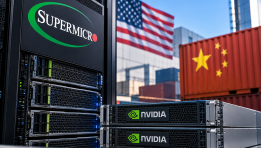
A contractor associated with Super Micro Computer has pleaded guilty to participating in a scheme to illegally export computer

- Lior mor
- •
- 6 Min Read
- •
- ago 10 hours
SKN | Wall Street Ends Week Higher as Earnings and Inflation Data Take Center Stage
Wall Street closed higher on Friday as investors shifted their attention toward the next stage of the market calendar,
- ago 10 hours
- •
- 6 Min Read

Wall Street closed higher on Friday as investors shifted their attention toward the next stage of the market calendar,

- Ronny Mor
- •
- 6 Min Read
- •
- ago 10 hours
SKN | EU Antitrust Review Puts November Deadline on UniCredit’s Commerzbank Takeover Bid
UniCredit’s proposed takeover of Commerzbank has entered a critical regulatory stage after the Italian lender sought approval from EU
- ago 10 hours
- •
- 6 Min Read

UniCredit’s proposed takeover of Commerzbank has entered a critical regulatory stage after the Italian lender sought approval from EU
- Lior mor
- •
- 7 Min Read
- •
- ago 11 hours
SKN | Can Bank Earnings and September CPI Determine the S&P 500’s Next Move Near Record Highs?
Wall Street Faces a Critical Test of Its Rally U.S. equity markets are entering a consequential week as major bank
- ago 11 hours
- •
- 7 Min Read

Wall Street Faces a Critical Test of Its Rally U.S. equity markets are entering a consequential week as major bank
