


- Ronny Mor
- •
- 8 Min Read
- •
- 6 months ago

Real Madrid continues to dominate the financial landscape of world football, once again leading Forbes’ “Most Valuable Soccer Clubs 2025” list with an enterprise value of $6.8 billion. The annual ranking evaluates clubs based not only on revenue but also on brand strength, global fan engagement, media assets, commercial partnerships, and projected growth – offering a strategic snapshot of the football economy heading into the next decade.
Real Madrid: Still the Gold Standard with $6.8 Billion in Enterprise Value
At the summit sits Real Madrid, whose market value is unmatched in the global sports arena. The Spanish giants leverage their long history of success, massive international fanbase, and steady Champions League appearances to generate exceptional income from broadcasting rights, merchandise, and commercial deals.
With the recent renovation of the Santiago Bernabéu Stadium into a multi-purpose, tech-integrated venue, Real Madrid is positioning itself for significant long-term monetization beyond football.
Manchester United: A Global Brand Cloaked in Red
Manchester United ranks second with a valuation of $6.6 billion, underscoring the commercial power of its brand even amid a decade of on-pitch instability. United continues to lead in global shirt sales, social media reach, and international broadcasting deals – particularly in Asia and North America. The club’s corporate structure and digital ecosystem reflect a modern sports conglomerate more than a traditional football institution.
Barcelona, Liverpool & Man City Round Out the Top 5
Barcelona ($5.7 billion) has rebounded post-Messi by realigning its commercial strategies and expanding its global footprint through academies and digital platforms.
Liverpool ($5.4 billion), fueled by consistent on-field results and a strong historical identity, maintains a profitable brand architecture.
Manchester City ($5.3 billion) exemplifies how data-driven management and success in European competitions can convert into sustained financial growth.
Bayern Munich vs PSG: Contrasting Philosophies, Similar Outcomes
Bayern Munich ($5.1 billion) reflects the strength of Germany’s ownership model – stable, debt-averse, and fan-focused. The club continues to grow organically, with a balanced business model.
On the other side stands Paris Saint-Germain ($4.6 billion), a product of Gulf investment and star-centric branding. Despite its rapid commercial expansion, PSG still trails behind the top five, highlighting the limits of flash over foundations.
London Powerhouses: Arsenal, Chelsea & Spurs Battle for Capital Dominance
Arsenal ($3.4 billion), Tottenham Hotspur, and Chelsea (both $3.3 billion) showcase London’s economic clout in the Premier League. With world-class stadiums, global fanbases, and significant commercial arms, all three are locked in a financial race.
Chelsea is under strategic redevelopment following its American-led takeover, while Tottenham is lauded for its cutting-edge matchday technology and aggressive monetization strategies.
Juventus, Dortmund, Atlético: Historic Clubs in Tight Markets
Juventus ($2.2 billion) and Borussia Dortmund ($2.1 billion) benefit from legacy branding and strong domestic loyalty. However, market limitations in Italy and Germany curb their ability to scale like Premier League clubs.
Atlético Madrid ($1.7 billion) remains in the shadows of its Spanish rivals despite brand refresh efforts and solid sporting credentials.
AC Milan & LAFC: Two Comeback Stories from Different Worlds
AC Milan ($1.5 billion) has re-entered the global conversation thanks to new ownership, a return to the Champions League, and targeted brand expansion in Asia.
LAFC ($1.3 billion) is the true disruptor in this year’s list. Founded only in 2014, the Los Angeles-based MLS club has surged into the top 15, driven by strategic digital integration, youthful fan engagement, and a modern content-first business model.
This milestone signals the rise of the American football economy, with LAFC as its flagship.
The Road Ahead: It’s Not Just About Trophies – It’s About the Ecosystem
What separates top-tier clubs in this ranking isn’t just trophies – it’s infrastructure.
Modern football organizations are evaluated by their ability to build ecosystems: women’s teams, esports divisions, global academies, environmental and social initiatives, and above all, digital platforms that engage fans as customers.
Looking ahead to 2030, clubs from regions like Saudi Arabia, Japan, India, and Southeast Asia may enter the rankings, reflecting football’s expanding geographic and economic footprint.
Final Takeaway: Winning Off the Pitch is Now as Important as Winning On It
The 2025 Forbes ranking reinforces a clear truth: in today’s football industry, corporate vision, fan strategy, and brand scalability are just as vital as matchday results.
Clubs are no longer just teams – they are diversified global businesses competing in one of the fastest-growing entertainment verticals.
Comparison, examination, and analysis between investment houses
Leave your details, and an expert from our team will get back to you as soon as possible
* This article, in whole or in part, does not contain any promise of investment returns, nor does it constitute professional advice to make investments in any particular field.
To read more about the full disclaimer, click here
- orshu
- •
- 7 Min Read
- •
- ago 3 hours
SKN | Asian Markets Rally Strongly to End the Week as Hong Kong Leads Gains and Regional Sentiment Improves
Asian markets closed Friday, December 12, 2025, on a powerful upswing, marking one of the strongest regional sessions this month
- ago 3 hours
- •
- 7 Min Read
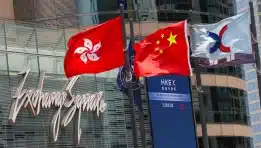
Asian markets closed Friday, December 12, 2025, on a powerful upswing, marking one of the strongest regional sessions this month
- orshu
- •
- 5 Min Read
- •
- ago 6 hours
SKN | Intel Tests Chipmaking Tools Linked to Sanctioned China Unit: What It Means for the Semiconductor Industry
Intel Corp. has conducted trials using chipmaking tools from a firm whose Chinese subsidiary is subject to U.S. export restrictions,
- ago 6 hours
- •
- 5 Min Read
Intel Corp. has conducted trials using chipmaking tools from a firm whose Chinese subsidiary is subject to U.S. export restrictions,

- Ronny Mor
- •
- 7 Min Read
- •
- ago 7 hours
SKN | Trump Moves to Curb State-Level AI Rules — Will a National Standard Reshape the Industry?
The White House is pushing to streamline regulation of artificial intelligence, as President Donald Trump signed an executive order directing
- ago 7 hours
- •
- 7 Min Read

The White House is pushing to streamline regulation of artificial intelligence, as President Donald Trump signed an executive order directing

- sagi habasov
- •
- 5 Min Read
- •
- ago 8 hours
SKN | US Stock Futures Mixed After Wall Street Records Historic Gains
U.S. stock futures were mixed in early trading, following a record-setting session on Wall Street that saw major benchmarks hit
- ago 8 hours
- •
- 5 Min Read

U.S. stock futures were mixed in early trading, following a record-setting session on Wall Street that saw major benchmarks hit

