


- omer bar
- •
- 7 Min Read
- •
- 2 minutes ago
Key Points
- The Iran-Israel conflict injects a structural risk premium into Brent crude, disproportionately affecting markets with isolated supply infrastructures.
- California’s price differential expands due to the combination of state taxes, carbon regulations, and a reliance on maritime imports vulnerable to global logistics disruptions.
- Current pricing dynamics shift consumer behavior toward increased cost-inflation sensitivity, squeezing operating margins within the transport and logistics sectors.

Price Transmission Mechanisms and Market Isolation
The energy architecture of California operates under a “logistics island” mechanism that exacerbates the volatility of international crude prices. Lacking direct pipeline connections to the U.S. Mid-Continent production hubs, the state relies on a maritime supply chain highly sensitive to capital flows and geopolitical risks. This structural configuration means that any increase in the Brent index, stemming from instability in the Strait of Hormuz, translates immediately into local refining costs. The pump price does not merely reflect the value of the raw commodity; it represents a complex network of physical constraints and regulatory incentives that penalize the state’s disconnection from the broader United States domestic distribution system.
Supply Chain Disruption and Geopolitical Exposure
Military escalation has reconfigured global supply expectations, driving crude future contracts toward significant technical resistance levels. For the California market, which imports approximately 50% of its processing needs, logistical vulnerability is critical. The geopolitical risk premium is integrated into import prices before operational inventories can absorb the impact, generating immediate pressure on the cash flows of West Coast refineries. This phenomenon is aggravated by low regional supply elasticity, where installed processing capacity has shown a steady contraction in the face of regulatory compliance demands, reducing the maneuverability of the sector against interruptions in Pacific trade routes and OPEC+ supply flows.
Strategic Benchmarking and Regulatory Compliance Costs
A comparative analysis reveals a structural divergence in Capital Expenditure (Capex) between California refineries and their peers in the U.S. Gulf Coast (PADD 3). While Texas-based refineries allocate capital toward capacity expansion and throughput efficiency, California operators direct approximately 40% of their Capex toward biofuel conversion and emissions mitigation under the Low Carbon Fuel Standard (LCFS). This strategic pivot increases the production cost per barrel of conventional gasoline by an estimated $0.15 to $0.25 above the national average. Key Performance Indicators (KPIs), such as net refining margins, exhibit higher volatility in the region due to the inability to execute immediate geographic arbitrage during demand spikes or local infrastructure failures.
Quantifiable Impacts on Logistics and Transport Sectors
Persistent increases in fuel costs are forcing a severe adjustment in the expenditure frameworks of heavy transport companies. Operating margins are under structural pressure as the pass-through of fuel surcharges meets increasing resistance in a moderate consumption environment. Industry KPIs, specifically the “operating cost-per-mile,” have shown deviations of up to 12% relative to annual commercial fleet projections. This margin pressure not only compromises immediate profitability but also accelerates the obsolescence of internal combustion assets. Consequently, there is a forced migration of capital toward alternative transport infrastructures that are less dependent on crude oil volatility and more aligned with state-level decarbonization incentives.
Forward-Looking Outlook and Capital Stress Scenarios
Market participants must monitor the capacity of regional refineries to secure alternative supply sources that mitigate sea-borne dependence during prolonged conflicts. The Brent-WTI spread will likely continue to dictate the competitive disadvantage of the West Coast, potentially exacerbating the migration of operating capital toward logistically integrated regions. Stability in international shipping lanes remains the critical determinant for normalizing price differentials and easing the stress on regional corporate balance sheets over the coming semester.
Comparison, examination, and analysis between investment houses
Leave your details, and an expert from our team will get back to you as soon as possible
* This article, in whole or in part, does not contain any promise of investment returns, nor does it constitute professional advice to make investments in any particular field.
To read more about the full disclaimer, click here
- Lior mor
- •
- 6 Min Read
- •
- ago 11 hours
SKN | Can Petrobras Sustain Record Output as Efficiency Gains Reshape Brazil’s Energy Balance?
Petrobras delivered a strong first-quarter performance, with record upstream production and improved refining output reinforcing its position as a key
- ago 11 hours
- •
- 6 Min Read

Petrobras delivered a strong first-quarter performance, with record upstream production and improved refining output reinforcing its position as a key

- omer bar
- •
- 6 Min Read
- •
- ago 2 days
SKN | Why Did WTI Oil Surge Over 7% as Supply Risks Intensify?
Oil prices extended their rally as West Texas Intermediate jumped more than 7%, reflecting mounting concerns over supply disruptions and
- ago 2 days
- •
- 6 Min Read

Oil prices extended their rally as West Texas Intermediate jumped more than 7%, reflecting mounting concerns over supply disruptions and
- Lior mor
- •
- 6 Min Read
- •
- ago 2 days
SKN | Why Did Oil Surge Toward $120 as Geopolitical Tensions Escalate?
Oil markets rallied sharply as geopolitical tensions intensified, pushing Brent Crude Oil closer to the $120 threshold. The surge reflects
- ago 2 days
- •
- 6 Min Read

Oil markets rallied sharply as geopolitical tensions intensified, pushing Brent Crude Oil closer to the $120 threshold. The surge reflects

- Ronny Mor
- •
- 9 Min Read
- •
- ago 2 days
SKN | Could a Prolonged Strait of Hormuz Blockade Trigger a Global Energy Shock?
Global markets are facing renewed uncertainty as Donald Trump signals preparations for a prolonged naval blockade of the Strait of
- ago 2 days
- •
- 9 Min Read
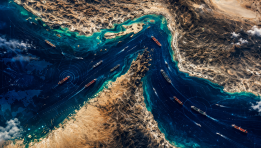
Global markets are facing renewed uncertainty as Donald Trump signals preparations for a prolonged naval blockade of the Strait of


