


- Arik Arkadi Sluzki
- •
- 11 Min Read
- •
- 7 months ago

Founder Leadership as an Engine of Exceptional Returns
In the complex world of investing—where market trends shift rapidly, financial reports flood in quarterly, and competitive advantages are short-lived—one clear insight stands out: companies led by their original founders consistently outperform the broader market. A recent infographic by Carbon Finance highlights this phenomenon using ten-year CAGR (Compound Annual Growth Rate) data, comparing founder-led companies to the S&P 500 index.
With stocks like Nvidia (NVDA) and Axon (AXON) delivering 78% and 38% annualized returns respectively—vastly outperforming the S&P 500’s 14%—a compelling question emerges: is the key to long-term market-beating performance embedded in who’s running the company?
In this article, we will examine the data, identify patterns, explore the strategic edge of founder-led firms, and analyze whether this trend is sustainable or largely sector-driven.
Quantitative Overview: Nvidia at the Top, S&P 500 Lags Behind
The visualized data offers a striking narrative. Leading the pack is Nvidia (NVDA) with an astounding 78% CAGR over the past decade. This figure suggests exponential, compounding growth that few, if any, companies have matched. For comparison, the S&P 500 posted an average CAGR of 14% over the same period.
Following Nvidia are Axon (38%), MercadoLibre (34%), Tesla (33%), Monolithic Power Systems (31%), and Fortinet (30%). Even Meta (formerly Facebook), which faced sharp corrections in recent years, achieved a CAGR of 23%, nearly double the market’s average.
In contrast, companies such as Salesforce (CRM) and CoStar Group (CSGP) delivered more modest returns of 15%. These results, while slightly above the index, lack the explosive growth seen in founder-led firms.
The broader takeaway: founder-led companies tend to deliver stronger, more sustained returns across various sectors and market cycles.
Behind the Numbers: Vision, Risk-Taking, and Long-Term Thinking
What explains the outperformance of these founder-led businesses? A major factor is the unique mindset and leadership style that founders bring. Unlike hired executives focused on quarterly results and job security, founders often have deep emotional ties to their businesses. They demonstrate visionary leadership, are willing to take bold risks, and typically pursue long-term strategies with patience and persistence.
Consider Jensen Huang, Nvidia’s founder and CEO. Huang has remained at the company’s helm since its inception, steering it from a niche GPU maker for gamers into a global powerhouse at the heart of the AI revolution. His long-term strategic vision enabled Nvidia to pivot toward datacenter GPUs and AI applications years before the market caught on.
Similarly, Elon Musk has led Tesla with relentless ambition and contrarian thinking, defying skeptics across the financial world. Despite volatility and criticism, Musk’s ability to execute on long-term goals has resulted in transformational growth for the company.
Sectoral Trends: Technology and Innovation Drive the Edge
It’s important to acknowledge that many of the top-performing founder-led companies belong to the technology sector. Nvidia, Tesla, Monolithic Power Systems, and Fortinet are all tech-driven businesses, benefiting from secular trends like digitization, AI, electrification, and cybersecurity.
By contrast, the S&P 500 contains legacy sectors such as finance, industrials, energy, and healthcare—areas that generally exhibit lower growth rates and more mature business models. This structural difference likely contributes to the performance gap.
However, this isn’t purely a sector story. MercadoLibre operates in e-commerce and digital payments across Latin America. Meta operates in social media and advertising. Both outperform the index by a wide margin, suggesting that founder influence transcends industry boundaries.
The common denominator is innovation, agility, and a long-term outlook—all of which founder-CEOs are uniquely positioned to provide.
Volatility and Risk: The Trade-Offs of Founder Control
Despite their superior long-term returns, founder-led companies are not without risk. Volatility tends to be higher. Stocks like Tesla and Nvidia have seen multiple drawdowns of over 30% within single years. Investor sentiment can swing wildly due to bold strategic decisions, controversial leadership styles, or media scrutiny.
There is also the issue of corporate governance. Founder dominance may result in excessive concentration of control, which can deter institutional investors or create conflicts of interest. Succession planning, board independence, and transparency may suffer when founders retain outsized influence.
In essence, investing in founder-led companies involves a calculated trade-off: long-term upside at the cost of near-term volatility and idiosyncratic risk.
Strategic Implications: Lessons for Investors and Executives
For retail and institutional investors alike, this trend offers valuable insights. Founder leadership can serve as a qualitative filter when evaluating potential investments. Screening for founder-CEO companies could enhance a portfolio’s growth potential—provided other fundamentals align.
Indeed, several asset managers have launched ETFs or funds that focus exclusively on founder-led firms. The “founder factor” is becoming a recognized edge in active and passive investing strategies alike.
For corporate leaders, the lesson is equally profound: companies that retain a founder-like culture—defined by innovation, mission-driven leadership, and long-term commitment—may be better positioned for sustained value creation.
Even if a founder has stepped away from day-to-day operations, fostering a bold, entrepreneurial ethos within the leadership team can help replicate many of the benefits seen in the top-performing firms.
Conclusion and Forward Outlook
The data presented by Carbon Finance strongly suggests that founder-led companies are not just anecdotal success stories but represent a repeatable, scalable model for long-term outperformance. The dominance of Nvidia, Tesla, and MercadoLibre over the past decade is not a statistical fluke—it reflects the power of founder conviction, strategic clarity, and the willingness to defy conventional wisdom.
That said, investors should remain aware of the inherent risks and avoid over-concentration in any one company or leader. A diversified basket of founder-led companies, especially in innovation-driven sectors, may strike the right balance between growth and risk management.
As capital markets grow increasingly complex and algorithm-driven, the human element—visionary leadership—remains as potent as ever. Sometimes, the founder isn’t just the face of the company—they are its beating heart.
Comparison, examination, and analysis between investment houses
Leave your details, and an expert from our team will get back to you as soon as possible
* This article, in whole or in part, does not contain any promise of investment returns, nor does it constitute professional advice to make investments in any particular field.
To read more about the full disclaimer, click here
- orshu
- •
- 7 Min Read
- •
- ago 4 hours
SKN | European Markets Trade Sideways as Currency Softness and Blue-Chip Weakness Cap Gains
European markets delivered another subdued session on Thursday, February 5, 2026, as investors largely stayed on the sidelines following the
- ago 4 hours
- •
- 7 Min Read
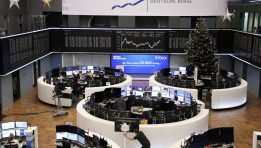
European markets delivered another subdued session on Thursday, February 5, 2026, as investors largely stayed on the sidelines following the
- orshu
- •
- 7 Min Read
- •
- ago 5 hours
SKN | Can European Markets Find Direction as Earnings and Central Banks Take Center Stage?
European stocks are heading into Thursday’s session with little conviction, as investors brace for a dense slate of corporate earnings
- ago 5 hours
- •
- 7 Min Read
European stocks are heading into Thursday’s session with little conviction, as investors brace for a dense slate of corporate earnings

- Lior mor
- •
- 7 Min Read
- •
- ago 9 hours
SKN | Wall Street Futures Rebound After Tech-Led Sell-Off — Is Market Sentiment Stabilizing?
US equity futures edged higher after a sharp tech-driven sell-off on Wall Street, signaling tentative stabilization in market sentiment following
- ago 9 hours
- •
- 7 Min Read

US equity futures edged higher after a sharp tech-driven sell-off on Wall Street, signaling tentative stabilization in market sentiment following

- Arik Arkadi Sluzki
- •
- 6 Min Read
- •
- ago 12 hours
SKN | Ford Explores China Partnership in Europe: Strategic Pivot or Calculated Risk?
Ford Motor is reported to be in early-stage talks with a Chinese automaker over a possible partnership in Europe,
- ago 12 hours
- •
- 6 Min Read

Ford Motor is reported to be in early-stage talks with a Chinese automaker over a possible partnership in Europe,

