


- Ronny Mor
- •
- 7 Min Read
- •
- 25 minutes ago
Key Points
- Lululemon delivered strong Q4 results but issued weaker-than-expected 2026 guidance.
- Rising tariffs and a proxy battle with founder Chip Wilson are weighing on margins.
- Growth remains uneven, with weakness in the Americas offset by strength in China and international markets.
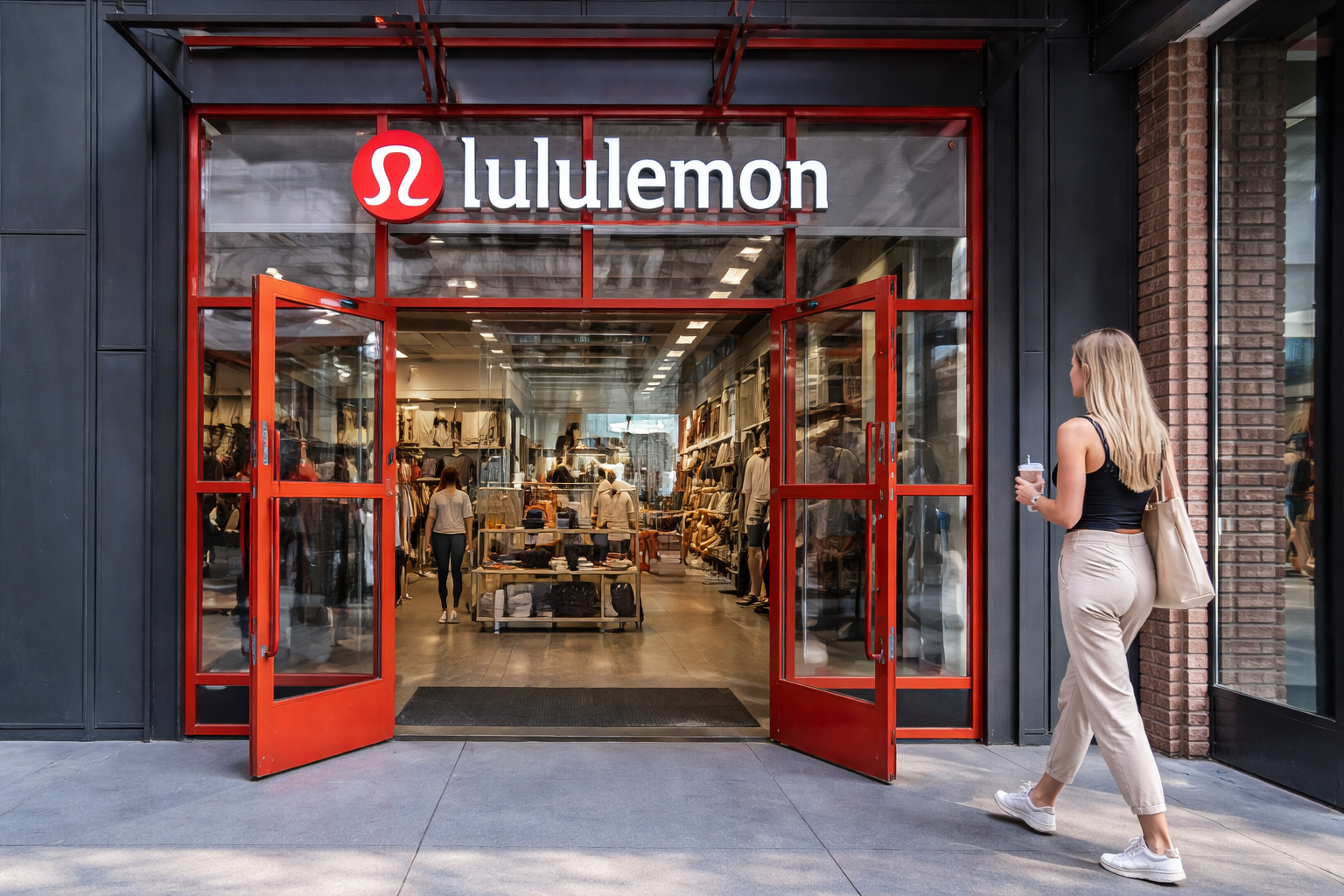
Lululemon reported better-than-expected fourth-quarter results but disappointed investors with a soft outlook for fiscal 2026, highlighting mounting pressures from tariffs, rising costs, and internal governance tensions.
The athleisure retailer is now navigating a complex environment where macroeconomic challenges and company-specific issues are weighing on its growth trajectory.
Strong Q4 Performance Overshadowed by Weak Guidance
Lululemon posted fourth-quarter earnings per share of $5.01, beating expectations of $4.78, while revenue came in at $3.64 billion, slightly above forecasts.
However, net income declined year-over-year, reflecting margin pressures despite stable sales growth.
The stronger quarterly performance was largely anticipated, with market focus shifting toward the company’s forward guidance.
2026 Outlook Falls Short of Expectations
The company’s projections for both the first quarter and full fiscal year came in below Wall Street expectations.
Lululemon expects first-quarter revenue between $2.40 billion and $2.43 billion, with earnings per share ranging from $1.63 to $1.68 — both below consensus estimates.
For the full year, revenue is forecast between $11.35 billion and $11.50 billion, while earnings are expected between $12.10 and $12.30 per share, also missing analyst projections.
The guidance reflects a cautious outlook as the company works through operational and strategic adjustments.
Tariffs and Cost Pressures Weigh on Margins
One of the most significant challenges facing Lululemon is the rising cost of tariffs.
The company expects tariffs to have a gross impact of $380 million in 2026, up from $275 million the previous year, with a net impact of $220 million after mitigation efforts.
Additional pressures from marketing, labor, and operational costs are further squeezing margins, limiting the company’s ability to expand profitability.
Proxy Battle Adds Governance Uncertainty
Lululemon is also dealing with a high-profile proxy battle involving founder Chip Wilson, who has criticized the company’s strategic direction and board oversight.
Wilson, the largest independent shareholder, has pushed for changes at the board level, arguing that the company has drifted away from its core strengths in product innovation and brand identity.
The ongoing dispute adds uncertainty to leadership and strategic execution at a critical time for the company.
Regional Performance Highlights Mixed Growth
Growth trends remain uneven across regions. The company’s core Americas market has shown little to no growth over the past two years and is expected to decline by 1% to 3% in 2026.
In contrast, international markets — particularly China — continue to perform strongly, with expected growth of around 20% in China and mid-teens growth in other regions.
This geographic divergence underscores both opportunities and risks as Lululemon looks to expand globally while stabilizing its core market.
Strategy Shift Toward Full-Price Model
Lululemon is also adjusting its pricing and promotional strategy after relying more heavily on discounts to drive sales.
The company plans to reduce promotions and return to a full-price model, a move that may weigh on short-term revenue but is aimed at restoring brand positioning and long-term profitability.
Management noted early signs of improvement from new product lines and creative direction, though the turnaround is still in its early stages.
What to Watch Going Forward
Lululemon’s path forward will depend on its ability to navigate cost pressures, resolve governance challenges, and reignite growth in its core markets.
Investors will be closely watching execution on its product strategy, progress in international expansion, and developments in the proxy battle.
While the brand retains strong global recognition, the near-term outlook suggests a period of transition, with risks to both growth and margins before a potential recovery can take hold.
Comparison, examination, and analysis between investment houses
Leave your details, and an expert from our team will get back to you as soon as possible
* This article, in whole or in part, does not contain any promise of investment returns, nor does it constitute professional advice to make investments in any particular field.
To read more about the full disclaimer, click here
- omer bar
- •
- 5 Min Read
- •
- ago 10 hours
SKN | Canadian Billionaire Stephen Smith Takes Strategic Stake in The Economist Group
Canadian billionaire Stephen Smith has agreed to acquire a significant minority stake in The Economist Group, marking a notable ownership
- ago 10 hours
- •
- 5 Min Read

Canadian billionaire Stephen Smith has agreed to acquire a significant minority stake in The Economist Group, marking a notable ownership

- Lior mor
- •
- 6 Min Read
- •
- ago 12 hours
SKN | DocuSign Valuation: Is the Selloff Creating a Buying Opportunity?
DocuSign has experienced notable volatility, with shares trading around $46.82 despite sharp declines over the past year. The recent weakness
- ago 12 hours
- •
- 6 Min Read

DocuSign has experienced notable volatility, with shares trading around $46.82 despite sharp declines over the past year. The recent weakness

- sagi habasov
- •
- 6 Min Read
- •
- ago 14 hours
SKN | Gold Holds Above $5,000 as Inflation Fears Clash With Oil Shock Uncertainty
Gold prices traded in a narrow range, holding above the $5,000 level as investors weighed the competing forces of rising
- ago 14 hours
- •
- 6 Min Read

Gold prices traded in a narrow range, holding above the $5,000 level as investors weighed the competing forces of rising

- Ronny Mor
- •
- 7 Min Read
- •
- ago 14 hours
SKN | Oil Surges Above $100 as Strait of Hormuz Disruptions Intensify Supply Fears
Global oil prices surged on Tuesday, with benchmarks climbing more than 2% as markets reacted to worsening supply disruptions tied
- ago 14 hours
- •
- 7 Min Read

Global oil prices surged on Tuesday, with benchmarks climbing more than 2% as markets reacted to worsening supply disruptions tied

