


- omer bar
- •
- 9 Min Read
- •
- 6 hours ago
Key Points
- Donald Trump’s evolving stance toward Iran is creating uncertainty for allies, rivals, and global markets.
- Energy markets and geopolitical risk premiums remain sensitive to signals regarding potential sanctions or escalation.
- For Israel and regional partners, the policy ambiguity complicates strategic planning and economic expectations.
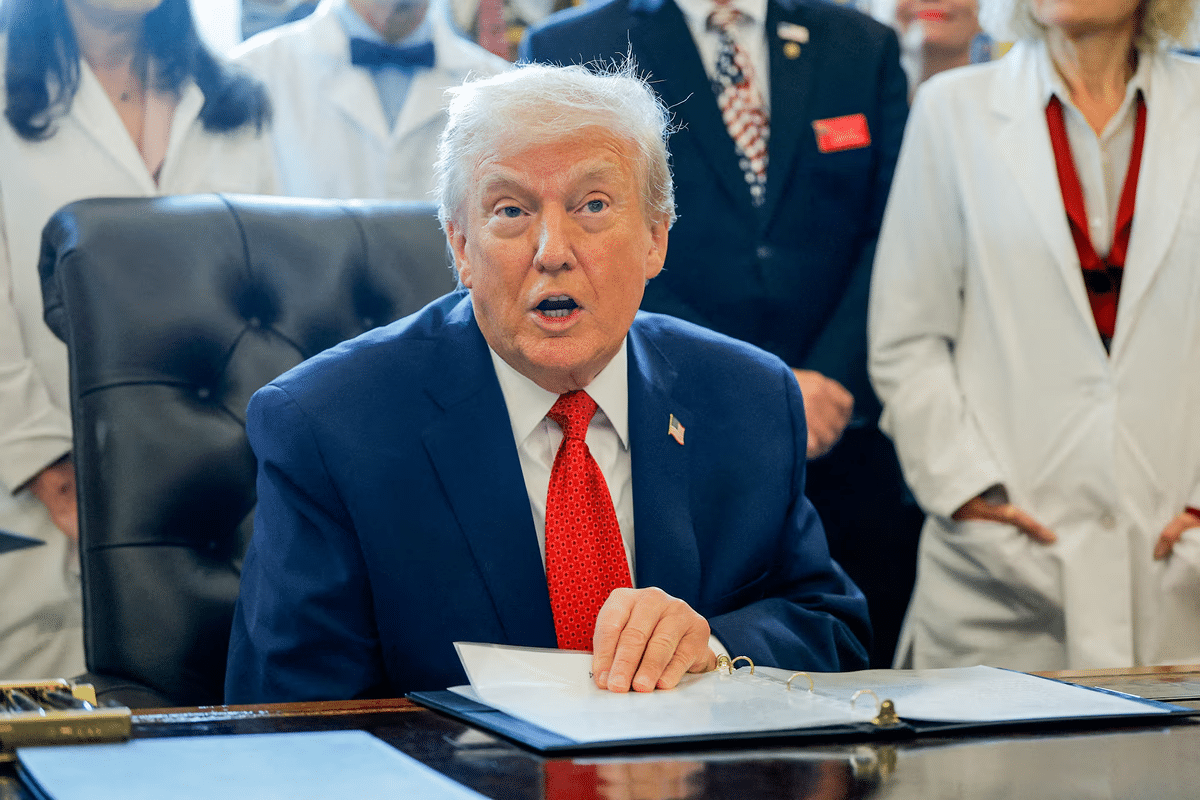
Uncertainty surrounding former U.S. President Donald Trump’s long-term approach to Iran is drawing increasing attention from policymakers, investors, and global markets. As geopolitical tensions in the Middle East remain a central driver of energy prices and regional security calculations, the lack of clarity regarding Washington’s endgame strategy toward Tehran is leaving both allies and adversaries attempting to interpret signals.
For global investors, the stakes extend beyond diplomacy. Iran sits at the center of key oil supply routes and geopolitical alliances, meaning any shift in U.S. policy could quickly influence energy markets, regional security dynamics, and broader macroeconomic sentiment.
Policy Ambiguity Creates Strategic Uncertainty
Trump’s public statements and political messaging regarding Iran have often combined strong rhetoric with shifting tactical signals, leaving observers divided over what a future strategy might entail. Some analysts interpret the approach as a continuation of a “maximum pressure” framework focused on sanctions and economic isolation. Others argue the strategy may leave room for negotiations or tactical recalibration depending on political developments.
During Trump’s previous administration, Washington withdrew from the 2015 nuclear agreement and reinstated sweeping sanctions targeting Iran’s energy exports, banking sector, and industrial activity. Those measures significantly reduced Iran’s oil exports and tightened financial pressure on the country’s economy.
However, the absence of a clearly articulated long-term policy framework now complicates expectations for governments, investors, and businesses operating in energy and geopolitical risk-sensitive sectors. Without clarity on whether the strategy would prioritize renewed negotiations, intensified sanctions, or regional deterrence, market participants face a wide range of possible outcomes.
Energy Markets and Global Trade Sensitivity
The uncertainty surrounding Iran policy carries particular implications for global energy markets. Iran holds one of the world’s largest proven oil reserves, and its production capacity has historically fluctuated depending on sanctions regimes and geopolitical developments.
Any tightening of sanctions could constrain Iranian crude exports and potentially tighten global supply conditions, particularly if the move coincides with production discipline from major producers within OPEC+. Conversely, diplomatic engagement or sanctions relief could return additional barrels to international markets, affecting price expectations and supply balances.
Energy analysts note that geopolitical risk premiums frequently emerge when tensions involving Iran escalate, especially given the country’s geographic proximity to the Strait of Hormuz. The strategic waterway handles a significant share of global oil shipments, making stability in the region critical for global energy flows.
For Israel and other Middle Eastern economies, shifts in U.S. policy toward Iran also carry direct economic implications. Defense spending, regional alliances, and investment flows in sectors such as energy, technology, and infrastructure can all be influenced by changing geopolitical risk assessments.
Regional Alliances and Strategic Calculations
The lack of a clearly defined policy trajectory toward Iran is also affecting diplomatic relationships across the Middle East. Regional partners, including Israel and Gulf states, are closely monitoring Washington’s signals to assess how future security guarantees and strategic cooperation might evolve.
Israel in particular has consistently viewed Iran’s nuclear ambitions and regional influence as a central national security concern. As a result, uncertainty surrounding the direction of U.S. policy may influence regional defense coordination and long-term strategic planning.
At the same time, Iran’s own geopolitical posture continues to shape the broader regional balance. Tehran maintains alliances and influence across multiple Middle Eastern theaters, making any U.S. policy shift a potential catalyst for wider geopolitical adjustments.
The evolving dynamics also intersect with global power competition. China and Russia have expanded diplomatic and economic engagement with Iran in recent years, adding another layer of complexity to the geopolitical landscape.
What Investors and Policymakers Will Monitor
Looking ahead, investors will closely watch for clearer signals from Washington regarding sanctions policy, diplomatic engagement, and regional security priorities. Even subtle shifts in messaging can influence oil prices, defense sector activity, and broader geopolitical risk sentiment.
Another critical factor will be how regional actors respond to continued policy ambiguity. Diplomatic coordination between the United States, Israel, and Gulf allies could shape both security outcomes and investor confidence across Middle Eastern markets.
For global markets, the central question is whether uncertainty surrounding Iran will translate into concrete policy action or remain a strategic tool within broader geopolitical negotiations. In the meantime, the evolving narrative around U.S.–Iran relations is likely to remain a key driver of energy market volatility and geopolitical risk assessment in the months ahead.
Comparison, examination, and analysis between investment houses
Leave your details, and an expert from our team will get back to you as soon as possible
* This article, in whole or in part, does not contain any promise of investment returns, nor does it constitute professional advice to make investments in any particular field.
To read more about the full disclaimer, click here
- omer bar
- •
- 8 Min Read
- •
- ago 60 minutes
SKN | U.S.–China Paris Talks Signal Possible Trade Breakthrough Ahead of Xi–Trump Summit
Senior U.S. and Chinese officials are nearing the conclusion of economic talks in Paris that could lay the groundwork for
- ago 60 minutes
- •
- 8 Min Read
Senior U.S. and Chinese officials are nearing the conclusion of economic talks in Paris that could lay the groundwork for
- omer bar
- •
- 7 Min Read
- •
- ago 12 hours
SKN | A 15% Global Tariff Proposal Could Reshape Trade — Which Stocks May Face the Greatest Pressure?
Global financial markets are closely watching the possibility of a significant shift in U.S. trade policy as discussions emerge
- ago 12 hours
- •
- 7 Min Read
Global financial markets are closely watching the possibility of a significant shift in U.S. trade policy as discussions emerge

- Arik Arkadi Sluzki
- •
- 7 Min Read
- •
- ago 2 days
SKN | Formula 1 Faces Strategic Test as Middle East Tensions Intensify
Global sporting events are increasingly intersecting with geopolitical risk, and Formula 1 is now facing the possibility of significant calendar
- ago 2 days
- •
- 7 Min Read

Global sporting events are increasingly intersecting with geopolitical risk, and Formula 1 is now facing the possibility of significant calendar

- Lior mor
- •
- 6 Min Read
- •
- ago 4 days
SKN | Is the U.S. Rebuilding Tariff Pressure as New Trade Investigations Target Major Global Economies?
The United States is moving to restore trade pressure on key global partners after the Supreme Court dismantled much of
- ago 4 days
- •
- 6 Min Read

The United States is moving to restore trade pressure on key global partners after the Supreme Court dismantled much of

