


- Ronny Mor
- •
- 8 Min Read
- •
- 12 hours ago
Key Points
- South Korea’s KOSPI and Japan’s Nikkei 225 lead gains in Asia, reflecting strong investor momentum in major developed markets.
- Chinese and Hong Kong equities move lower, highlighting diverging sentiment across regional markets.
- Currency indicators show modest stability, with the Australian dollar and Japanese yen posting slight gains.
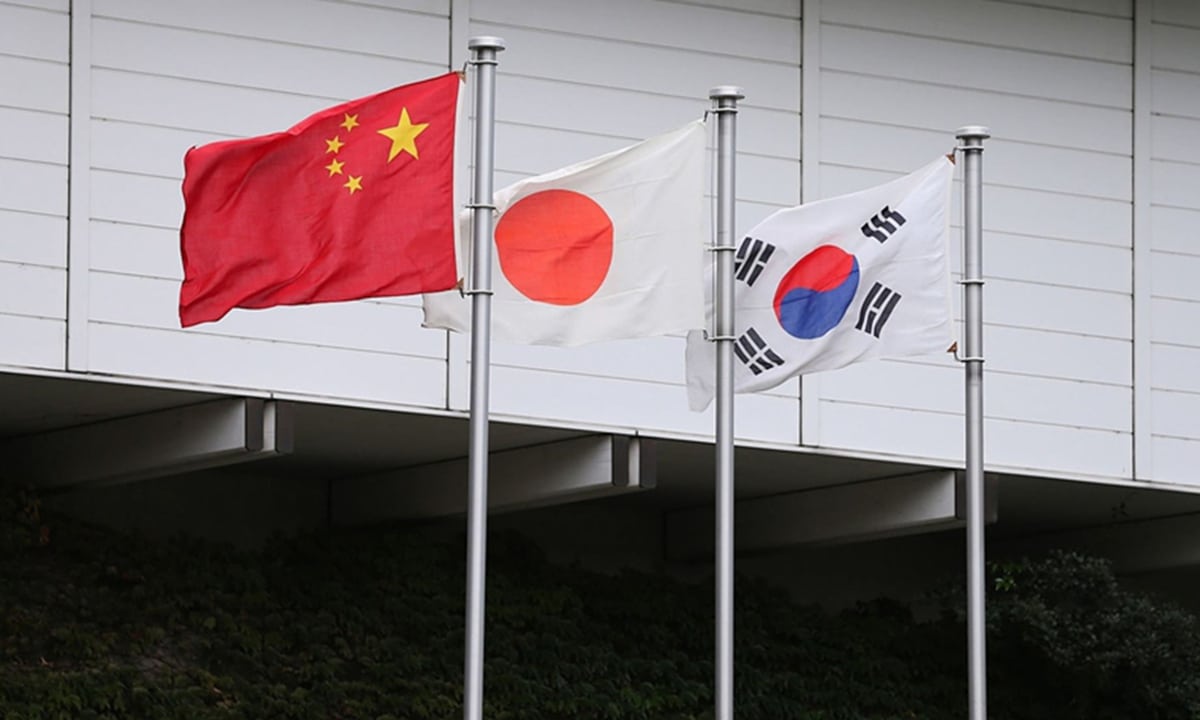
Asian markets traded in mixed territory during the morning session on Tuesday, March 10, as strong gains in South Korea and Japan contrasted with declines in China, Hong Kong, and India. Investors across the region are navigating a complex mix of global macroeconomic signals, including interest rate expectations, currency movements, and regional economic data. The divergence in performance highlights the uneven pace of economic recovery and investor sentiment across Asia’s major financial markets.
South Korea and Japan Lead Regional Gains
South Korea’s equity market delivered the strongest performance in Asia during the morning session. The KOSPI Composite Index surged 6.03% to 5,568.56 points, reflecting robust investor demand across technology and industrial stocks. The rally signals renewed confidence in South Korea’s export-oriented economy, particularly as semiconductor and electronics sectors remain central to global supply chains.
Japan’s Nikkei 225 also posted strong gains, rising 3.17% to 54,400.84 points. The upward movement suggests continued support for Japanese equities from both domestic and international investors. Market participants continue to monitor the Bank of Japan’s policy stance and the broader impact of currency stability on export competitiveness. The Japanese yen index edged slightly higher by 0.06% to 63.43, indicating relative currency stability even as equity markets gained momentum.
Australia also recorded positive market sentiment, with the S&P/ASX 200 climbing 1.49% to 8,727.40 points. Gains in mining, financials, and energy stocks supported the index. Meanwhile, the Australian Dollar Index rose 0.65% to 70.75, suggesting improving investor confidence in commodity-linked currencies.
China and Hong Kong Face Downward Pressure
In contrast to the strong performance in developed Asian markets, Chinese and Hong Kong equities traded lower. The SSE Composite Index declined 0.67% to 4,096.60 points, reflecting ongoing investor caution regarding China’s economic outlook and policy environment.
Hong Kong’s Hang Seng Index dropped 1.35% to 25,408.46 points, extending recent volatility in the territory’s equity market. Technology and financial shares remained under pressure as global investors reassess exposure to Chinese-linked assets. Market participants continue to track regulatory developments and economic indicators that could influence capital flows into the region.
India’s S&P BSE SENSEX also moved lower, falling 1.71% to 77,566.16 points. The decline suggests profit-taking following recent market strength and reflects broader risk recalibration by global investors. India remains one of the fastest-growing major economies, but near-term market movements often reflect global liquidity conditions and investor positioning.
Currency Movements and Regional Market Sentiment
Currency indicators in the region showed modest gains, signaling relative stability across foreign exchange markets. The Australian Dollar Index increased by 0.65%, benefiting from stronger commodity sentiment and positive equity market performance in Australia. Meanwhile, the Japanese Yen Index remained largely stable, rising slightly by 0.06%.
Currency movements often serve as a key signal for equity market flows in Asia, particularly for export-driven economies such as Japan and South Korea. Stable currencies can support investor confidence by reducing volatility in cross-border capital flows and improving predictability for multinational corporations operating in the region.
The divergence between equity performance and relatively stable currency markets suggests that investors are selectively allocating capital rather than exiting the region broadly. This selective approach reflects the complexity of global macro conditions, including interest rate expectations in the United States and economic growth forecasts across Asia.
Outlook: Key Signals Investors Are Watching Across Asia
Looking ahead, investors will closely monitor several factors that could influence Asian market performance in the coming sessions. Economic data releases from China, central bank policy signals from Japan and Australia, and developments in global interest rate expectations remain central to market sentiment.
Commodity prices and currency stability will also play an important role in shaping regional equity trends, particularly for export-oriented economies. For global and Israeli investors tracking Asian markets, the current divergence highlights both risks and opportunities as capital flows shift between stronger and weaker regional markets.
If current momentum continues, developed Asian markets such as Japan and South Korea could maintain their leadership, while Chinese and Hong Kong equities may require clearer economic signals to regain investor confidence. Market participants will continue to evaluate macroeconomic data, corporate earnings trends, and policy developments to determine whether the current divergence evolves into a broader regional trend or stabilizes as trading progresses.
Comparison, examination, and analysis between investment houses
Leave your details, and an expert from our team will get back to you as soon as possible
* This article, in whole or in part, does not contain any promise of investment returns, nor does it constitute professional advice to make investments in any particular field.
To read more about the full disclaimer, click here
- orshu
- •
- 5 Min Read
- •
- ago 27 minutes
SKN | BioNTech’s Founding Duo to Launch New mRNA Venture — A New Chapter for the Post-Pandemic Biotech Race
Leadership changes at one of the world’s most prominent biotechnology companies are drawing attention across global markets. Two early
- ago 27 minutes
- •
- 5 Min Read

Leadership changes at one of the world’s most prominent biotechnology companies are drawing attention across global markets. Two early

- Ronny Mor
- •
- 6 Min Read
- •
- ago 1 hour
SKN | Trump Signals Iran War Could End ‘Soon,’ Cooling Global Oil Shock Fears
Global energy markets reacted cautiously after former U.S. President Donald Trump indicated that the ongoing conflict involving Iran could
- ago 1 hour
- •
- 6 Min Read

Global energy markets reacted cautiously after former U.S. President Donald Trump indicated that the ongoing conflict involving Iran could

- omer bar
- •
- 5 Min Read
- •
- ago 2 hours
SKN | Board Games Firm to Debut on Britain’s Private Stock Market in Unusual Listing
A British board games manufacturer is preparing to become the first company listed on the United Kingdom’s newly developed
- ago 2 hours
- •
- 5 Min Read

A British board games manufacturer is preparing to become the first company listed on the United Kingdom’s newly developed
- Ronny Mor
- •
- 7 Min Read
- •
- ago 4 hours
SKN | Why Is Qantas Raising International Airfares as Middle East Conflict Pushes Fuel Costs Higher?
Airlines are beginning to pass rising fuel costs onto passengers as the conflict in the Middle East drives a sharp
- ago 4 hours
- •
- 7 Min Read

Airlines are beginning to pass rising fuel costs onto passengers as the conflict in the Middle East drives a sharp

