


- Arik Arkadi Sluzki
- •
- 7 Min Read
- •
- 14 minutes ago
Key Points
- Ford Motor Company (NYSE: F) shares declined this week as investors reacted to concerns about electric vehicle profitability and industry competition.
- Rising costs tied to EV development, supply chains, and labor agreements are weighing on the company’s near-term margins.
- Broader uncertainty in the global automotive market, including slowing consumer demand and higher interest rates, has also affected investor sentiment.
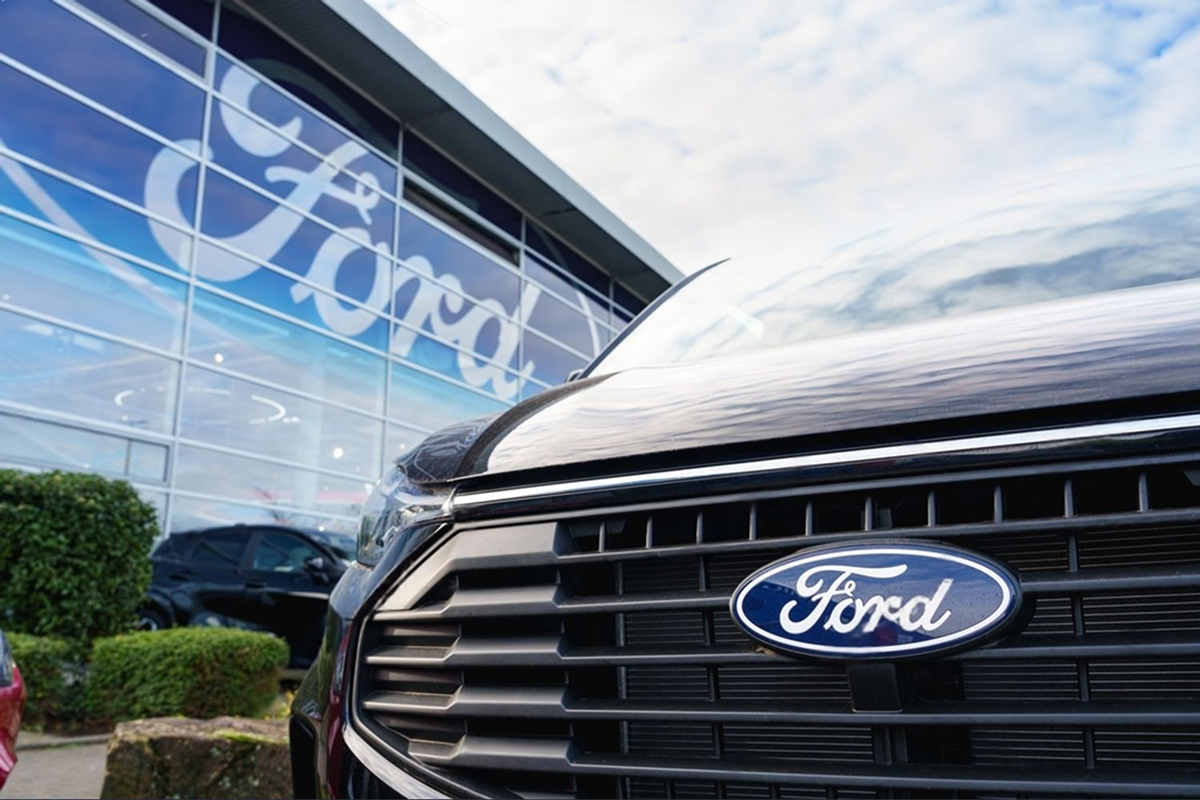
Shares of Ford Motor Company moved lower this week as investors reassessed the outlook for the traditional automaker navigating the transition toward electric vehicles. The decline reflects broader challenges facing the automotive industry, including rising production costs, shifting consumer demand, and intense competition in the global EV market. For investors, the movement in Ford stock underscores the complexities of balancing legacy vehicle production with the heavy capital investments required for electrification.
Electric Vehicle Transition Raises Profitability Concerns
One of the most significant factors influencing the recent decline in Ford shares is the financial pressure associated with the company’s transition to electric vehicles. Automakers around the world are investing billions of dollars to develop EV platforms, battery supply chains, and charging infrastructure. While these investments are necessary to remain competitive, they often weigh on short-term profitability.
Ford has been expanding its EV portfolio through models such as the F-150 Lightning and the Mustang Mach-E. However, the cost of producing electric vehicles remains relatively high due to battery expenses, raw materials, and manufacturing adjustments. Analysts have noted that many traditional automakers are still working to achieve sustainable profit margins within their EV divisions.
In contrast, established EV-focused companies and emerging competitors continue to intensify competition across the sector. This environment can pressure pricing strategies and require additional investment in innovation, potentially affecting earnings expectations.
Macro Pressures Impacting Auto Demand
Beyond company-specific factors, broader economic conditions are also affecting the automotive industry. Higher interest rates have increased financing costs for consumers purchasing vehicles, which can slow demand for both traditional and electric models.
Automobile purchases are often financed through loans, making the sector particularly sensitive to monetary policy changes. As borrowing costs rise, potential buyers may delay vehicle purchases or choose more affordable options, influencing automaker revenue projections.
At the same time, global economic uncertainty has prompted investors to adopt a more cautious stance toward cyclical industries such as automotive manufacturing. Companies that rely heavily on consumer spending tend to experience greater share price volatility during periods of economic uncertainty.
Strategic Positioning and Competitive Landscape
Despite the short-term pressure on Ford stock, the company remains one of the most recognizable brands in the global automotive industry. Its long history of manufacturing trucks, SUVs, and commercial vehicles provides a strong foundation in key market segments.
Ford has also been restructuring parts of its business to adapt to industry transformation. The company has separated its internal operations into divisions focused on traditional vehicles, electric vehicles, and commercial mobility services. This structure is designed to improve operational efficiency while accelerating the development of next-generation vehicle technologies.
Competition within the automotive sector continues to intensify as established manufacturers and new entrants invest heavily in electric mobility and autonomous technologies. The pace at which companies successfully scale EV production and improve profitability will likely shape long-term industry dynamics.
Looking ahead, investors will likely monitor several key factors influencing the future performance of Ford Motor Company. These include progress in reducing EV production costs, developments in battery technology, and broader trends in global vehicle demand. Changes in interest rates, government incentives for electric vehicles, and advancements in charging infrastructure could also influence market adoption rates. As the automotive industry continues undergoing a historic technological transformation, Ford’s ability to balance innovation with financial discipline will remain central to its long-term competitive position.
Comparison, examination, and analysis between investment houses
Leave your details, and an expert from our team will get back to you as soon as possible
* This article, in whole or in part, does not contain any promise of investment returns, nor does it constitute professional advice to make investments in any particular field.
To read more about the full disclaimer, click here
- Lior mor
- •
- 7 Min Read
- •
- ago 44 minutes
SKN | Where Could Eli Lilly Stock Be in 10 Years? Growth Drivers, Risks, and the Future of the Pharma Giant
The long-term outlook for Eli Lilly and Company has become a focal point for investors as the pharmaceutical industry
- ago 44 minutes
- •
- 7 Min Read

The long-term outlook for Eli Lilly and Company has become a focal point for investors as the pharmaceutical industry

- omer bar
- •
- 8 Min Read
- •
- ago 1 hour
SKN | Is Oracle’s $500 Billion Stargate AI Project Facing Headwinds as Infrastructure Demands Grow?
The technology sector is closely watching developments surrounding Oracle’s proposed $500 billion Stargate project, an ambitious initiative designed to
- ago 1 hour
- •
- 8 Min Read

The technology sector is closely watching developments surrounding Oracle’s proposed $500 billion Stargate project, an ambitious initiative designed to

- orshu
- •
- 6 Min Read
- •
- ago 2 hours
SKN | What Drove the FTSE 100’s Substantial Pullback This Week?
The FTSE 100 faced significant headwinds this week, reflecting a broader shift in global market sentiment. The UK's premier
- ago 2 hours
- •
- 6 Min Read

The FTSE 100 faced significant headwinds this week, reflecting a broader shift in global market sentiment. The UK's premier

- sagi habasov
- •
- 7 Min Read
- •
- ago 2 hours
SKN | Qualcomm Claims ‘Significant Advantage’ Over Nvidia in Edge AI Race as Competition Intensifies
The competition to dominate the next phase of artificial intelligence computing is intensifying as Qualcomm asserts it holds a
- ago 2 hours
- •
- 7 Min Read

The competition to dominate the next phase of artificial intelligence computing is intensifying as Qualcomm asserts it holds a

