


- Arik Arkadi Sluzki
- •
- 7 Min Read
- •
- 27 minutes ago
Key Points
- The U.S. Securities and Exchange Commission (SEC) fined the New York Stock Exchange (NYSE) $9 million for failures related to a trading glitch that disrupted markets.
- The incident highlighted weaknesses in exchange operational controls and market infrastructure oversight.
- Regulators are increasing scrutiny on technology resilience and market stability across global exchanges.

The New York Stock Exchange (NYSE) has been fined $9 million by the U.S. Securities and Exchange Commission (SEC) following a trading glitch that disrupted activity across multiple securities. The enforcement action underscores growing regulatory concern over the reliability of market infrastructure in an era where trading platforms rely heavily on automated systems and complex technology networks. The incident has renewed attention on operational resilience within global financial markets.
SEC Enforcement Highlights Market Infrastructure Risks
According to the SEC, the fine relates to failures in the exchange’s operational processes that contributed to a trading disruption affecting market participants. Exchanges play a central role in maintaining orderly markets, and regulators require them to maintain robust systems designed to prevent operational failures that could interfere with trading activity.
The SEC noted that weaknesses in certain systems and procedures contributed to the disruption, which temporarily affected trading in several listed securities. When such incidents occur, they can trigger price dislocations, order imbalances, and confusion among traders and investors.
Market regulators place significant emphasis on operational reliability because modern financial markets operate at extremely high speeds. With millions of transactions processed every second, even minor system issues can rapidly escalate into broader market disruptions if safeguards are not properly implemented.
The Growing Complexity of Exchange Technology
Global stock exchanges have evolved into highly sophisticated technology platforms. Trading today relies heavily on algorithmic trading, automated order routing, and electronic market-making systems. While these systems enable efficient price discovery and high liquidity, they also increase the importance of system stability and cybersecurity safeguards.
The NYSE glitch highlights how technological complexity can introduce operational risks even within some of the most advanced financial institutions. Exchanges must continuously update software systems, test infrastructure upgrades, and maintain redundant systems capable of preventing disruptions.
Incidents involving exchange technology are closely watched by regulators because they can affect investor confidence in market integrity. Even temporary disruptions can lead to significant financial consequences for market participants if trades are executed incorrectly or delayed.
As global financial markets become increasingly interconnected, technical disruptions in one major exchange can also influence trading conditions across other markets and asset classes.
Implications for Global Market Oversight
The enforcement action against the NYSE reflects a broader trend of regulators strengthening oversight of financial market infrastructure. Regulatory authorities in the United States, Europe, and Asia have been placing greater emphasis on operational resilience, cybersecurity preparedness, and technology risk management.
Exchanges are required to implement strict compliance programs designed to detect system vulnerabilities before they affect trading activity. These programs typically include rigorous testing protocols, fail-safe mechanisms, and real-time monitoring systems.
For investors and institutional market participants, reliable exchange infrastructure is essential for maintaining market liquidity and transparency. Operational failures can undermine confidence in trading systems, potentially affecting participation across equity and derivatives markets.
Looking ahead, regulators are expected to continue emphasizing the importance of technology resilience, market surveillance, and operational risk management. Exchanges may face increased pressure to strengthen internal controls and invest in more advanced monitoring systems to prevent similar disruptions. As financial markets continue to evolve through digitalization and high-speed trading technologies, maintaining stable and reliable trading platforms will remain a critical priority for regulators and market operators worldwide.
Comparison, examination, and analysis between investment houses
Leave your details, and an expert from our team will get back to you as soon as possible
* This article, in whole or in part, does not contain any promise of investment returns, nor does it constitute professional advice to make investments in any particular field.
To read more about the full disclaimer, click here
- orshu
- •
- 8 Min Read
- •
- ago 40 seconds
SKN | Financial Stocks Slide: Why Bread Financial, Perella Weinberg, Donnelley Financial, PROG, and Sallie Mae Are Trading Lower
A group of financial-sector stocks including Bread Financial (BFH), Perella Weinberg Partners (PWP), Donnelley Financial Solutions (DFIN), PROG Holdings
- ago 40 seconds
- •
- 8 Min Read

A group of financial-sector stocks including Bread Financial (BFH), Perella Weinberg Partners (PWP), Donnelley Financial Solutions (DFIN), PROG Holdings
- orshu
- •
- 7 Min Read
- •
- ago 44 minutes
SKN | Methode Electronics Stock Slides: What Is Driving the Sell-Off in MEI Shares Today?
Shares of Methode Electronics Inc. traded lower in recent market activity as investors digested concerns surrounding the company’s earnings
- ago 44 minutes
- •
- 7 Min Read

Shares of Methode Electronics Inc. traded lower in recent market activity as investors digested concerns surrounding the company’s earnings
- orshu
- •
- 7 Min Read
- •
- ago 3 hours
SKN | European Stocks Close Lower on March 6 as STOXX 50, DAX and FTSE 100 Slide Amid Rising Market Caution
European equity markets ended the March 6 trading session in negative territory as investors adopted a more cautious stance
- ago 3 hours
- •
- 7 Min Read
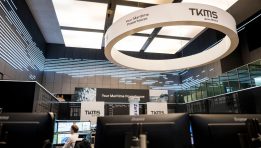
European equity markets ended the March 6 trading session in negative territory as investors adopted a more cautious stance
- orshu
- •
- 7 Min Read
- •
- ago 4 hours
SKN | Israel Market Close – March 6, 2026: Tel Aviv Stocks Pause After Rally as Investors Digest Recent Gains
Israeli markets closed on March 6, 2026 with limited movement as investors paused after the strong rally earlier in the
- ago 4 hours
- •
- 7 Min Read
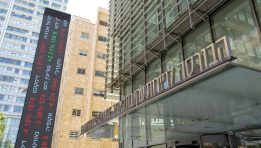
Israeli markets closed on March 6, 2026 with limited movement as investors paused after the strong rally earlier in the

