





- omer bar
- •
- 7 Min Read
- •
- 6 months ago


Key Points
- Toyota, Hyundai and Chinese automakers are among the companies most exposed to the Middle East auto market.
- Rising oil prices and shipping disruptions could raise logistics costs and delay vehicle deliveries.
- A prolonged conflict near the Strait of Hormuz could ripple across the global automotive supply chain.

The escalating conflict involving Iran has introduced new uncertainty for the global automotive industry, with analysts warning that several major international carmakers could face disruptions in sales, logistics, and supply chains. The Middle East has become an increasingly important market for foreign automakers, particularly for Asian manufacturers that have expanded aggressively across the region in recent years. As geopolitical tensions threaten energy flows and key shipping routes, investors are beginning to assess how prolonged instability could affect vehicle demand, export logistics, and the broader cost structure of the global auto industry.
Middle East Market Exposure Raises Risks for Global Automakers
Automakers such as Toyota Motor, Hyundai Motor, and Chinese manufacturer Chery appear particularly exposed to potential disruptions tied to the conflict. According to industry analysis, these companies collectively account for roughly one-third of vehicle sales in the Middle East, highlighting the region’s strategic importance for international auto manufacturers. Toyota alone represents approximately 17% of regional sales, followed by Hyundai with about 10%, while Chery commands roughly 5% of the market.
The Middle East has also emerged as a rapidly expanding destination for Chinese automotive exports. Export data suggests that about 17% of China’s passenger vehicle shipments were directed to the region in 2025. This growing reliance on Middle Eastern demand means that any sustained geopolitical disruption could have broader implications for Chinese automakers that are increasingly dependent on overseas markets to support production growth.
Shipping Routes and Energy Costs Add Pressure
Beyond direct sales exposure, the conflict raises significant concerns about transportation routes and energy costs. The Strait of Hormuz, a vital maritime passage connecting the Persian Gulf with global shipping lanes, plays a central role in both oil flows and international trade logistics. Approximately 20 million barrels of crude oil move through the waterway each day, making it one of the most strategically sensitive shipping corridors in the world.
Industry analysts warn that a closure or disruption of the strait could extend vehicle shipping times by up to two weeks. Longer transit times increase logistics expenses, complicate inventory planning, and create delivery delays that ripple through dealer networks and customer supply chains. In a sector where production scheduling and distribution efficiency are critical, such disruptions could materially affect sales performance across the region.
Energy Prices and Market Sentiment Complicate the Outlook
Energy prices have already begun reacting to the heightened tensions. U.S. crude oil recently moved above $80 per barrel, while retail gasoline prices in the United States climbed roughly 27 cents in a single week to reach an average of $3.25 per gallon. Rising fuel costs can influence consumer purchasing behavior, particularly in markets where large vehicles and SUVs dominate sales.
Some automakers may face additional pressure from strategic decisions made before the conflict escalated. Companies heavily reliant on fuel-intensive models could encounter weaker demand if energy prices continue to climb. At the same time, the industry is already navigating a complex transition toward electrification, leaving many manufacturers balancing investments in traditional combustion engines with the long-term shift to electric mobility.
Looking ahead, investors and industry executives will closely monitor developments around shipping routes, oil prices, and regional stability. If the conflict intensifies or disrupts key trade corridors, the automotive sector could face a combination of rising costs, supply delays, and fluctuating consumer demand that reshapes global sales dynamics in the months ahead.
Comparison, examination, and analysis between investment houses
Leave your details, and an expert from our team will get back to you as soon as possible
* This article, in whole or in part, does not contain any promise of investment returns, nor does it constitute professional advice to make investments in any particular field.
To read more about the full disclaimer, click here
- Ronny Mor
- •
- 8 Min Read
- •
- ago 1 hour
SKN | Nike’s S&P 100 Exit Signals a Deeper Crisis: Can the Sportswear Giant Rebuild Its Market Position?
The deterioration in Nike’s equity value has reached an important symbolic milestone. S&P Dow Jones Indices announced that NIKE
- ago 1 hour
- •
- 8 Min Read

The deterioration in Nike’s equity value has reached an important symbolic milestone. S&P Dow Jones Indices announced that NIKE

- Arik Arkadi Sluzki
- •
- 9 Min Read
- •
- ago 4 hours
SKN | GPT-6 Astra Challenges Claude Fable 5.1 With Lower Enterprise AI Costs and Near-Perfect Task Completion
OpenAI's GPT-6 Astra is emerging as a significant competitor in enterprise artificial intelligence after Signal65's PINNACLE benchmark showed the
- ago 4 hours
- •
- 9 Min Read

OpenAI's GPT-6 Astra is emerging as a significant competitor in enterprise artificial intelligence after Signal65's PINNACLE benchmark showed the

- sagi habasov
- •
- 7 Min Read
- •
- ago 7 hours
SKN | KOSPI Contracts 1.95% Weekly to 6,687.21: Are South Korean Tech Equities Rebounding Following Mid-Week Memory Sell-Off?
The KOSPI Composite Index (^KS11) exhibited notable multi-session volatility over the trading week in Seoul, ultimately settling at 6,687.21
- ago 7 hours
- •
- 7 Min Read
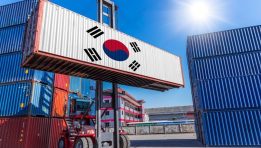
The KOSPI Composite Index (^KS11) exhibited notable multi-session volatility over the trading week in Seoul, ultimately settling at 6,687.21

- orshu
- •
- 6 Min Read
- •
- ago 9 hours
SKN | Hang Seng Index (^HSI) Gains 0.26% Weekly to 25,650.87: Is Chinese Tech Accumulation Driving a Breakout Near Key Resistance?
The Hang Seng Index (^HSI) demonstrated a decisive late-week surge, ultimately settling at 25,650.87 to capture a 5-day net
- ago 9 hours
- •
- 6 Min Read
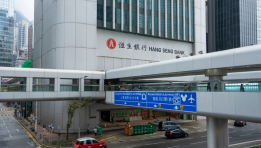
The Hang Seng Index (^HSI) demonstrated a decisive late-week surge, ultimately settling at 25,650.87 to capture a 5-day net

