


- orshu
- •
- 6 Min Read
- •
- 4 hours ago
Key Points
- Major European indices declined, with the DAX down 1.63% and EURO STOXX 50 falling 1.43%.
- MSCI Europe dropped 1.97%, signaling broad regional equity weakness.
- Euro and British pound weakened, reflecting cautious capital flows and currency pressure.
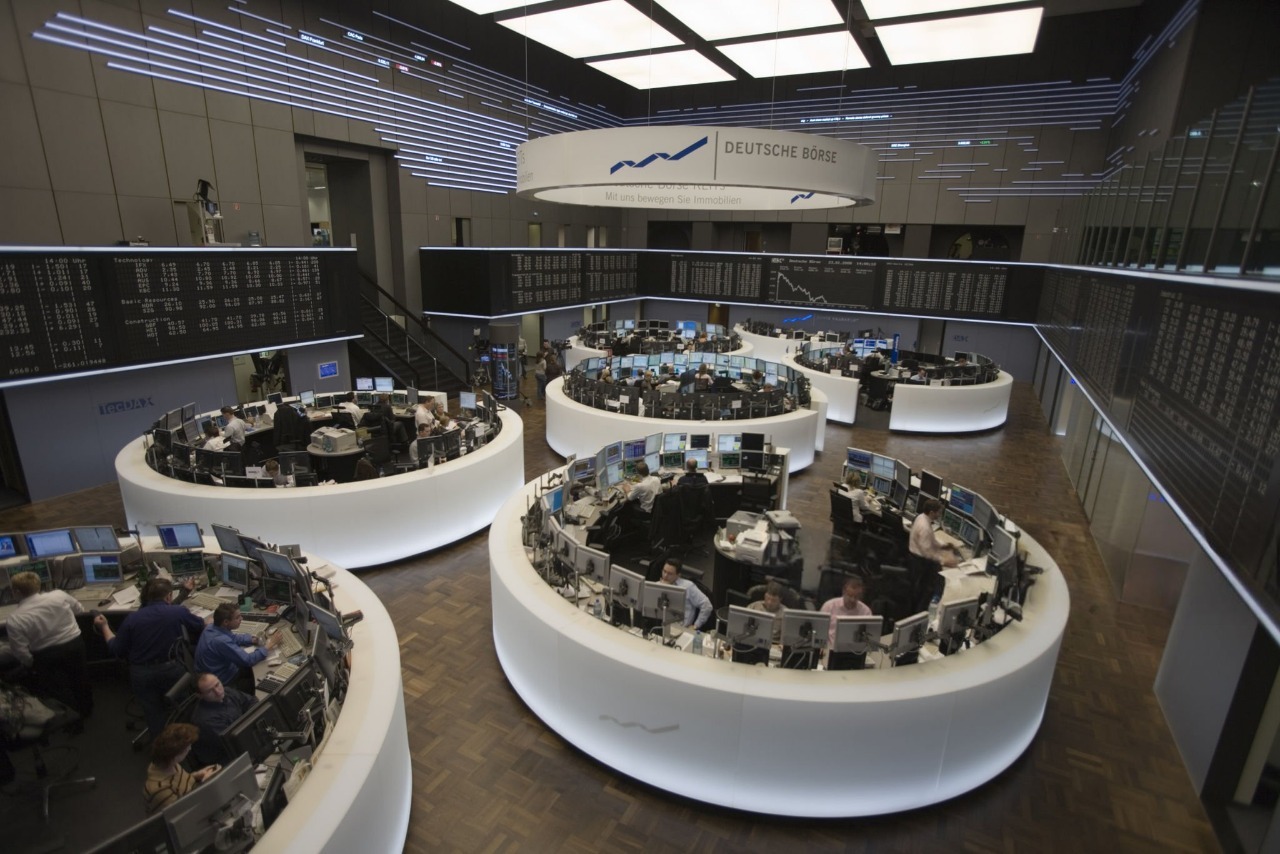
European equity markets ended the March 5 trading session in negative territory, extending the recent pattern of cautious investor positioning across global markets. The declines were broad-based, with major benchmarks across Germany, France, and the United Kingdom all closing lower.
The DAX in Germany slipped 1.63% to 23,811.75, while the EURO STOXX 50 fell 1.43% to 5,786.69. France’s CAC 40 declined 1.44% and the FTSE 100 in London dropped 1.29%, highlighting widespread selling across the region.
Regional Benchmarks Reflect Widespread Risk Aversion
The day’s declines were not limited to one market or sector. The MSCI Europe, which tracks equities across developed European economies, fell 1.97% to 2,660.00, underscoring broad investor caution.
Similarly, the Euronext 100 slipped 1.07% to 1,759.83, reflecting weakness among large multinational companies listed across European exchanges. These companies are particularly sensitive to shifts in global demand and currency volatility.
The uniformity of the declines suggests macro-driven repositioning rather than company-specific developments. When global uncertainty rises, European equities often experience synchronized selling due to their strong exposure to international trade and industrial production cycles.
Currency Weakness Adds to Market Pressure
Currency markets reinforced the defensive tone seen in equities. The Euro Index fell 0.59% to 115.63, while the British Pound Index declined 0.53% to 133.03.
Weakness in major European currencies can reflect investor movement toward safer assets, particularly the U.S. dollar. While a weaker euro can sometimes support exporters by making European goods more competitive globally, short-term currency declines often signal risk-off sentiment.
Exchange rate movements also influence corporate earnings expectations. Companies generating revenue in foreign currencies may face translation effects when reporting results in euros or pounds, adding another layer of uncertainty for investors.
Sector Sensitivity and Global Linkages
European markets are heavily weighted toward industrial, automotive, luxury goods, and financial sectors—industries that are highly sensitive to global economic conditions. As a result, even modest changes in international growth expectations can lead to noticeable market swings.
Energy prices and supply dynamics also remain important drivers of regional sentiment. European economies have been particularly sensitive to energy cost fluctuations over the past several years, and shifts in commodity markets can quickly influence equity valuations.
For international investors, including those in Israel with exposure to European equities, the session highlights the interconnected nature of global capital markets. Developments in U.S. monetary policy, currency markets, and commodity prices frequently transmit directly into European stock performance.
Looking ahead, investors will monitor upcoming economic indicators, including inflation reports, manufacturing data, and European Central Bank commentary for clues about the direction of monetary policy. Currency stability and bond yield trends will also play a key role in determining whether equities can stabilize after recent declines. If macro signals improve and volatility eases, European markets may attempt a recovery led by cyclical sectors. However, persistent global uncertainty could continue to pressure regional benchmarks, keeping investors focused on defensive positioning and risk management.
Comparison, examination, and analysis between investment houses
Leave your details, and an expert from our team will get back to you as soon as possible
* This article, in whole or in part, does not contain any promise of investment returns, nor does it constitute professional advice to make investments in any particular field.
To read more about the full disclaimer, click here
- orshu
- •
- 7 Min Read
- •
- ago 10 seconds
SKN | SOXS Surges Over 6% on March 5 as Semiconductor Weakness Lifts Bearish ETF
The Direxion Daily Semiconductor Bear 3X Shares ETF (SOXS) moved sharply higher on March 5, gaining roughly 6.01% to
- ago 10 seconds
- •
- 7 Min Read

The Direxion Daily Semiconductor Bear 3X Shares ETF (SOXS) moved sharply higher on March 5, gaining roughly 6.01% to
- orshu
- •
- 6 Min Read
- •
- ago 6 hours
SKN | U.S. Markets Mixed on March 5 as Russell 2000 Leads Gains While Major Indexes Struggle
U.S. equities traded in mixed territory on March 5 as investors balanced easing volatility with lingering macroeconomic uncertainty. While
- ago 6 hours
- •
- 6 Min Read

U.S. equities traded in mixed territory on March 5 as investors balanced easing volatility with lingering macroeconomic uncertainty. While

- omer bar
- •
- 5 Min Read
- •
- ago 10 hours
SKN | Asia Markets Rebound on March 5, 2026 as South Korea Surges 9.63% Following Historic Selloff
Asian markets closed higher on March 5, 2026, staging a strong rebound after the dramatic selloff that shook regional markets
- ago 10 hours
- •
- 5 Min Read

Asian markets closed higher on March 5, 2026, staging a strong rebound after the dramatic selloff that shook regional markets
- orshu
- •
- 6 Min Read
- •
- ago 12 hours
SKN | European Markets Attempt Stabilization as Eurozone Blue Chips Rebound
European markets showed signs of stabilization on Wednesday, March 4, 2026, as eurozone blue chips mounted a notable rebound following
- ago 12 hours
- •
- 6 Min Read

European markets showed signs of stabilization on Wednesday, March 4, 2026, as eurozone blue chips mounted a notable rebound following

