


- omer bar
- •
- 6 Min Read
- •
- 29 minutes ago
Key Points
- Goldman Sachs raised its 2026 gold target to $5,400 per ounce.
- Central banks and private investors are driving “sticky” structural demand.
- Gold’s rally reflects macro risk hedging, not a broad commodity supercycle.
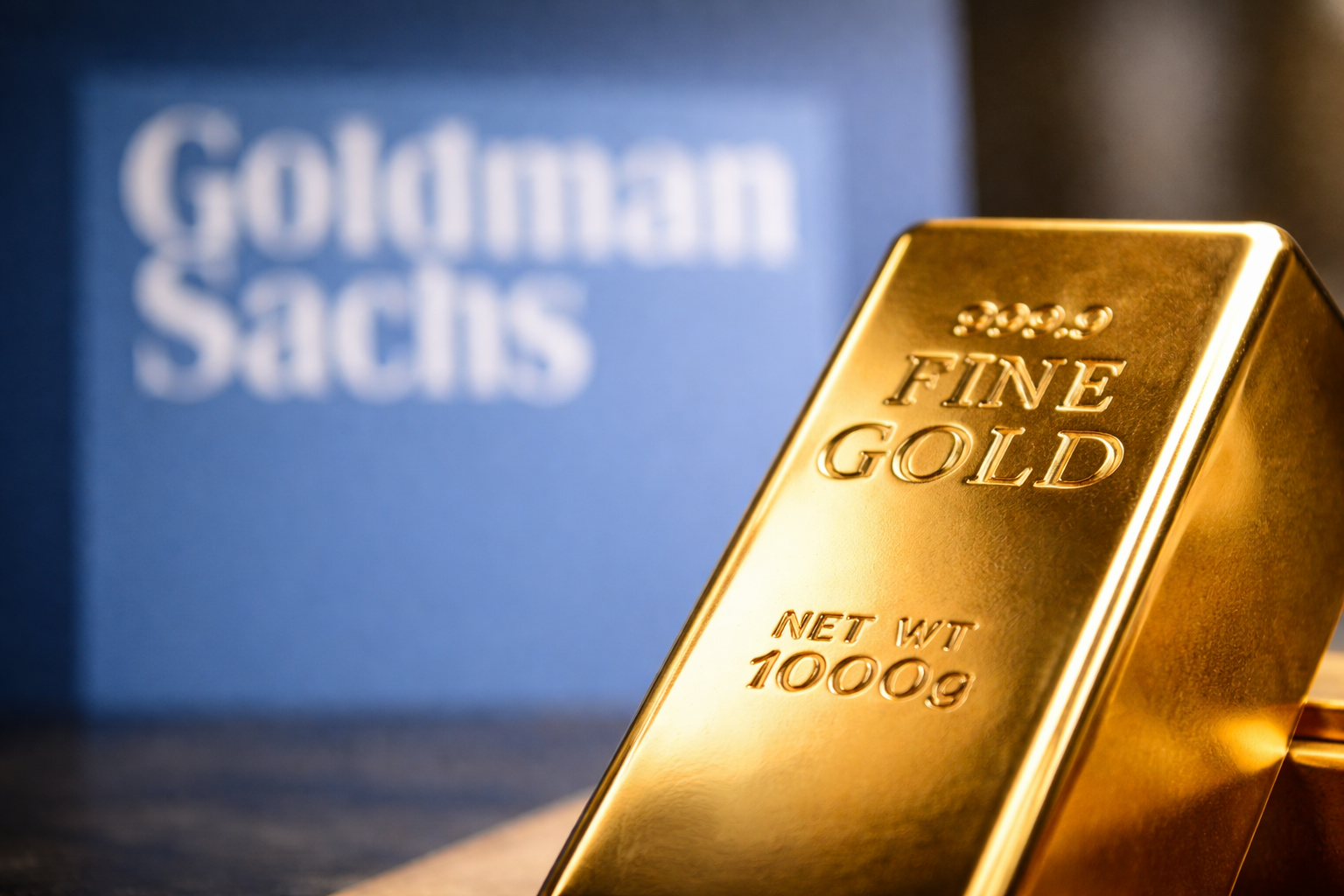
Gold is trading near historic highs after one of the strongest rallies in its modern history, with spot prices touching $5,589 in January 2026 before stabilizing above the $5,000 threshold. As of Feb. 25, bullion is hovering around $5,187 per ounce. Now, Goldman Sachs has raised its year-end 2026 target to $5,400, arguing that the drivers behind the rally are structural rather than speculative. For investors in both the U.S. and Israel navigating inflation risk, fiscal expansion, and currency volatility, the question is whether this run has further to go.
Structural Demand Rewrites the Gold Playbook
Goldman’s upgrade, led by commodities strategists Daan Struyven and Lina Thomas, reflects a shift in buyer composition. Western exchange-traded funds have accumulated roughly 500 tonnes of gold since early 2025, far exceeding flows typically explained by rate cuts alone. That signals allocation shifts rather than tactical trades.
At the same time, high-net-worth individuals and family offices are purchasing physical bullion, while institutions are increasingly buying call options on gold ETFs. Goldman characterizes this positioning as part of a “debasement trade,” driven by long-term concerns over fiscal sustainability, rising sovereign debt levels, and central bank independence.
Central banks remain a cornerstone of demand. The bank forecasts average monthly purchases of 60 tonnes in 2026, largely from emerging-market reserve managers diversifying away from dollar-heavy holdings. China’s central bank extended its buying streak to 15 consecutive months in January 2026, reinforcing the durability of official-sector demand. These flows are described as “sticky,” tied to macro risk hedging rather than cyclical volatility.
Why This Is Not a Commodity Supercycle
Despite the price surge, Goldman firmly rejects the notion that gold’s rally signals a broader commodity supercycle. Unlike industrial metals or energy, gold’s price trajectory depends less on synchronized global growth and more on financial conditions, currency stability, and real interest rates.
Copper, steel, and oil typically require expansive manufacturing cycles and infrastructure spending to sustain prolonged bull markets. China’s property sector remains under pressure, limiting the kind of synchronized demand that defined the 2000s commodity boom. Energy consumption is rising, but not at a pace that signals systemic scarcity.
Gold, by contrast, benefits from macro uncertainty rather than industrial acceleration. It acts as a hedge against policy missteps, fiscal expansion, and geopolitical strain. In this sense, the rally reflects defensive positioning rather than cyclical exuberance.
Investor Psychology and Portfolio Implications
The behavioral dimension is critical. When investors begin to hedge against long-term monetary stability rather than short-term inflation, allocations tend to persist. That reduces volatility from profit-taking and makes pullbacks shallower.
For diversified portfolios, gold’s strength may signal rising risk aversion in global markets. Israeli institutional investors, many of whom hold substantial U.S. exposure, must weigh currency implications alongside bullion positioning. A weaker dollar could amplify gold’s role as a portfolio stabilizer.
Looking ahead, the trajectory toward $5,400 will depend on central bank accumulation, fiscal policy trends, and ETF inflows. A sharp rebound in real yields could temper momentum, while renewed geopolitical tensions could accelerate it. The coming quarters will test whether gold’s current floor above $5,000 becomes the new baseline for a structurally repriced asset.
Comparison, examination, and analysis between investment houses
Leave your details, and an expert from our team will get back to you as soon as possible
* This article, in whole or in part, does not contain any promise of investment returns, nor does it constitute professional advice to make investments in any particular field.
To read more about the full disclaimer, click here
- sagi habasov
- •
- 6 Min Read
- •
- ago 7 hours
SKN | Gold Reclaims $5,200: Are Trade Tensions and Middle East Risks Reigniting the Safe-Haven Trade?
Gold prices pushed back above the $5,200 threshold as renewed uncertainty around U.S. trade policy and escalating geopolitical tensions in
- ago 7 hours
- •
- 6 Min Read

Gold prices pushed back above the $5,200 threshold as renewed uncertainty around U.S. trade policy and escalating geopolitical tensions in

- orshu
- •
- 6 Min Read
- •
- ago 11 hours
SKN | Gold Holds Above $5,000 as Tariff Turmoil and Iran Tensions Fuel Safe-Haven Demand
Gold advanced on Wednesday as a softer dollar and renewed trade-policy uncertainty reinforced safe-haven flows, while escalating Middle East tensions
- ago 11 hours
- •
- 6 Min Read

Gold advanced on Wednesday as a softer dollar and renewed trade-policy uncertainty reinforced safe-haven flows, while escalating Middle East tensions

- Lior mor
- •
- 6 Min Read
- •
- ago 1 day
SKN | Oil Near Seven-Month High: Will US–Iran Talks Defuse the Geopolitical Risk Premium?
Oil prices are hovering near seven-month highs as markets brace for renewed nuclear negotiations between the United States and Iran.
- ago 1 day
- •
- 6 Min Read

Oil prices are hovering near seven-month highs as markets brace for renewed nuclear negotiations between the United States and Iran.
- orshu
- •
- 6 Min Read
- •
- ago 2 days
SKN | Copper Rebounds Toward $5.9: Is the Rally Sustainable as China Returns?
Copper prices climbed sharply as mainland Chinese traders returned from the Lunar New Year break, injecting fresh liquidity into the
- ago 2 days
- •
- 6 Min Read
Copper prices climbed sharply as mainland Chinese traders returned from the Lunar New Year break, injecting fresh liquidity into the

