


- omer bar
- •
- 7 Min Read
- •
- 4 days ago
Key Points
- Treasuries posted their first weekly decline in a month as deficit risks re-emerge.
- Strong labor and inflation data reduce expectations for near-term Fed cuts.
- Yields remain range-bound between roughly 4% and 4.3% amid macro uncertainty.
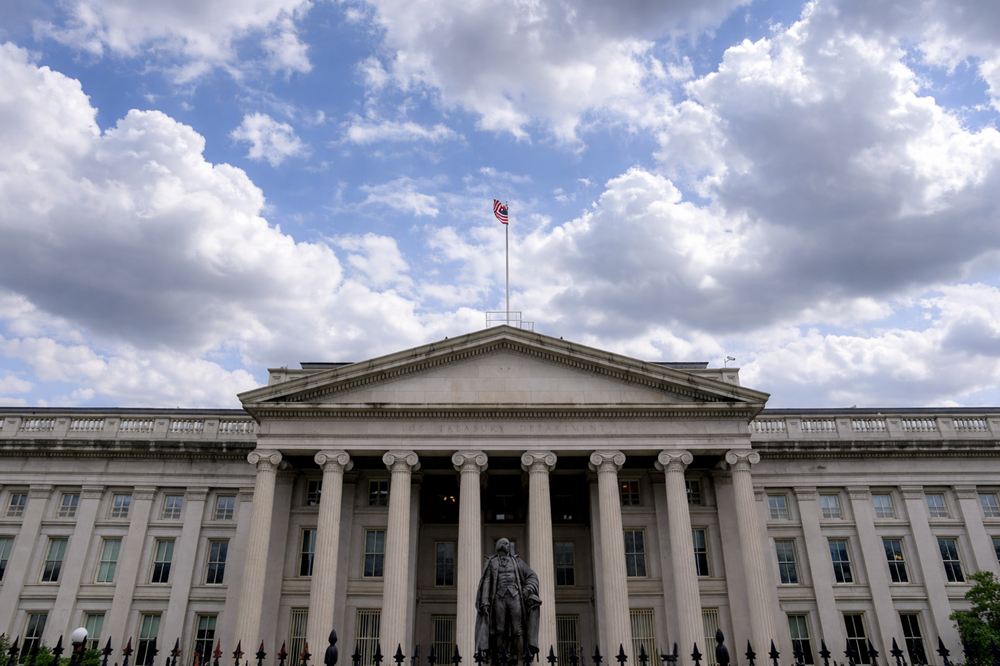
Momentum in the $31 trillion US Treasury market is tilting back toward bond bears as a combination of fiscal uncertainty, resilient economic data, and hawkish Federal Reserve signals challenge the rally seen earlier this month. After Treasuries posted their first weekly loss in a month, investors are reassessing whether the recent haven-driven advance has run its course. The Supreme Court’s decision to strike down President Donald Trump’s tariffs — potentially widening the deficit — alongside firm labor and inflation data, has revived expectations that yields may drift higher within their established trading range.
Deficit Pressures and Policy Signals Reshape Sentiment
The high court’s rejection of Trump’s emergency tariff framework threatens to remove a revenue stream that had been partially offsetting federal borrowing needs. If average effective tariff rates fall materially, the Treasury may need to issue more debt to finance the shortfall. Strategists broadly anticipate a mild “bear steepening,” with longer-dated yields edging higher as deficit concerns re-enter pricing models.
At the same time, economic data complicates the case for rate cuts. Strong labor-market readings and inflation running above expectations suggest the bar for further monetary easing remains high. Minutes from the Federal Reserve’s January meeting revealed some officials even discussed the possibility of tightening if price pressures persist. For bond bulls who had priced in as many as three rate cuts this year, that narrative has weakened.
Ten-year yields ended last week at 4.08%, up from near 4% lows earlier in the week but still below mid-January levels of roughly 4.3%. The move underscores a market caught between cyclical resilience and structural fiscal anxiety.
Options Market Signals and Tactical Positioning
Options pricing offered early warning signs that the rally was overstretched. A one-month call-put skew in 10-year futures reached levels historically associated with near-term yield reversals. Similar extremes preceded yield rebounds during April’s tariff volatility and during episodes of stress in 2023.
BNP Paribas strategists characterized the prior rally as “panic-driven,” recommending interest-rate swaps to position for higher yields. JPMorgan has advised short positions in two-year notes, arguing stable growth conditions could keep the Fed sidelined through 2026.
Portfolio managers such as Marlborough Investment Management’s James Athey trimmed exposure when yields approached the lower end of their range. The prevailing strategy remains range trading rather than outright breakout bets, reflecting confidence that the economy has not meaningfully shifted trajectory.
Geopolitics and Private Credit Risks Add Complexity
Despite the bearish tilt, supportive forces persist. US military deployments in the Middle East and rising oil prices maintain latent risk-off potential. Any escalation involving Iran could quickly renew haven flows into Treasuries.
Meanwhile, stress in alternative credit markets — highlighted by Blue Owl Capital’s decision to restrict withdrawals from a private credit fund — reminds investors of latent financial fragilities. Such developments could cap yield increases if broader risk appetite falters.
For now, the 10-year Treasury continues to oscillate between roughly 4% and 4.3%, reflecting a macro tug-of-war rather than a decisive trend. Investors appear unwilling to commit to a sustained breakout in either direction without a material shift in growth or inflation dynamics.
Looking ahead, the bond market’s next catalyst may emerge from fiscal policy clarity or a decisive change in labor and inflation data. Until then, tactical positioning — rather than directional conviction — is likely to dominate strategies across US rates markets.
Comparison, examination, and analysis between investment houses
Leave your details, and an expert from our team will get back to you as soon as possible
* This article, in whole or in part, does not contain any promise of investment returns, nor does it constitute professional advice to make investments in any particular field.
To read more about the full disclaimer, click here
- omer bar
- •
- 6 Min Read
- •
- ago 3 days
SKN | Dollar Rebounds Above 97.8: Is Tariff Turbulence Reviving Safe-Haven Demand?
The U.S. dollar regained ground Tuesday, with the Dollar Index climbing above 97.8 after weakness in the prior session, as
- ago 3 days
- •
- 6 Min Read

The U.S. dollar regained ground Tuesday, with the Dollar Index climbing above 97.8 after weakness in the prior session, as

- sagi habasov
- •
- 7 Min Read
- •
- ago 1 week
SKN | Treasury Yields Edge Higher Ahead of Fed Minutes: Will Policymakers Signal a Shift?
U.S. Treasury yields ticked higher as investors positioned cautiously ahead of the Federal Reserve’s January meeting minutes, due for release
- ago 1 week
- •
- 7 Min Read
U.S. Treasury yields ticked higher as investors positioned cautiously ahead of the Federal Reserve’s January meeting minutes, due for release
- sagi habasov
- •
- 6 Min Read
- •
- ago 1 week
SKN | Stocks and Bonds Drift in Holiday-Thinned Trade: What the Muted Volatility Signals for Global Investors
Stocks and bonds moved within narrow but uneven ranges as holiday-thinned trading reduced liquidity across major financial centers. With
- ago 1 week
- •
- 6 Min Read

Stocks and bonds moved within narrow but uneven ranges as holiday-thinned trading reduced liquidity across major financial centers. With

- Ronny Mor
- •
- 6 Min Read
- •
- ago 2 weeks
SKN | Carry Trade and Commodities Shield EM Currencies: Are They Now More Stable Than G-7 FX?
Emerging-market currencies are showing an unusual degree of resilience relative to their developed-market peers, challenging long-standing assumptions about foreign-exchange
- ago 2 weeks
- •
- 6 Min Read

Emerging-market currencies are showing an unusual degree of resilience relative to their developed-market peers, challenging long-standing assumptions about foreign-exchange

