


- orshu
- •
- 6 Min Read
- •
- 4 hours ago
Key Points
- South Korea’s KOSPI surged 3.09%, leading gains across open Asian markets as semiconductor optimism supported technology stocks.
- Mainland China and India declined, highlighting fragmented regional performance amid ongoing Lunar New Year disruptions.
- Limited market participation across Asia constrained liquidity, leaving domestic catalysts to drive price action ahead of full reopening.
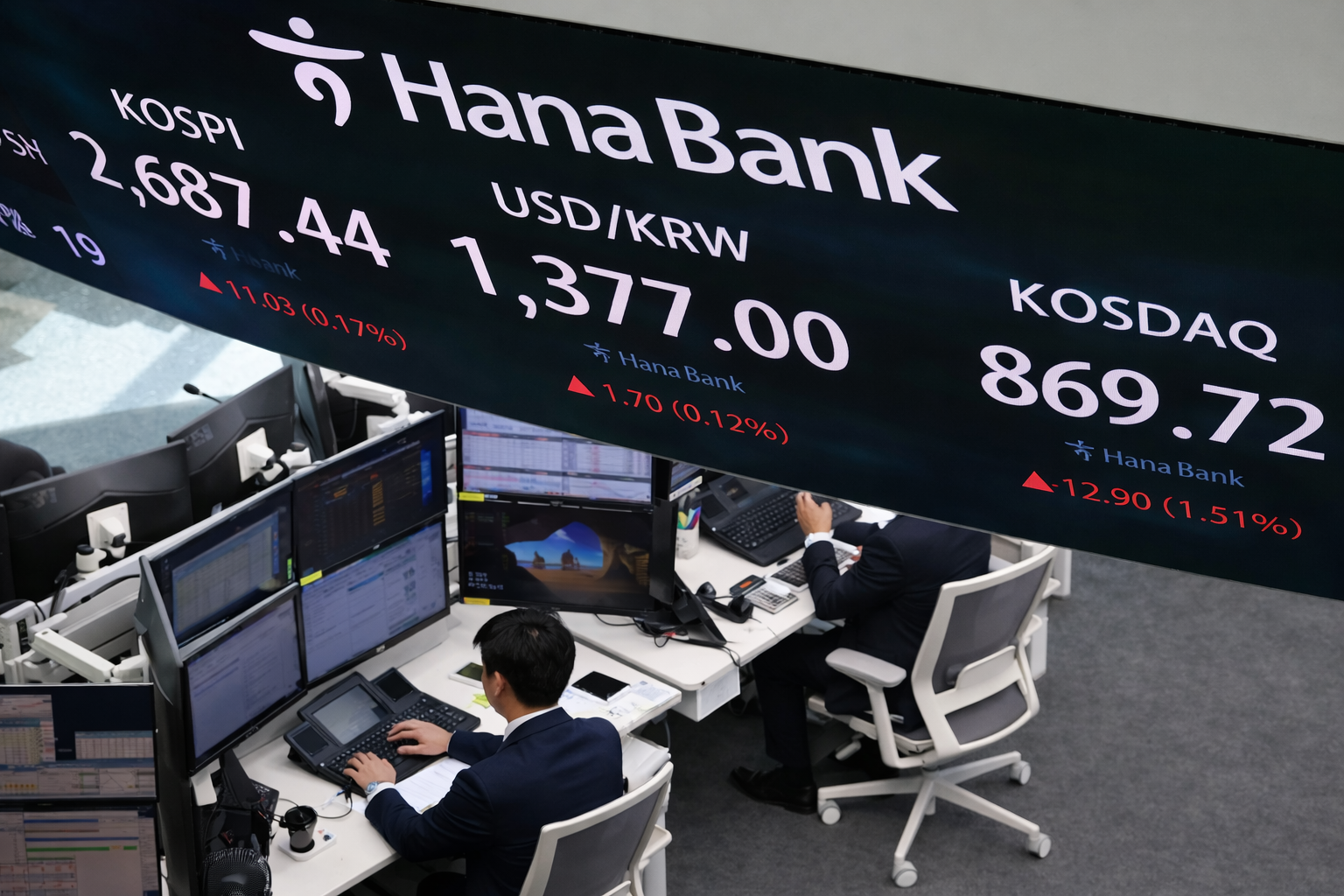
Asian markets closed February 19, 2026 with a broadly positive tone among open exchanges, led by a strong rally in South Korea. Despite continued Lunar New Year disruptions across key financial centers, selective domestic buying pushed several benchmarks higher. However, declines in mainland China and India highlighted ongoing fragmentation across the region.
Holiday-related shutdowns continued to suppress cross-border capital flows, shaping a session driven largely by domestic dynamics rather than synchronized regional momentum.
South Korea Leads Regional Rebound
South Korea’s KOSPI Composite Index surged 3.09% to 5,677.25, marking the strongest performance in Asia. The sharp rally suggests renewed investor confidence following recent volatility, with technology and industrial stocks driving gains as liquidity gradually normalizes after holiday disruptions.
The rebound was also supported by continued global semiconductor optimism tied to artificial intelligence infrastructure spending, which remains a key driver of capital flows into South Korea’s technology sector.
Japan’s Nikkei 225 rose 0.57% to 57,467.83, supported by a weakening yen. The Japanese Yen Index fell 1.01% to 64.60, offering support to export-oriented companies and contributing to equity strength.
Australia’s S&P/ASX 200 advanced 0.88% to 9,086.20, despite a 0.56% decline in the Australian Dollar Index to 70.43. The softer currency may have helped support exporters and commodity-linked stocks.
China Weak, India Pulls Back
China’s mainland equity markets remained partially impacted by Lunar New Year holidays, with participation still thin despite selective trading activity. The SSE Composite Index declined 1.26% to 4,082.07, extending recent weakness as investors await the return of full liquidity and institutional flows.
India’s S&P BSE Sensex fell 1.44% to 82,531.16, marking one of the session’s weakest performances. The decline suggests profit-taking or repositioning after previous resilience, particularly across domestic financial and consumer sectors.
The divergence between South Korea’s strong rally and India’s decline underscores the selective and fragmented nature of current Asian market conditions.
Limited Hong Kong Participation as Holidays Continue
Hong Kong trading resumed in a limited capacity following holiday closures, allowing the Hang Seng Index to edge 0.52% higher to 26,705.94. The modest gain reflected cautious positioning rather than broad risk-on sentiment, as regional participation remained uneven.
Several exchanges across Asia continued operating on reduced schedules due to Lunar New Year celebrations, including markets in mainland China, Taiwan, and Vietnam. The staggered reopening limited cross-border capital flows and suppressed overall volatility, leaving domestic catalysts to drive price action across the region.
Outlook
As Lunar New Year holidays conclude and exchanges gradually reopen, market participation is expected to increase. Historically, post-holiday sessions can generate heightened volatility as delayed trades and institutional reallocations re-enter the system.
Investors will watch whether South Korea’s strong rebound can sustain momentum and whether China stabilizes once full liquidity returns. Currency movements — particularly the yen’s weakness and fluctuations in the Australian dollar — will remain important indicators for export-heavy markets.
For now, Asia’s close reflects improving risk appetite in select markets, offset by ongoing weakness in mainland China and uneven performance across the region. The return of full trading activity will likely determine whether this rebound broadens or transitions into a more cautious consolidation phase.
Comparison, examination, and analysis between investment houses
Leave your details, and an expert from our team will get back to you as soon as possible
* This article, in whole or in part, does not contain any promise of investment returns, nor does it constitute professional advice to make investments in any particular field.
To read more about the full disclaimer, click here
- orshu
- •
- 5 Min Read
- •
- ago 2 minutes
SKN | US Stocks Slide as Nasdaq Leads Declines While Dollar and Volatility Edge Higher
US equity markets opened lower on February 19 as investors adopted a more defensive stance, with technology shares weighing
- ago 2 minutes
- •
- 5 Min Read

US equity markets opened lower on February 19 as investors adopted a more defensive stance, with technology shares weighing
- orshu
- •
- 5 Min Read
- •
- ago 6 hours
SKN | European Markets Mixed as Regional Benchmark Jumps Despite Pullback in Core Indices
European markets delivered a mixed performance on Thursday, February 19, 2026, as a sharp rise in the broader regional benchmark
- ago 6 hours
- •
- 5 Min Read

European markets delivered a mixed performance on Thursday, February 19, 2026, as a sharp rise in the broader regional benchmark
- orshu
- •
- 6 Min Read
- •
- ago 18 hours
SKN | Mega-Cap Tech Powers Intraday Rally as Markets Position for Fed Minutes Volatility
US equity markets climbed intraday as heavyweight technology companies once again provided the primary source of upward momentum. The
- ago 18 hours
- •
- 6 Min Read

US equity markets climbed intraday as heavyweight technology companies once again provided the primary source of upward momentum. The
- orshu
- •
- 7 Min Read
- •
- ago 19 hours
SKN | Consumer Stocks Send a Cautious Signal: Rotation or Resilience Beneath the Surface?
Consumer stocks were mixed Wednesday afternoon, reflecting a market caught between resilient spending data and mounting macro uncertainty. While
- ago 19 hours
- •
- 7 Min Read

Consumer stocks were mixed Wednesday afternoon, reflecting a market caught between resilient spending data and mounting macro uncertainty. While

