


- orshu
- •
- 6 Min Read
- •
- 2 hours ago
Key Points
- Major European indices closed mixed, with the FTSE 100 and CAC 40 edging higher while Germany’s DAX declined.
- Currency markets remained relatively stable, with the British Pound Index rising 0.22% and the Euro Index nearly flat.
- Regional divergence reflects sector rotation and investor caution ahead of upcoming macroeconomic data.
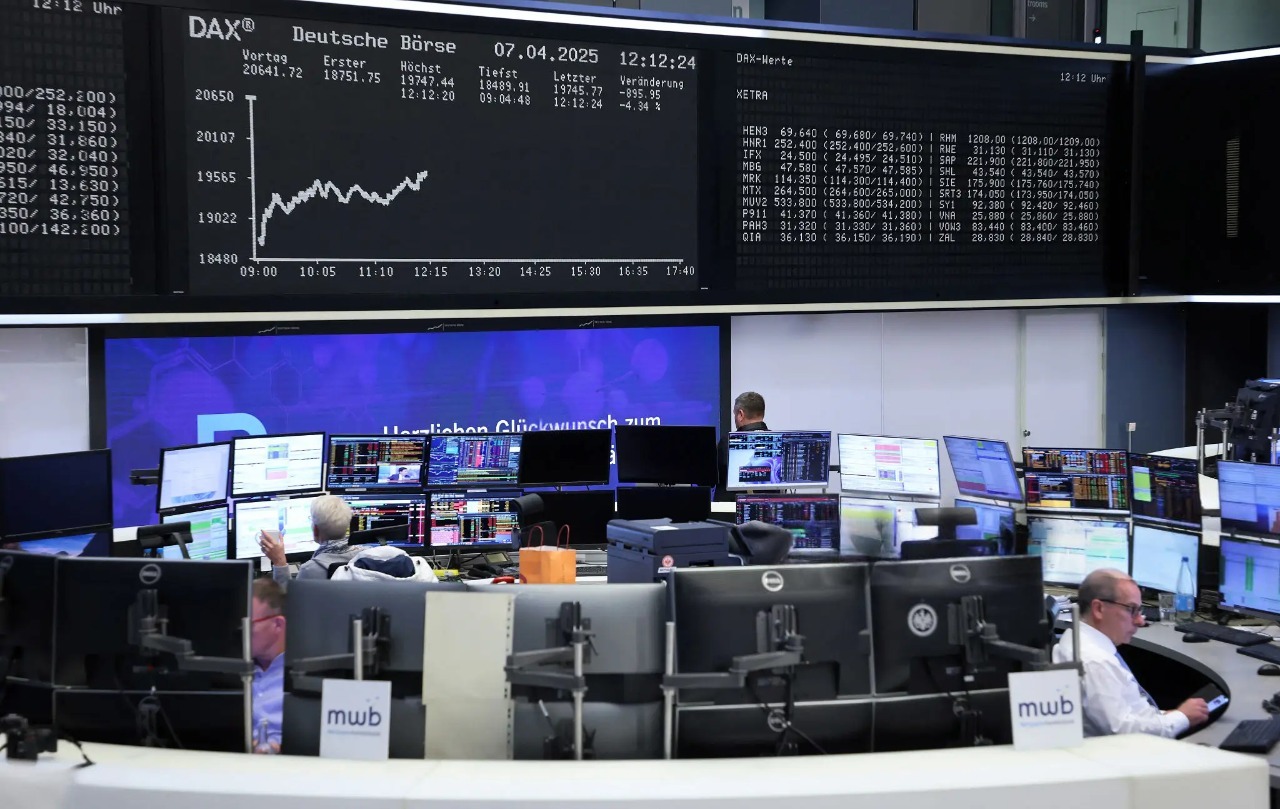
European equity markets ended February 16 with a divided tone as investors balanced selective buying in the UK and France against weakness in German equities. The session underscored ongoing rotation across sectors, with currency markets signaling relative stability despite broader global volatility.
With the market now closed, traders are recalibrating expectations around economic momentum, corporate earnings trajectories, and monetary policy direction within the eurozone and the United Kingdom.
FTSE and CAC Hold Gains While DAX Retreats
The FTSE 100 advanced 0.22% to 10,468.95, supported by strength in multinational and commodity-linked names that tend to benefit from currency resilience and external demand. The UK’s blue-chip index continues to display relative defensive characteristics, particularly during periods of continental uncertainty.
France’s CAC 40 added 0.11% to 8,320.68, while the Euronext 100 Index gained 0.13%. These modest advances suggest steady investor appetite in core eurozone markets, though conviction appears measured rather than aggressive.
In contrast, Germany’s DAX fell 0.47% to 24,797.18, reflecting pressure in industrial and export-sensitive sectors. Germany’s economic sensitivity to global manufacturing cycles and external trade dynamics often makes the DAX more reactive to shifts in growth expectations.
Broader European Benchmarks and Data Irregularities
The EURO STOXX 50 edged down 0.06%, reinforcing the view of a balanced but cautious session across large-cap eurozone names. Meanwhile, the MSCI Europe index was reported at 2,779.97 with a sharp negative percentage move. The magnitude of the reported decline appears inconsistent with broader market performance and may reflect a technical or data anomaly rather than a systemic selloff.
Investors are therefore interpreting the session primarily through the lens of sector-specific adjustments rather than broad risk aversion. Financials and energy-related names provided partial support, while technology and industrial shares experienced selective pressure.
Currency Stability Provides Anchor
Currency markets showed relative calm. The British Pound Index rose 0.22%, mirroring the FTSE’s gain and suggesting supportive sentiment toward UK assets. In contrast, the Euro Index slipped marginally by 0.01%, effectively flat on the session.
Stable currency movements often reduce volatility spillover into equity markets. For export-heavy economies like Germany, even modest euro fluctuations can influence earnings outlooks. The current near-flat euro reading indicates that equity divergence stemmed more from sector rotation than foreign-exchange stress.
From a global allocation perspective, European markets remain sensitive to monetary policy signals from the European Central Bank and the Bank of England. Rate path clarity will be critical in determining capital flows into regional equities.
Looking ahead, investors will monitor inflation data, central bank commentary, corporate earnings revisions, and global trade indicators. Germany’s industrial trajectory will remain a focal point, particularly as it influences eurozone growth expectations. Currency stability provides a temporary anchor, but sustained equity upside will likely depend on improving economic momentum and earnings resilience. If macro signals strengthen, selective European indices could regain upward traction; however, uneven sector performance and external demand risks continue to shape the near-term outlook.
Comparison, examination, and analysis between investment houses
Leave your details, and an expert from our team will get back to you as soon as possible
* This article, in whole or in part, does not contain any promise of investment returns, nor does it constitute professional advice to make investments in any particular field.
To read more about the full disclaimer, click here
- orshu
- •
- 7 Min Read
- •
- ago 2 minutes
SKN | Rotating Out of Risk: Which Stock Traits Matter Most in a Defensive Market Shift?
As global equity markets navigate heightened volatility, persistent geopolitical tensions, and shifting interest-rate expectations, investors are increasingly reassessing portfolio
- ago 2 minutes
- •
- 7 Min Read

As global equity markets navigate heightened volatility, persistent geopolitical tensions, and shifting interest-rate expectations, investors are increasingly reassessing portfolio
- orshu
- •
- 7 Min Read
- •
- ago 3 hours
SKN | Israel Market Close Today, February 16, 2026: Equities Extend Gradual Climb as Sector-Balance and Mid-Caps Lead Gains
Israeli financial markets closed today, February 16, 2026, with moderate gains across the equity complex as investors maintained a constructive
- ago 3 hours
- •
- 7 Min Read

Israeli financial markets closed today, February 16, 2026, with moderate gains across the equity complex as investors maintained a constructive
- orshu
- •
- 7 Min Read
- •
- ago 8 hours
SKN | Asia Closes Mixed as India and Hong Kong Advance While Mainland China Remains Shut for Lunar New Year
Asian markets ended February 16, 2026, with mixed results as investors navigated a fragmented trading environment shaped by widespread Lunar
- ago 8 hours
- •
- 7 Min Read

Asian markets ended February 16, 2026, with mixed results as investors navigated a fragmented trading environment shaped by widespread Lunar
- orshu
- •
- 5 Min Read
- •
- ago 11 hours
SKN | European Markets Mixed as U.K. and Germany Advance While Eurozone Blue Chips Weaken
European markets delivered a mixed performance on Monday, February 16, 2026, as gains in the U.K. and Germany contrasted with
- ago 11 hours
- •
- 5 Min Read
European markets delivered a mixed performance on Monday, February 16, 2026, as gains in the U.K. and Germany contrasted with

