


- omer bar
- •
- 8 Min Read
- •
- 52 minutes ago
Key Points
- U.S. Treasury Secretary Scott Bessent blamed speculative Chinese trading for gold’s recent violent swings.
- He described the rally-and-reversal as a potential “speculative blowoff” rather than a fundamentals-driven move.
- Comments on the Fed, the dollar, and equities signal confidence in a resilient U.S. economic cycle.
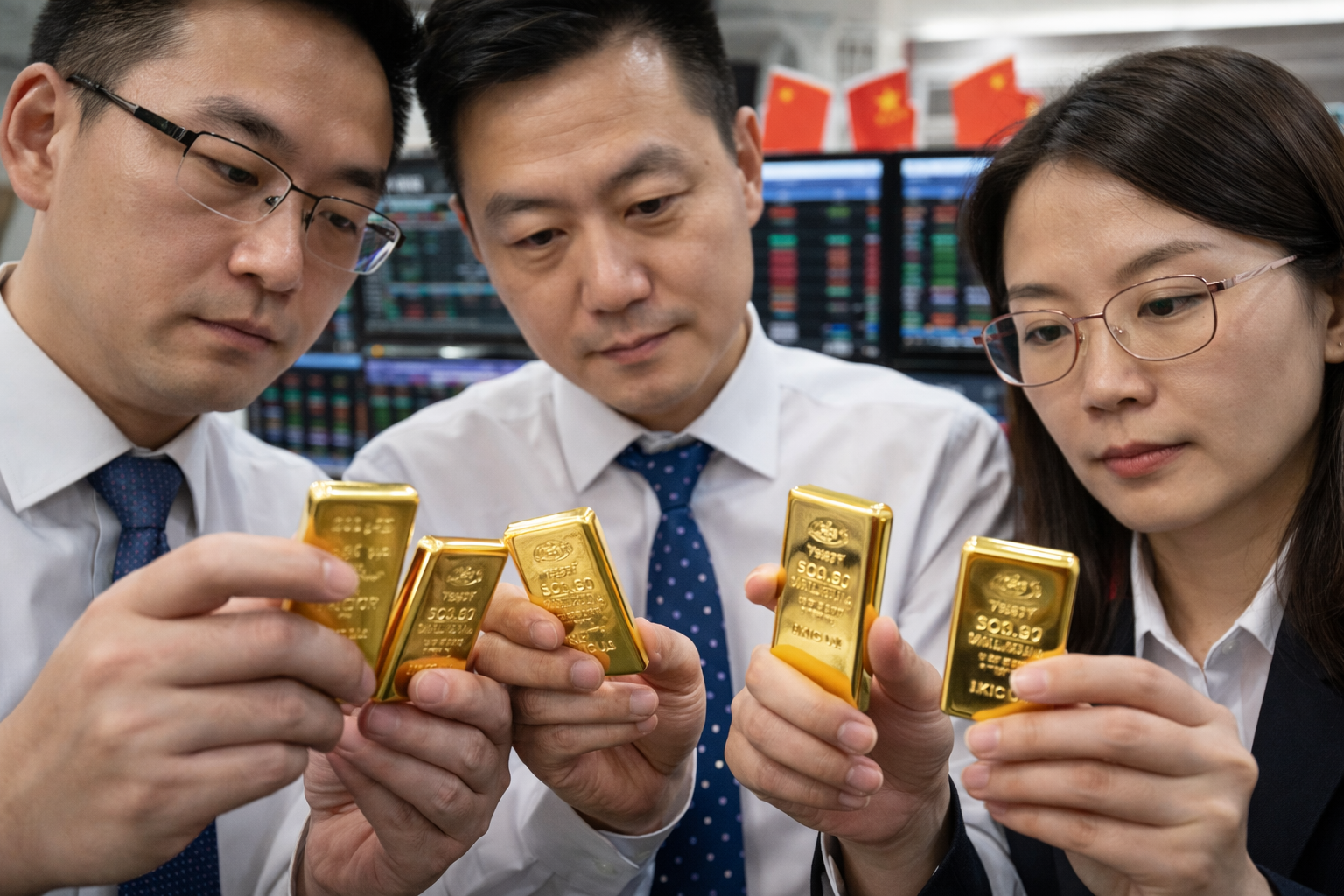
Gold’s dramatic surge and sudden reversal last week may have had less to do with U.S. fundamentals and more to do with speculative excess abroad, according to U.S. Treasury Secretary Scott Bessent. Speaking in a television interview, Bessent pointed directly to trading behavior in China, suggesting that aggressive positioning and subsequent margin tightening fueled the metal’s wild price swings.
Speculation, Not Scarcity
Bessent characterized recent moves in gold as disorderly, saying trading activity in China had become “unruly” enough to force authorities there to tighten margin requirements. In his view, the sharp rally followed by an abrupt reversal resembled a classic speculative blowoff — a pattern in which leveraged buying accelerates prices higher before collapsing under its own weight.
That interpretation challenges the dominant narrative that gold’s surge was purely a response to geopolitical risk, concerns over U.S. monetary policy independence, and broader macro uncertainty. While those factors provided a backdrop, Bessent implied that positioning dynamics, rather than structural demand, amplified price action to unsustainable levels.
Ripple Effects Across Markets
The turbulence in precious metals coincided with notable shifts elsewhere. As gold retreated, the U.S. dollar recorded its first weekly gain since early January, suggesting a partial unwind of defensive positioning. At the same time, equities pushed higher, with the Dow Jones Industrial Average topping 50,000 for the first time.
Bessent cited the Dow’s milestone as evidence that the U.S. economy remains on a positive trajectory, supported by corporate earnings strength and investor confidence. With midterm elections approaching in November, he framed the equity rally as a signal that economic momentum could translate into tangible benefits for households, contrasting sharply with the instability seen in commodity markets.
A Cautious Federal Reserve Outlook
Beyond gold, Bessent addressed monetary policy, signaling expectations for a measured approach from the Federal Reserve. He said he does not anticipate rapid action to shrink the Fed’s balance sheet, noting that the current “ample reserves” regime requires maintaining a relatively large balance sheet.
In practical terms, Bessent suggested the Fed may take a year or more to decide its next steps on balance sheet policy, reinforcing the idea that monetary conditions will not tighten abruptly through quantitative measures. That stance aligns with his broader message that market volatility is being driven more by speculative behavior than by imminent policy shifts.
Politics and Central Bank Independence
Bessent also touched on the political backdrop, commenting on President Donald Trump’s nominee to chair the Fed, Kevin Warsh. He described Warsh as independent but mindful of public accountability, a phrasing likely aimed at reassuring markets wary of political pressure on monetary policy.
Pressed by lawmakers about Trump’s past comments on interest rates, Bessent downplayed concerns, framing them as rhetorical rather than a blueprint for direct intervention. Still, the exchange underscores how questions around Fed independence continue to influence asset prices, including gold.
What to Watch Next
If Bessent is right, gold’s recent volatility may ease as speculative excess is wrung out, particularly if tighter margin rules curb leveraged trading in China. However, the underlying drivers that initially attracted investors to gold — geopolitical tension, currency hedging, and policy uncertainty — have not disappeared.
For investors, the key distinction is whether gold resumes trading on fundamentals or remains vulnerable to sharp swings driven by positioning. Bessent’s remarks suggest the latter risk remains elevated, even as U.S. equities and the dollar tell a more optimistic story.
Comparison, examination, and analysis between investment houses
Leave your details, and an expert from our team will get back to you as soon as possible
* This article, in whole or in part, does not contain any promise of investment returns, nor does it constitute professional advice to make investments in any particular field.
To read more about the full disclaimer, click here
- omer bar
- •
- 8 Min Read
- •
- ago 2 hours
SKN | Has Johnson & Johnson’s Rally Run Ahead of Its Fundamentals After a 60% Gain?
Johnson & Johnson has re-emerged as a market standout after a powerful rally that has pushed its share price close
- ago 2 hours
- •
- 8 Min Read

Johnson & Johnson has re-emerged as a market standout after a powerful rally that has pushed its share price close
- omer bar
- •
- 8 Min Read
- •
- ago 6 hours
SKN | Goldman Traders Warn the Selloff Isn’t Done as Systematic Funds Loom Over Wall Street
Wall Street’s sharp rebound late last week may have offered temporary relief, but traders at Goldman Sachs are cautioning that
- ago 6 hours
- •
- 8 Min Read

Wall Street’s sharp rebound late last week may have offered temporary relief, but traders at Goldman Sachs are cautioning that

- orshu
- •
- 7 Min Read
- •
- ago 2 days
SKN | US Markets Rebound Strongly on February 6, 2026 as Volatility Collapses and Risk Appetite Returns
U.S. equity markets closed sharply higher on Friday, February 6, 2026, marking a decisive rebound after days of heightened volatility
- ago 2 days
- •
- 7 Min Read
U.S. equity markets closed sharply higher on Friday, February 6, 2026, marking a decisive rebound after days of heightened volatility
- omer bar
- •
- 8 Min Read
- •
- ago 2 days
SKN | Is the AI Infrastructure Boom Only Getting Started, According to Nvidia’s Jensen Huang?
The global surge in artificial intelligence spending is far from peaking, according to Jensen Huang. Speaking publicly this week, the
- ago 2 days
- •
- 8 Min Read

The global surge in artificial intelligence spending is far from peaking, according to Jensen Huang. Speaking publicly this week, the

