


- Ronny Mor
- •
- 7 Min Read
- •
- 3 months ago
Key Points
- U.S. closures reflect structural challenges rather than short-term volatility.
- International markets provide ballast but may not offset domestic weakness.
- A sale or restructuring could reshape Pizza Hut’s role within the global restaurant landscape.
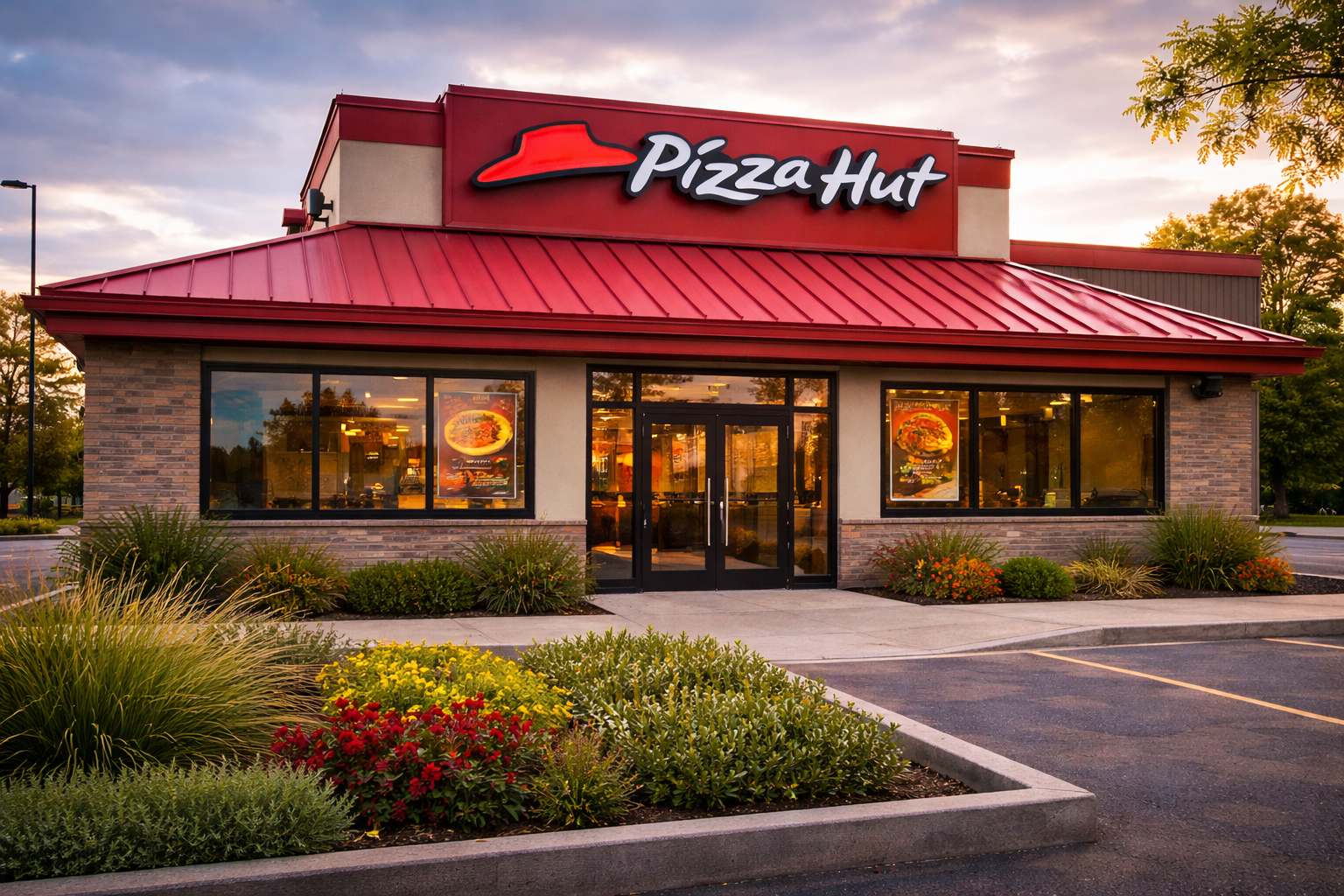
Pizza Hut is preparing to shutter 250 restaurants across the United States in the first half of the year, a move that reflects deeper strategic questions surrounding the brand’s future. The closures come as parent company Yum Brands continues a formal review of strategic options for Pizza Hut, including a potential sale, amid persistent underperformance in its home market.
A Targeted Pullback in the U.S. Market
Yum Brands says the planned closures will focus on underperforming locations within Pizza Hut’s U.S. system, which currently numbers more than 6,000 restaurants. The decision follows a challenging year in which Pizza Hut’s U.S. same-store sales declined 5%, highlighting ongoing struggles with aging store formats, weaker traffic, and changing consumer behavior.
For investors, the closures suggest a deliberate pruning rather than a wholesale retreat. Rationalizing the store base can lift average unit economics, but it also underscores how difficult it has become for legacy dine-in–oriented chains to compete in a market increasingly dominated by delivery-first, digitally optimized rivals.
Competitive Pressure and Shifting Preferences
The contrast with Domino’s is telling. While Domino’s has yet to release full-year results, its U.S. same-store sales rose 2.7% in the first nine months of last year, reinforcing its reputation for operational efficiency and digital leadership. That divergence has shaped investor psychology, with capital flowing toward brands seen as structurally better positioned for convenience-driven consumption.
Pizza Hut’s struggles are not purely cyclical. Analysts point to a slower pace of store modernization and a brand identity caught between dine-in heritage and delivery expectations. In a sector where speed, consistency, and technology increasingly define success, that middle ground has proven costly.
International Operations Tell a Different Story
Outside the United States, the picture is more balanced. International same-store sales grew 1% last year, supported by expansion in Asia, the Middle East, and Latin America. China, Pizza Hut’s second-largest market outside the U.S., accounts for roughly 19% of total sales and remains a relative bright spot.
This geographic split complicates Yum’s strategic calculus. A potential buyer may value the international footprint more highly than the mature and challenged U.S. business, raising questions about whether a transaction would involve the entire brand or a more complex restructuring.
Store Count, Growth, and Capital Discipline
Pizza Hut ended 2025 with 19,974 locations worldwide, down 251 stores from the prior year. Although the chain opened nearly 1,200 restaurants across 65 countries, closures outpaced new units. Yum has indicated that additional global openings are planned for 2026, but details remain sparse, reinforcing a sense of cautious capital deployment.
CEO Chris Turner has said the review of strategic options for Pizza Hut is expected to conclude this year, but he has offered little insight into potential outcomes. For markets, that silence keeps uncertainty elevated, even as Yum’s other brands—KFC, Taco Bell, and Habit Burger & Grill—continue to anchor its valuation.
What Comes Next for the Brand
Looking ahead, Pizza Hut’s near-term trajectory hinges on execution and strategic clarity. Store closures may stabilize margins, but sustainable recovery in the U.S. likely requires accelerated reinvestment or a new owner willing to rethink the brand’s positioning. For investors and industry observers, the coming months will reveal whether this retrenchment is a prelude to renewal—or the opening chapter of a larger exit.
Comparison, examination, and analysis between investment houses
Leave your details, and an expert from our team will get back to you as soon as possible
* This article, in whole or in part, does not contain any promise of investment returns, nor does it constitute professional advice to make investments in any particular field.
To read more about the full disclaimer, click here
- Lior mor
- •
- 5 Min Read
- •
- ago 20 hours
SKN | Palantir Q1 Earnings in Focus as AI Momentum and Government Demand Drive Growth
Strong Revenue Growth Expected Palantir Technologies is set to report its first-quarter earnings, with Wall Street expecting revenue of approximately
- ago 20 hours
- •
- 5 Min Read

Strong Revenue Growth Expected Palantir Technologies is set to report its first-quarter earnings, with Wall Street expecting revenue of approximately

- omer bar
- •
- 4 Min Read
- •
- ago 23 hours
SKN | UCB to Acquire Candid Therapeutics in $2.2 Billion Deal to Expand Autoimmune Pipeline
Strategic Expansion into Autoimmune Therapies UCB has agreed to acquire California-based Candid Therapeutics in a transaction valued at up to
- ago 23 hours
- •
- 4 Min Read

Strategic Expansion into Autoimmune Therapies UCB has agreed to acquire California-based Candid Therapeutics in a transaction valued at up to

- Ronny Mor
- •
- 6 Min Read
- •
- ago 2 days
SKN | Berkshire Hathaway Cash Pile Surges in Greg Abel’s First Quarter as CEO—What It Signals for Markets
Berkshire Hathaway reported a sharp rise in its cash reserves during the first quarter under new CEO Greg Abel,
- ago 2 days
- •
- 6 Min Read

Berkshire Hathaway reported a sharp rise in its cash reserves during the first quarter under new CEO Greg Abel,
- omer bar
- •
- 6 Min Read
- •
- ago 3 days
SKN | Moderna Beats Revenue Expectations as Global Vaccine Demand Supports International Sales
Moderna exceeded revenue expectations in its latest quarterly results, supported by continued demand for its COVID-19 vaccine in international
- ago 3 days
- •
- 6 Min Read

Moderna exceeded revenue expectations in its latest quarterly results, supported by continued demand for its COVID-19 vaccine in international


